BOOK
0
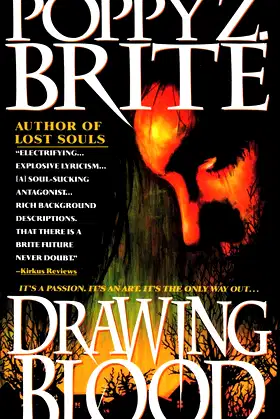
Twenty years after his tortured cartoonist father killed his mother and siblings, cartoonist Trevor McGee returns to the scene of the crime, determined to face the demons of the past and the dark force threatening to destroy him
Brite ( Lost Souls ) comes into her own in this second novel that should establish her as not only an adept in the horror genre, but also as a singularly talented chronicler of her generation. Five-year-old Trevor McGee wakes one morning to find that his father, cartoonist Bobby McGee, has murdered his mother and younger brother, then hanged himself. Twenty years later, Trevor, now a cartoonist himself, returns to Missing Mile, N.C. (a fictional town also featured in Lost Souls ), and the now-haunted house of his youth for answers: Why did his father choose to spare his life? What prompted the loss of creativity which Trevor himself now dreads? Meanwhile, 19-year-old Zachary Bosch, himself the tormented result of disturbed parents, arrives in Missing Mile on the lam for computer hacking. The two fall in love, and, with Zach's help, Trevor finds that he can reach the horrible but liberating truth the house holds for him. Though subplots and secondary characters sometimes hamper the pace of the main plot line, they do serve to evoke a certain 20-something, cyberpunk-era zeitgeist that resonates with the concerns of contemporary youth. Author tour. Copyright 1993 Reed Business Information, Inc.
Zach and Trevor are young men who fall in love in a haunted house where Trevor's father murdered his family and killed himself, sparing only Trevor. An underground cartoonist like his dead father, Trevor has returned to the crumbling house in rural Missing Mile, North Carolina, to learn why his father spared him. Zach is a hacker on the run. He is a popular and exotic extrovert while Trevor is a painfully introverted virgin. With the help of Zach and psilocybin, Trevor confronts his father in Birdland, the comic town that his father created, even as the FBI traces Zach to Missing Mile. Drawing Blood is a flawed but compelling story. It's labeled "psychological horror," but the horror gives way to a suspenseful, offbeat gay romance. The first half, where Brite's powerful characterizations and settings are drawn, is hard to put down. But the haunted house is tame, and Trevor's struggle to learn to love Zach lingers overlong in homoerotic material, straining the momentum. The FBI arrives in time, however, to lend some suspense to the ending. Recommended for public libraries.- Robert C. Moore, DuPont Merck Pharmaceutical Co. Information Svcs., North Billerica, Mass.Copyright 1993 Reed Business Information, Inc.
As with many of today's best writers of horror fiction, Brite--the author of the highly regarded Lost Souls --focuses more on character than on spooks. When Robert McGee's car breaks down in Missing Mile, North Carolina, the down-and-out comic-book artist uses the last of his money to rent a rundown farm house. McGee's depression soon turns murderous: he kills his entire family except one child, Trevor, and then commits suicide. Twenty years later, Trevor--now an artist himself--returns to Missing Mile, where he encounters Zach, a computer hacker on the run from the feds. The two become lovers and set up residence in the house where the murders occurred. Together they confront the horror that infuses both the building and Trevor's life. The prose here runs like a river; an astute observer of the human condition, Brite has given the haunted-house story a thorough remodeling. This is a sexy, classy, frequently funny study in psychological horror. Elliott Swanson
Brite follows up her electrifying debut, Lost Souls (1992), with a longer work whose horrors, while more focused, have their energies dimmed by fine writing. Set once again in Missing Mile, North Carolina--where in Lost Souls the redneck vampires kept blood in whiskey bottles--this second novel gives its soul-sucking antagonist a psychological reality based less on mad variations on Bram Stoker than on a family tragedy. Back in 1972, famed underground cartoonist Robert ``Bobby'' McGee, a figure clearly based on the R. Crumb whose images stamped the hallucinogenic generation with Mr. Natural and other disrupters of the status quo, fell into writer's block and bludgeoned to death all of his family but his five-year-old son Trevor. Now, having left his orphanage and found his own way as a cartoonist of underground demons, Trevor returns to Missing Mile to find out why his father failed to kill him. He moves into the still empty house of death, where the lights work with no power source, and finds himself deep in the mysteries of Birdland, a psychic state emerging from the alto sax of Charlie Parker, where Bobby McGee's ghost wanders in limbo. Meanwhile, virgin Trevor falls in love with Zachary Bosch, a 19-year-old computer hacker on the run from the Secret Service, who moves into the house of haunted blood with Trevor and experiences Boschian visions. Woven throughout are ties to Parker tunes and Zach's new role as vocalist with the Gumbo rock band at the Sacred Yew. Climax comes with Trev and Zach entering the psychic cartoon of Birdland together via psilocybin.... Brite strives for the explosive lyricism of Lost Souls in rich background descriptions that here bulk out her pages but fail to intensify them. The R. Crumb echoes deliver brilliantly. That there is a Brite future never doubt. -- Copyright ©1993, Kirkus Associates, LP. All rights reserved.
Find it on
AmazonNo videos available yet.
No news articles linked to this title yet.

Overall
Overall rating of the media
Atmosphere
How immersive and tense is the atmosphere
Gore
Level and quality of gore/violence
Story
Quality of the storyline and plot
Writing
Quality of the written content
Character Development
Depth and growth of characters
Pacing
Flow and timing of the narrative