

BOOK
0
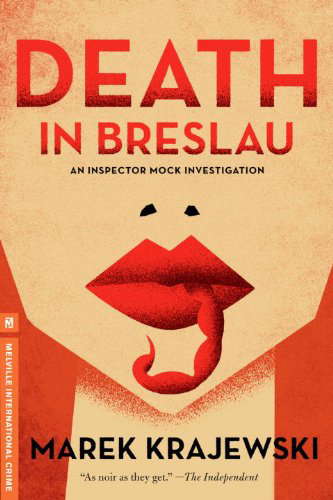
Introducing one of the most stylish and moody historic detective series ever: The Inspector Eberhard Mock QuartetOccupied Breslau, 1933: Two young women are found murdered on a train, scorpions writhing on their bodies, an indecipherable note in an apparently oriental language nearby ...Police Inspector Eberhard Mock's weekly assignation with two ladies of the night is interrupted as he is called to investigate. But uncovering the truth is no straightforward matter in Breslau. The city is in the grip of the Gestapo, and has become a place where spies are everywhere, corrupt ministers torture confessions from Jewish merchants, and Freemasons guard their secrets with blackmail and violence.And as Mock and his young assistant Herbert Anwaldt plunge into the city's squalid underbelly the case takes on a dark twist of the occult when the mysterious note seems to indicate a ritual killing with roots in the Crusades ...
“Marek Krajewski goes far beyond the police procedural in a novel that confronts the infinitely more terrible crimes to come.”
"This intelligent, atmospheric crime novel, which flashes forward to such events as the 1945 Dresden firebombing and the beginnings of the cold war, possesses a distinctly European, Kafkaesque sensibility."
"As noir as they get. This complex and atmospheric thriller will find many fans, who will eagerly await the rest of Krajewski's Breslau quartet."
"It promises to be a great quartet."
"Krajewski's wonderfully laconic style and his painterly descriptions of place and character tether even the most overwrought scenes to a palpable reality."
"Krajewski’s thriller...will intrigue and compel readers to its end."
"Atmosphere and piquant period detail saturate the pages, and push these books into the upper echelons of literary crime ... Krajewski's lacerating narrative performs the key function of the skilful novelist: providing an entree into a world far from our own."
"Krajewski has Mankell's sharp eye for detail, but he has, too, a more sophisticated frame of reference that may intrigue fans of Umberto Eco and Boris Akunin...Death In Breslau is a stylish, intelligent and original addition to the canon."
"Reminiscent of Georg Grosz...Death In Breslau isn't just an exciting mystery, it's the story of lost Fatherland...wonderful."
"The city of Breslau is as much a character in this thriller as the parade of gothic loons that inhabit it...This addictive soup has an air of the burlesque about it."
"Krajewski relishes the period detail as takes us from bloody interrogation cells to Madame LeGoef's sweaty bordello ... above all you get the sense that Krajewski is enjoying teasing and tormenting us with numerous examples of the violent coming together of eroticism and the body-politic. In this respect, Death in Breslau is strongly reminiscent of Alain Robbe-Grillet's Repetition... What's haunting about Krajewski's book, however, is that the worst was yet to come."
"Atmospheric and uncompromising, it is noir with its dark underbelly fully exposed"
Find it on
AmazonNo videos available yet.
No news articles linked to this title yet.

Overall
Overall rating of the media
Atmosphere
How immersive and tense is the atmosphere
Gore
Level and quality of gore/violence
Story
Quality of the storyline and plot
Writing
Quality of the written content
Character Development
Depth and growth of characters
Pacing
Flow and timing of the narrative