
BOOK
0
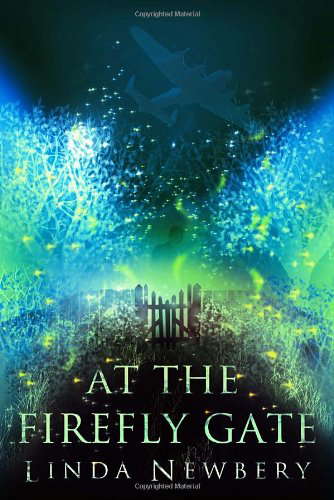
Henry has always felt like an outsider and things are about to get worse when his family moves to the countryside and the prospect of a new school looms. He retreats more and more into his shell, until he meets Dottie, a frail old lady, who has tremendous spirit. He feels as though he knows her, as though they have been friends for many years. And as she tells him about her wartime romance with a Royal Air Force navigator also named Henry, our Henry is drawn into that world. In a series of mysterious, sometimes frightening events he re-enacts Henry's life . . . and learns that despite being dreadfully afraid, Henry acted heroically at the cost of his own life. Only our Henry knows the true story and it shows him a way through his own self-doubts and misgivings.
Grade 5–7—First published in England, this quiet, gentle story of friendship and love spans years and defies time. Small, timid Henry moves with his parents at the end of Year Six to a village in Suffolk near Risingheath, a former World War II airfield. The first friend he makes is an unlikely one: his neighbor's great-aunt. He is drawn to Dottie, for whom Henry is a reminder of another Henry-her fiancé, a Royal Air Force navigator who never returned from his 13th bombing mission. The author employs a nice touch of magical realism with the shadowy figure that appears in the evening and seems to be waiting, amid the fireflies, at the gate in Henry's garden. At night the boy hears the old planes that flew over more than 60 years earlier. He is drawn into Dottie's reminiscences, and sometimes has the strange sense of being in someone else's body. While playing with a flight-simulator program on a computer, young Henry "sees" what happened on that final mission. He realizes that, although the RAF navigator was afraid, he acted heroically. This realization helps the boy find courage and a way through his own fears. He has made some friends and is looking forward to the summer holidays. This is a well-written book, with an old-fashioned tone, that emphasizes character and feelings over plot. It's for thoughtful readers who appreciate a book that lingers in their minds.—Connie Tyrrell Burns, Mahoney Middle School, South Portland, ME Copyright © Reed Business Information, a division of Reed Elsevier Inc. All rights reserved.
Henry misses his old home, school, and neighborhood in London and feels out of sorts in his family's new house, a cottage in a Suffolk village. Taking a liking to an elderly, dying woman who lives nearby, he becomes intrigued by her account of life in the area during World War II, when she fell in love with an RAF pilot at a nearby air station. Coincidentally, his name was Henry, too. Past and present blur as Henry has vivid dreams of himself as a wartime pilot and sees waking visions that he gradually realizes must come from another time or place. Newbery writes well, drawing readers into Henry's shifting reality slowly and letting his puzzlement work itself out. The subplot involving an inhospitable girl his parents urge him to befriend is acutely observed, incisively drawn, and sometimes painful in its realism. This contemporary British novel uses historical and magical elements sparingly, and to good effect. Carolyn PhelanCopyright © American Library Association. All rights reserved
“HENRY ISN’T SURE how he will fit in now that his family has moved from London to a small village in rural Suffolk. On his first night in the family’s new house, Henry sees a shadowy young man surrounded by glowing fireflies, waiting by the gate at the bottom of the garden. The next day, Henry meets Dottie, his neighbor’s elderly aunt, and senses an odd connection with her that is also somehow linked to the stranger in the garden. Henry’s dreams and visions allow him to share in the experiences of Dottie’s long-ago beau (also named Henry), who died during World War II. Like a homespun cousin to the Ouija board, the Scrabble game conveys otherworldly, thematically related messages through its tiles. More cozy than frightening, these supernatural goings-on provide a counterpoint to the day-to-day events of Henry’s new life.”
One Fireflies It was the first night away from home. This was supposed to be home now, but it didn’t feel like it. Henry stood looking out of his bedroom window into the dusk, at the fields, hedges and trees behind the cottage. In London there had always been traffic noise outside; here, he could almost feel the trees breathing. It was just past midsummer, and the sort of night that hardly got dark before the next early dawn. As his eyes adjusted, Henry saw — with a thump of surprise — that someone was out there. A man, standing at the orchard gate. The orchard was a narrow strip of grass and trees that ran behind the cottages, with a big field beyond. Each garden had a wooden gate at the end, so that you could walk straight out into the orchard. Henry’s new garden was tangled and overgrown and by the end gate the strange man stood waiting — a young man, he looked, with a jacket slung over one shoulder. Henry saw points of light dancing around his head and shoulders. They must be fireflies, he thought, straining his eyes: he’d heard of fireflies, but didn’t know there really were such things. Among the dancing points of light, there was one small glow attached to the young man’s hand: the tip of a lit cigarette. He was smoking, waiting. What, or who, was he waiting for? Watching him, Henry had the oddest sense of being both down there and up here. He could feel the floorboards under his bare feet and smell the dusty warmth of the bedroom, unused for so long. At the same time he smelled the coolness of grass and leaves, and felt the weight of the jacket on one shoulder and the wing-brush of insects against his face, and tasted the hot rush of smoke into his lungs. He saw the fireflies dance and flicker among the leaves of the apple trees, like tiny flames drawn by the glow of the cigarette. And he knew that if he turned his head and looked up, he would see himself, a boy in blue pyjamas framed in the window, the light of the upstairs landing behind him. He shook his head and the peculiar feeling vanished: he must have imagined it. But the young man hadn’t vanished. He lifted his cigarette to his mouth, turned and looked straight at Henry. He knows I’m here, Henry thought. That’s why he’s standing there. Waiting. Quickly he ducked out of sight behind two packing-cases, even though he knew it was too late. Just for that second, the man had looked straight at him, without any sense of surprise, as if he’d expected to see a boy standing at the window. No, more than that: as if Henry were exactly the person he expected to see there. Take deep breaths — in, out. Try to feel confident, then you’ll be confident. That was what Dad said to do, when Henry got into a panic. But those panicky times were exactly when it was most impossible to breathe normally. Henry turned and ran noisily downstairs, as if the thump of his feet would drive the stranger away. Mum was unpacking books while Dad made coffee in the small kitchen, the only room in any kind of order. ‘There’s a man outside!’ Henry blurted. ‘In the orchard, looking in.’ ‘At the end of our garden? It’s OK, there’s a public footpath runs along there,’ Dad said. He opened the back door to look out. ‘No. Can’t see anyone.’ ‘He was by the gate, smoking.’ Henry stepped out to the flagged path, which disappeared beneath a sprawl of nettles and thistles a few feet from the door. ‘And there are fireflies.’ He peered along the length of the garden. There was no young man, no fireflies, no cigarette-tip glowing in the dark — only the warm air and the breath of the trees. ‘Just someone walking through,’ Dad said, shepherding Henry back indoors. ‘That footpath goes right along the orchard, then into the big field behind.’ He made it sound so ordinary. Less certain now of what he had seen, Henry couldn’t explain the strangeness of it. ‘Anyway,’ Dad added, going back to the steaming kettle, ‘you don’t get fireflies, not in this country.’ ‘But I saw them!’ ‘Funny time to be out walking.’ Mum was reaching deep into a crate, head down, bottom up. ‘Hen, it’s time for bed. You’ve had a long day.’ ‘Mu-um! Don’t call me Hen!’ ‘Sorry,’ Mum said, from inside the box. ‘I’ll come up in a minute to see you’ve got everything you need.’ ‘Curtains,’ Henry said. ‘I haven’t got curtains.’ ‘I know.’ Mum straightened up. ‘We’ll find them tomorrow. Won’t matter, will it, not for one night? This time of year it’s only dark for a few hours and you’re at the back of the house. It’s not as if anyone can see in.’ But the man outside! ‘Night, Henry. Sleep tight,’ Dad said, as he always did. Henry went upstairs and crept to the window to check again, but saw only the twisted trunks of the apple trees and their shadowy leaves in the dusk. The man wasn’t walking, he thought; he was waiting for something. Or for someone. He was waiting for me. And, in the room that held all the day’s warmth, he felt a cold shiver between his shoulder-blades, like iced water trickling.
Find it on
AmazonNo videos available yet.
No news articles linked to this title yet.
No tags available.

Overall
Overall rating of the media
Atmosphere
How immersive and tense is the atmosphere
Gore
Level and quality of gore/violence
Story
Quality of the storyline and plot
Writing
Quality of the written content
Character Development
Depth and growth of characters
Pacing
Flow and timing of the narrative