

BOOK
0
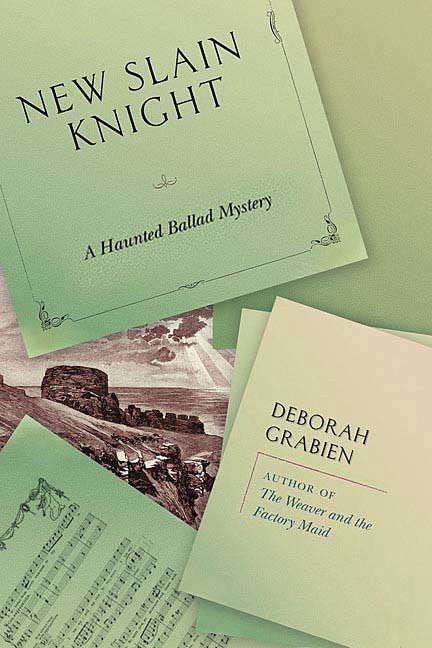
It’s summer in England, and---with nothing urgent demanding their attention---Ringan and Penny are planning a quiet vacation alone together. Their plans change when Ringan’s niece, fourteen-year-old violin prodigy Becca, is dumped in their care while her parents deal with an emergency abroad.Ringan has no idea what to do with a teenage relative. Penny points out that Becca is more a musician than a child, and suggests a musical holiday in Cornwall. Playing in front of a live audience with Ringan and a band will give the girl much-needed experience and confidence. It will let Ringan get to know his niece better, as well.It’s a good plan, and everyone approves. And yet something about the St. Ives home of their host, Gowan, leaves Penny uneasy. She hears voices in her mind, speaking in Cornish, and has a horrifying vision through the eyes of a dying man. When, soon after, she finds Becca sleepwalking, Penny learns from Gowan that, many years earlier, his emotionally unstable lover hanged herself in this house. It may simply be the echoes of that tragedy disturbing both her and Becca. But after Becca has a seizure during a live performance of a seemingly harmless song, Penny and Ringan realize that a much older tragedy hangs over Gowan and his family. And if they can’t find the truth and lay to rest whatever ghosts still walk, they may lose Becca.New-Slain Knight, the fifth in the Haunted Ballad mystery series, touches on the ties that bind: family, the past and the present, and the mystery that lies behind every story.
In Grabien's enthralling fifth Haunted Ballad mystery, a tragedy in 1481 Cornwall has startling modern-day repercussions for musician Ringan Laine; his psychically talented significant other, Penny Wintercraft-Hawkes; and Ringan's beautiful adolescent niece, gifted violinist Rebecca Eisler. Becca accompanies Ringan and Penny on holiday to visit rakish, middle-aged Gowan Camborne, who invites Becca and Ringan to perform with his group, the Tin Miners. Gowan is shocked by Becca's resemblance to a lost love, while Penny senses something off about his St. Ives family estate. Then Penny and Becca encounter restless spirits seeking contact, apparently stirred up by an old folk ballad, and Becca becomes increasingly sensitive to the ghost of Jenna Camborne, one of Gowan's ancestors. The need to learn the truth behind a 500-year-old crime before another death occurs today gives Penny, Ringan and their friends a major challenge and provides Grabien's fans with another chilling psychic puzzler. (Nov.) Copyright © Reed Business Information, a division of Reed Elsevier Inc. All rights reserved.
Chapter 1On a glorious July day, Ringan Laine checked his cell phone for messages, found none, and headed out into his garden for a nice long nap under the late afternoon sun.Part of him—admittedly a very small part, easily identified as what he usually referred to as his damned Scots Protestant work ethic—was doing its level best to make him feel guilty. The work ethic, or whatever it was, had chosen to take the form of an infuriating little voice at the back of his head. He’d rolled out of bed after lying in until nearly ten in the morning, and the little voice had been poking away at him steadily ever since.It had begun by suggesting that there were several things around Lumbe’s Cottage that needed doing. There was the toilet, for instance; that was badly in need of a good hard scrub. The voice pointed out that doing something about the sheet of ice presently keeping his freezer door from closing properly might be a wise idea. It raised the question of washing nearly two months’ accumulation of pollen and dirt and stray bits of roofing thatch from the cottage’s windows. It pointed out that all these things really ought to get done before Penny, Ringan’s longtime girlfriend, arrived from London tomorrow. It had finished up with the observation that after ten hours of sleep the previous night, Ringan’s desire to nap in the sun was unjustified, not to mention indecently hedonistic. As a kind of coda, the irritating little voice reminded him that the strings on Lord Randall, his Martin guitar, had been in constant use on the tour he’d just finished and wanted changing.Ringan had initially coped with the voice by doing his best to ignore it. When that tactic failed, he took a tried-and-true road: mentally telling it to sod off, ticking off the various items that wanted doing first to forestall any reoccurrence.Fortunately, he had common sense on his side. In the first place, Penny wasn’t coming down until tomorrow, so the loo could stay dirty until this evening, by which time the temperatures would have gone down to below subtropical, and he’d probably have a bit of energy to spare. He already knew what was causing the creeping glacier in his fridge, ta ever so: the ice-making device had apparently nursed thoughts of world domination while he was off on the road for five weeks with his band, Broomfield Hill. He’d left a message with the local appliance repair people and, anyway, he’d already disconnected the icemaker. Cleaning the windows was about as stupid an idea as anyone could get in this heat—besides, the BBC weather service had said there were storms offshore, so rain was coming during the night, most likely. Obviously, the intelligent thing to do was to let the rain do the windows for him, instead of he himself getting up on a ladder and probably keeling over and crashing to the ground from sunstroke. As for Lord Randall’s tired strings, those could damned well wait. Penny was coming down tomorrow for three weeks and what he had in mind for a high percentage of those three weeks had nothing at all to do with guitars.With the voice at least temporarily silenced, Ringan let himself into the miniature tithe barn that, these days, he used partly as a rehearsal space and partly for storing things that were only ever used out of doors. Even on the hottest days, the barn was cool; the foundations, nearly six feet in height and made of the petrified earth and dung that the locals had been calling “cob” for a thousand years at least, took no warmth from the sun or the air and gave none back. The crucked oak beams that made the roof look like a small-scale model of the Abbey Barn, that world-famous tourist attraction a few miles away in Glastonbury, seemed high and remote.The interior was always mostly in shadow, the sun’s rays never reaching fully in. Ringan, stepping carefully around the heavy wrought-iron chairs and table he’d put away for safety while he toured with his band, moved gardening tools and disintegrating lawn umbrellas to one side, and glanced up and around. The instinct to see if he could catch any sign of movement was now as ingrained as any habit could be. Once, there had been other shadows in here, two people caught between death and eternity. They were gone now, those two, gone to whatever corner of time and space offered sanctuary to such as them. . . . But there was nothing, and Ringan dropped his eyes. He hunted through a small pile of seemingly random objects just inside the door, telling himself, as he always did, that he really ought to put a few hours aside and organise his bits and pieces. Pulling the low-slung canvas chair he wanted free of the rest, he straightened his back and, once again, found his gaze moving from one end of the barn to the other, sweeping from the near-darkness of the building’s distant corners and ancient foundations to the faint dance of dust motes just inside the slitted windows. Someday, he thought, he might be able to walk into the barn—for that was all it was, now, a useful outbuilding—without remembering the lovers who had once been caught within these walls like extinct insects in amber.Ringan got the lawn chair out under one of the apple trees and began the process of setting it up to his liking. It took some doing; the chair, with its built-in canopy and seat of faded green canvas and its squeaky brass-plated hardware, had been sitting in the barn for the better part of a year. Not only were the various bits of hardware rusty and uncooperative, the wood that formed the frame was dry and shrinking. He made a mental note: next trip into Glastonbury for supplies, add a bit of wood oil to the shopping list. . . . “Want a hand with that?”The voice, cheerful and a bit amused, came from just behind him. Ringan turned and found himself confronting his landlord.“Albert! Christ, you startled me. I could use a bit of help, yes—this thing’s gone as dry as a bone and the hinges are useless, pretty much. I’ve got to get some lubricant or something at the home centre, next time I’m there. Here, could you put some weight on the foot? I’ll pry the other end open—right, that’s done it.”“Those hinges sound like a soul in torment. But there’s no need to buy lubricant. I’ve got gallons of it, that spray-on stuff, up at the House. I’ll send someone down with it for you.” Albert Wychsale, Baron Boult, glanced around, in hopes of finding a second chair. In his sixties and on the round side, he wasn’t coping well with the heat; his face was pink, his thinning pale hair was sweaty, and he was damp and a bit wilted around the edges. Lacking a second seat, he settled himself gingerly on the grass; while the dry grass of high summer in Somerset wasn’t likely to stain his trousers, the dead spikes, their springy softness leeched out by weeks of direct sunlight and unrelenting temperatures, were sharp and prickly. “I just came by to drop off your post. I got lucky about the day, because I honestly couldn’t remember which day you were coming down. I’ve left everything on your kitchen table—the door was open and I saw your car. How did your tour go? Are you home for a while now?”“The tour went fine, thanks. Five weeks, two dozen shows, Scotland to Cornwall. Literally, John o’ Groats to Land’s End. The new CD’s selling very well—our fastest seller to date, in fact.” Ringan, who’d been about to flop into the chair, suddenly remembered his manners. “I think I need a good cold beer. Do you fancy one? And maybe a chair? You don’t look very comfortable, squatting like that.”In the end, Ringan’s plan for an immediate nap was shelved in favour of getting the rest of the lawn furniture out of the barn and set up on the grass. As they edged the heavy table out into the sun, it occurred to Ringan, sweat trickling down his chest and through the front of his shirt as he swore under his breath, that the little voice in his head was getting some of its own back.“Is something funny?” Albert finished dusting off the seat of one of the chairs and sank into it with a grateful exhale. “Because you’re grinning and, honestly, I wouldn’t have thought you felt much like grinning, at least not going by what you were muttering while we were moving that table. Or is that just a feral grimace?”“Just thinking that my inner Protestant is getting its wish, that’s all, what with me slogging in the heat instead of sleeping in the sun. I’ve got three weeks of doing sod all coming to me, and my damned work ethic kept jogging me in the mental ribs to do chores instead of take a nice kip out of doors. Where in hell did I put my beer?”“Next to that green canvas thing, right on the grass—Butterball, get away from that and let Ringan have his pint in peace, you idiot beast.” Wychsale, one hand firmly around his own bottle, shook his head as the Wychsale estate’s enormous orange Persian cat emerged from behind the apple tree and began a ritual sniffing. “At least it’s cooling down a bit. So, three weeks of perfect summer weather and nothing on your dance card except relaxing? Sounds like a bit of heaven—I can’t imagine the sort of tour you people just did without wanting to sleep. Is Penny coming down?”“Tomorrow, for three full weeks.” Ringan felt his lips wanting to curve up into a smile. He couldn’t help it. The smile was tender, edging on sensual; he hadn’t seen Penny Wintercraft-Hawkes since his band had begun touring. “We’ve finally managed to beat the odds and have the same amount of time...
Find it on
AmazonNo videos available yet.
No news articles linked to this title yet.

Overall
Overall rating of the media
Atmosphere
How immersive and tense is the atmosphere
Gore
Level and quality of gore/violence
Story
Quality of the storyline and plot
Writing
Quality of the written content
Character Development
Depth and growth of characters
Pacing
Flow and timing of the narrative