

BOOK
0
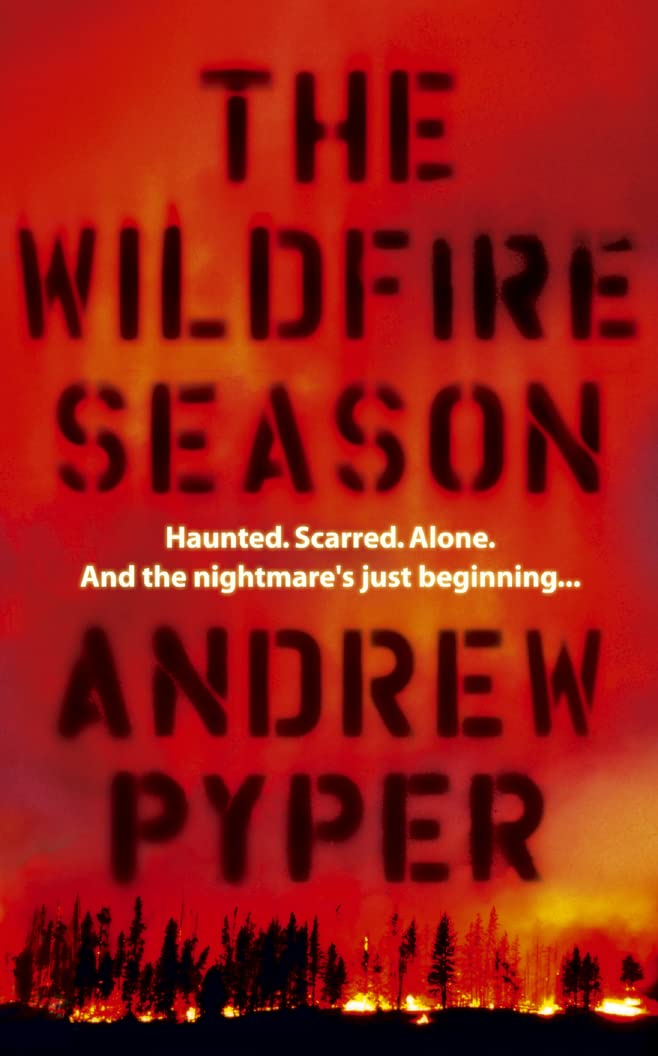
After half his body was burned in a forest fire, Miles McEwan left his life behind and moved to the most remote place he could find, a little village in the Yukon called Ross River. He's sitting at his usual spot in the town's one bar as two life-changing forces approach from opposite sides: one is a forest fire, set with the flick of a match; the other is his former girlfriend, who after five years of searching has tracked him down, bringing with her a daughter Miles didn't know he had. As head of the town's firefighters, Miles must confront the fire, find a killer, and protect his newfound family. Andrew Pyper's vivid, panoramic story encompasses the vast wilderness of the Yukon, as malevolent forces of nature and man converge on Ross River, in this "brilliant melding of mystery, suspense, survival, and the supernatural" (The Vancouver Sun).
Chosen as "Best Book of the Year" by three major Canadian newspapers, this third novel by award-winning Canadian Pyper is an edge-of-the-seat thriller, laced with a hint of Native American mysticism. It is also a study in character, set in the beautiful but unforgiving landscape north of the sixtieth parallel. Miles McEwan, a young man in love and ready to start medical school in the fall, becomes tragically disfigured while fighting a forest fire, scarred not only in body but also in spirit from the circumstances surrounding the fire. He flees his Toronto life and eventually makes his way to the Yukon, where, five years later, Alex, the woman he left behind, finally finds him. Interwoven with this story is that of a mother bear and her two cubs, at first the hunted, then ultimately the hunter. And, of course, the third strand of the story is the wildfire season in Ross River, where the absence of any forest fire proves almost as deadly as the uncontrollable fire that eventually rages through the area. Maureen O'ConnorCopyright © American Library Association. All rights reserved --This text refers to an out of print or unavailable edition of this title.
Haunted. Scarred. Alone. And the nightmare’s just beginning. Of all the end-of-the-world places he could have run to after he was burned, Miles McEwan chose Ross River. Buried deep in the vast wilderness of the Yukon, it seemed the perfect place to escape the past. Best of all, he could carry on doing what he did best--fighting fire. But five years on, Miles is still troubled by two phantoms of his previous life: the young man whose agonizing death preys on his conscience, and the woman he abandoned as a consequence. And in the dark forest around Ross River, fire and violence are brewing. As a small blaze becomes an inferno, a group of bear trackers is about to encounter nature in its wildest form. Elsewhere a killer is going about his work, quietly and ruthlessly. As the survivors of the hunting party are picked off one by one and fire rages through the mountains, Miles embarks on a desperate rescue mission, driven by love for a daughter who, until this dangerous summer, had been a perfect stranger. A remarkable work, The Wildfire Season is an edgy psychological thriller, a supernatural chiller, a terrifying tale of untamed nature, and an unusual--and unusually moving--story of what one can choose to endure in the name of love. --This text refers to an out of print or unavailable edition of this title.
Set in Ross River, a tiny Canadian Yukon settlement, Pyper's subtle thriller develops a sense of dread more from the menace of uncontrollable forest fires and lurking grizzlies than the human predator who remains anonymous until the end. The local fire chief, Miles McEwan, is a loner whose hidden past is revealed when Alex, his vengeful former lover, arrives in Ross River with their five-year-old daughter, Rachel. Meanwhile, a retired executive and his wife come to town for a grizzly hunt, and it's wildfire season. As several fires combine to threaten Ross River's stubbornly independent inhabitants, the firefighters, the hunting party and the bears, an individual is plotting murder. Pyper (Lost Girls) writes beautifully about the splendor and dangers of the wilderness. He doesn't anthropomorphize, but his understanding of bears and fire imbues both with a life force. A bestseller in Canada, this novel offers excellent pacing and credible characters, though readers should be prepared for some horrific violence. (Dec.) Copyright © Reed Business Information, a division of Reed Elsevier Inc. All rights reserved. --This text refers to an out of print or unavailable edition of this title.
Chapter One He must go far, but not too far. Someplace lightning would choose. A tree that is a foot or two taller than its neighbours, one with a drop sheet of needles around its base. Too much regrowth will only lead to a telltale explosion. On the other hand, there will have to be enough fuel to nurture the smoke, keep it alive while teaching it to go slow. The firestarter had assumed the perfect location would make itself plain once he was out here. Instead, nowhere looks right. There are moments when he thinks he might be lost. His squinting attention to particular corners of the forest makes his head swim when he lifts it to get his bearings. He has never been afraid in the bush before. Then again, he isn’t himself, is he? Maybe he would never become lost so close to where he started, but the firestarter might. Doing this thing, he refuses to think of himself as himself. A split personality, if only for today. It’s not shame that forces him to hide—he has his reasons for being here, or a set of compulsions anyway, even if he has trouble recalling them now, so occupied is he by the act alone. He is the firestarter and not himself mostly because it makes it easier. A man temporarily free of history, attachments, implications. For now, he’s a soldier on a mission, acting on faith in the wisdom of his orders. As if folding its arms, the forest blocks his progress. He punches forward, kept on his feet by an elastic web of spruce branches. Once, he gets trapped in a standing coffin of twigs and is forced to hack his way out with his knife. As he thrashes free he hears himself whimper. A sound he doesn’t recognize as any he’s ever made before. In time, he finds that he stands in a small clearing. Indiscernible from the dozen bald patches he has already passed through and dismissed as unsuitable. Here. Later, someone might even figure it out. It started here. He snaps the campfire sticks he picked up at the outfitter’s in Carmacks into cubes and drops them randomly, one at a time, as he paces. Will two sticks be enough? He decides three would be better, just to be sure. Then four. He takes the tin of kerosene from his pack and sprays it in spidery lines reaching out from the duV he has raked into a small pile with his hands. He thinks he may have overdone it a bit but reminds himself that whatever evidence he leaves behind will be turned to ash long before he makes it back to town. The firestarter plucks the Zippo from his breast pocket. He pauses long enough to stroke his thumb over the illustration etched into its silver plate. A habit. One that is observed every time he holds the lighter in his palm before lifting the same thumb to turn the flint. Over the years, both in his own possession and those of its previous, anonymous owners, the drawing’s lines have been smoothed, the words printed beneath it faded, though still readable. New York City. Atop this caption, the Manhattan skyline is rendered from a thousand feet above the island’s south tip, so that the Chrysler Building is a pope’s hat in the distance and, looming in the foreground, the twin towers stand guarding all that lies behind them. They were gone now, of course. He can’t believe it was nearly four years ago that he watched them collapse into aprons of dust on TV, then wonders what isn’t right about four years, whether it feels longer ago or more recent than that. Not that he’d ever seen them when they were still around. He’d never been to New York in his life. The distance between there and where he is now strikes him as preposterous, science-fictional. Where had he gotten the Zippo, anyway? A gift, he thinks, or maybe not. He’s not sure who gave it to him if it is. It’s just one of those mass-produced souvenirs that make their way around the world, a cousin in the family of Maid of the Mist pens and Mao alarm clocks, drifting from hand to hand, the original sentiment attached to its purchase long rubbed away. The firestarter is ready now. All he needs to do is flick the lighter and touch the flame to the accelerants spilled around his boots. Yet, for another moment, he does nothing but study the words and grooves of the Zippo’s face with a pointless intensity. What does he want these familiar hieroglyphs to reveal? Now, after so long spent in his pockets, lying on dresser tops, lost and found in the chasms between sofa pillows? He’s only waiting for the answer to why he has come here to return. Already, he’s learned that this is the problem with being two people at once. The motivations of one tend to slip away for stretches so that, acting as the other, he finds himself having thoughts he doesn’t know the beginning or end of. Still, even the intentions of a stranger standing in the woods with a lighter in his hand aren’t difficult to guess. With one more pass of his thumb over the lines of Manhattan, he starts a fire. Then he bends to his knees, cups his hands on the ground, and starts another. Copyright © 2005 by Andrew Pyper Enterprises Inc. All rights reserved. --This text refers to an out of print or unavailable edition of this title.
Find it on
AmazonNo videos available yet.
No news articles linked to this title yet.
No tags available.

Overall
Overall rating of the media
Atmosphere
How immersive and tense is the atmosphere
Gore
Level and quality of gore/violence
Story
Quality of the storyline and plot
Writing
Quality of the written content
Character Development
Depth and growth of characters
Pacing
Flow and timing of the narrative