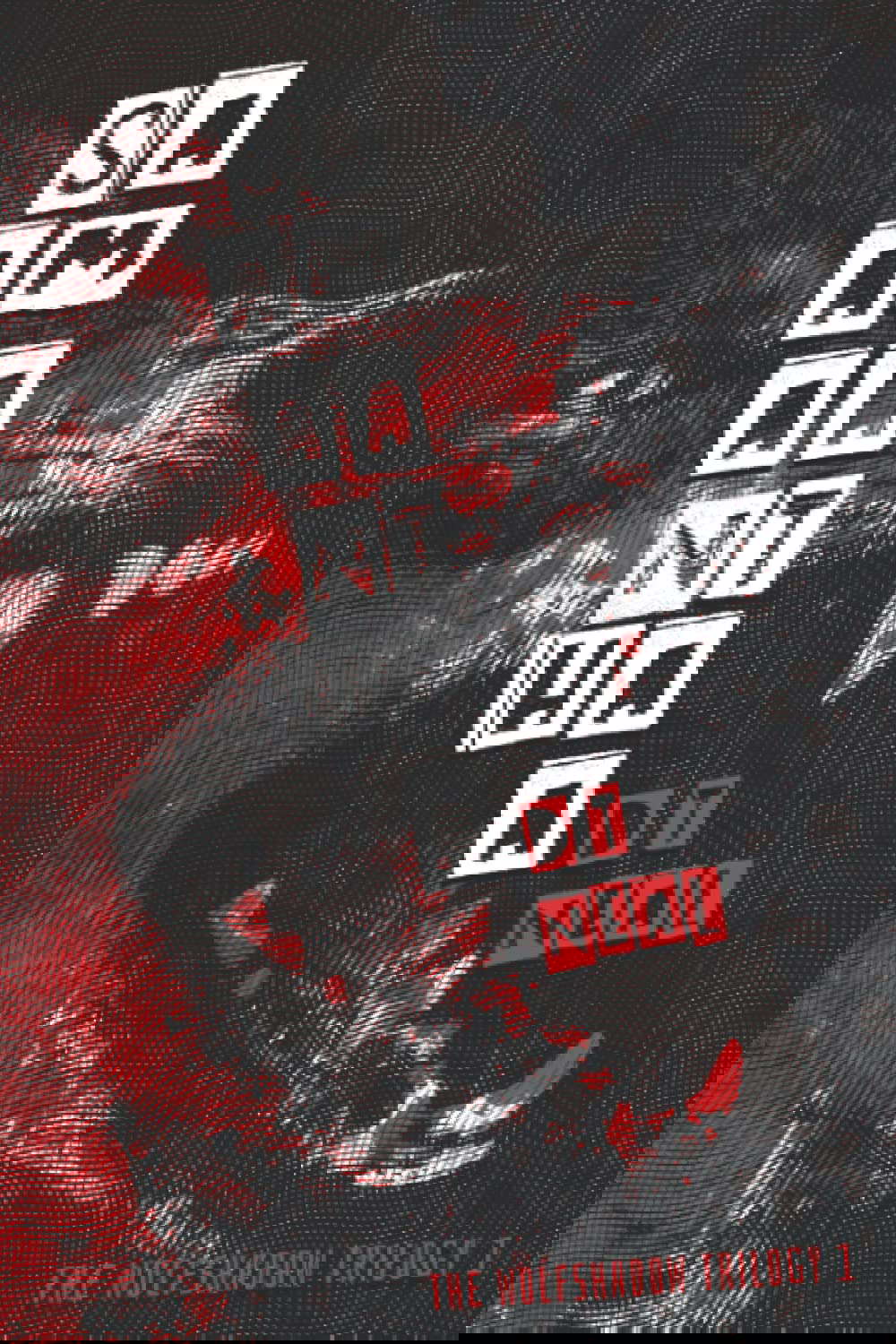
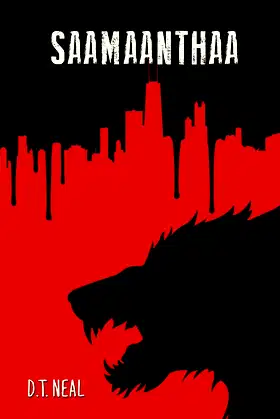
Set in Chicago in 2007, Saamaanthaa follows Samantha Hain, a 28-year-old performance artist whose pretentious peers include poets and painters who see themselves as cultured subversives in a world full of ordinary people. Sam encounters Ansel Rupino, an artist, a werewolf, and is infected by him during a one-night stand. She sees her world turned inside out as she struggles to reconcile her artistic persona with her lycanthropy, and finds artistic inspiration and expression, both creative and destructive, through her infection. As the story propels her through the city, the unpredictable and gruesome consequences of her malady become increasingly dire for Sam, her friends, the city, and even the world. Saamaanthaa explores lycanthropy-as-art, the effect of Sam’s disease on her relationships, and what it means to be a monster, and a woman, in a world of men. Part black comedy, part satire, all horror novel, Saamaanthaa offers a uniquely literary take on the werewolf mythos, and builds to an unforgettable, grisly climax.
This is a great werewolf novel. And when I say that, I mean it's a werewolf story in the purest form: It's bloody, it's monstrous, it's depraved - and it's fun. It's as much a monster memoir as it is a satire on the absurdity of humanity. The unique setting - 2007 Chicago - and the fact that the main character is a female performance artist who enjoys dalliances with both men and women make for a fun twist on the werewolf genre, which tends to get kind of samey (they all ride motorcycles, they all hang out in '70s adult theaters, they only terrorize English moors, etc.) The writing style was clever, original, and laugh-out-loud funny in some places. I loved all the details that D.T. Neal provided about Chicago, art culture, literature, philosophy, The Who, and the music of the times. Speaking of the times, it was fun to revisit the mid-aughts fashion and technology (blogs, cyberfriends, "the Net," primitive phones with mobile web, "kewl," Izod zip-ups, lip and bellybutton rings, old-school emoticons, the whole bit). It's a fun snapshot of life before the smartphone and social media takeover that I had forgotten about and it gave me unexpected nostalgia - something I didn't expect from a werewolf tale. That said, a lot of the social and political observations made throughout the story aged well and are, in many ways, even more relevant today. The characters were extraordinarily fleshed out, flawed, sexy, compelling, and fun. You might not agree with all of their choices, but you feel for them, anyway (including Ansel). Even the side characters had distinct personalities and weren't just vessels for the plot. It's all here. You've got poser hipsters, Suicide Girl hopefuls, trust fund artists, and video-game-addicted middle managers. All of the details, setting descriptions, and character development made for a novel that felt shockingly realistic and, oddly enough, plausible. This is probably pretty close to how things would go down if there were werewolves out there. This novel explores werewolfism in the same way that Anne Rice delved into her vampires in "Interview with the Vampire" and "The Vampire Lestat" in that it focuses on the firsthand experience of becoming what society deems a monster and eventually embracing it. It's a truly unique read - the only thing remotely similar is Glen Duncan's "The Last Werewolf" trilogy, particularly the second installment, "Tallula Rising," which is told from a female werewolf's perspective. I highly recommend this book to anyone who enjoys werewolves in all their monstrous glory. This book should be WAY more popular than it is currently. It has quickly become one of my favorite books. It deserves an edgy, artsy show with a cool soundtrack and all the awards. It's honestly wild that I just now heard about it. I can't wait to see what the characters get up to in the next two books!
From reviewer BECKY STEPHENSON
From the Back Cover
Set in Chicago in 2007, Saamaanthaa follows Samantha Hain, a 28-year-old performance artist whose pretentious peers include poets and painters who see themselves as cultured subversives in a world full of ordinary people. Sam encounters Ansel Rupino, an artist, a werewolf, and is infected by him during a one-night stand. She sees her world turned inside out as she struggles to reconcile her artistic persona with her lycanthropy, and finds artistic inspiration and expression, both creative and destructive, through her infection. As the story propels her through the city, the unpredictable and gruesome consequences of her malady become increasingly dire for Sam, her friends, the city, and even the world. Saamaanthaa explores lycanthropy-as-art, the effect of Sam's disease on her relationships, and what it means to be a monster, and a woman, in a world of men. Part black comedy, part satire, all horror novel, Saamaanthaa offers a uniquely literary take on the werewolf mythos, and builds to an unforgettable, grisly climax.
About the Author
Born in Missouri, growing up in Ohio, and settling in Chicago, D. T. Neal has always written fiction, but only got really serious about it in the late 90s. He brings a strong Rust Belt perspective to his writing, a kind of "Northern Gothic" aesthetic reflective of his background.Writing his first novel at 29, he then devoted time to his craft and worked on short stories, occupying a space between genre and literary fiction, with an emphasis on horror, science fiction, and fantasy. He has seen some of his short stories published in "Albedo 1," Ireland's premier magazine of speculative fiction, and he won second place in their Aeon Award in 2008 for his short story, "Aegis." He has lived in Chicago since 1993, and is a passionate fan of music, a student of pop culture, an avid photographer and bicycler, and enjoys cooking.He has published seven novels, Brighteyes (Shutterclique #1), Saamaanthaa, The Happening, and Norm—collectively known as The Wolfshadow Trilogy—Chosen, Suckage, and the cosmic folk horror-comedy thriller, The Cursed Earth. He has also published three novellas—Relict, Summerville, and The Day of the Nightfish. He has also published two collections— Singularities, a collection of science fiction stories, and The Thing in Yellow, a collection of King in Yellow mythos-based stories.He co-edited THE FIENDS IN THE FURROWS folk horror anthologies, The Fiends in the Furrows: An Anthology of Folk Horror, The Fiends in the Furrows II: More Tales of Folk Horror, and The Fiends in the Furrows III: Final Harvest.AWARDS:* 2008 Aeon Award, Second Place for "Aegis"* 2009 Honorable Mention, "Best Horror of the Year," edited by Ellen Datlow for "Aegis" and "Rotgut."* Runner-up, 2013 Best New Novel by a Chicagoan, Chicago Reader, for "Suckage"* Shortlisted for the 2012 Aeon Award for "Day of the Nightfish."
News
No news articles linked to this title yet.
Activity
No activity on this title yet.
Log in or create an account to rate it, mark it observed, and post scary scenes.