
BOOK
0
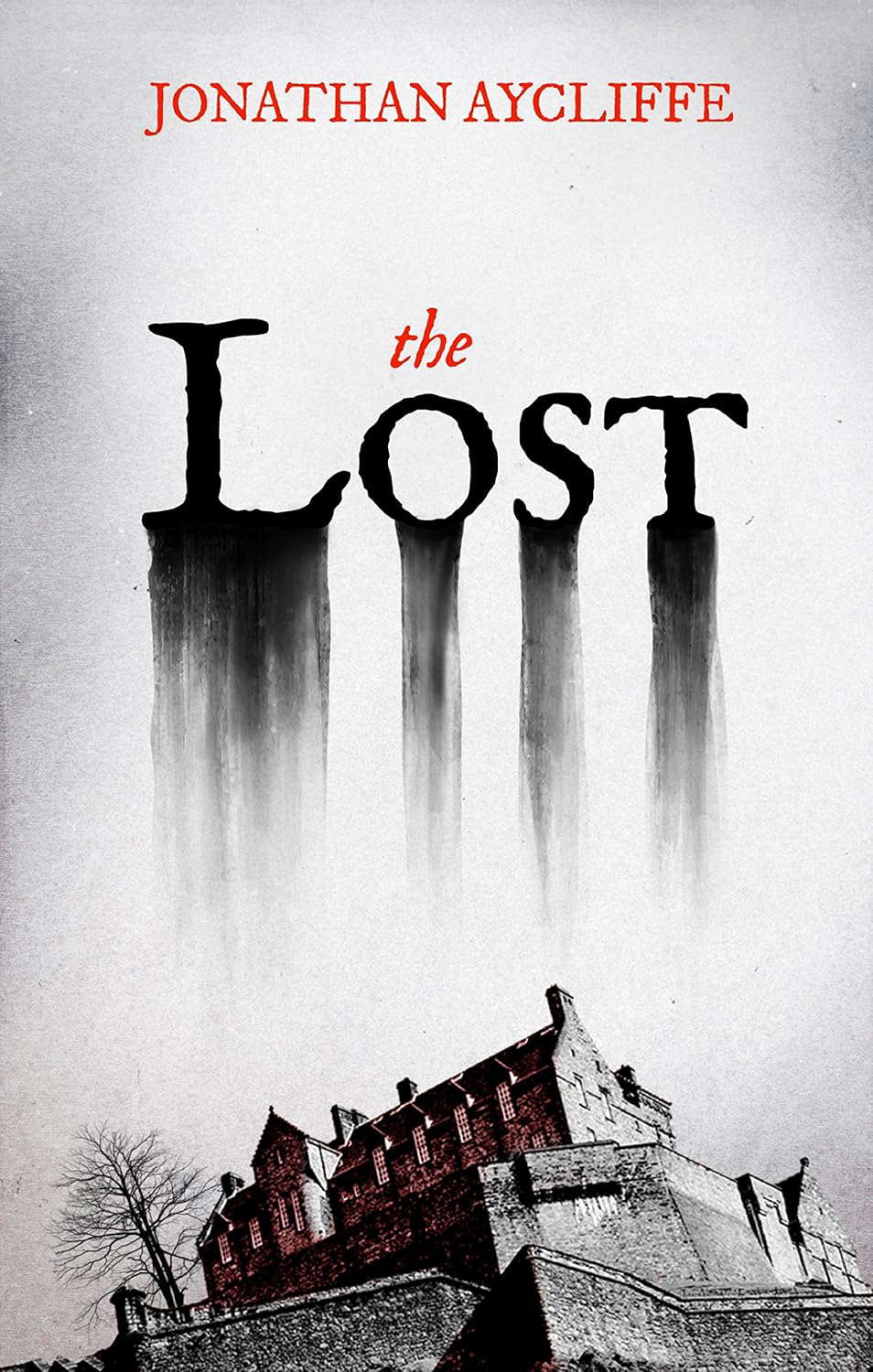
British born Michael Feraru, scion of a long line of Romanian aristocrats, leaves his country of birth and his love, to reclaim his heritage - a Draculian castle deep in the heart of Transylvania. He plans to turn his inheritance into an orphanage in the new post-Ceausescu, post-communist country. There he enlists the help of a young local lawyer, Liliana Popescu, to search for the missing Feraru millions, and battle through the complex maze of old bureaucracy in the scam-rich, newly-born state.Feraru describes his journey into the heart of the Romanian countryside, wasted by years of neglect and caught in a time-warp, as though the twentieth century had never reached it. When he eventually arrives at his inheritance, he finds the castle of the Ferarus, in a sunless valley in the Carpathian Mountains, is home to much more than memories...Aycliffe conjures a feeling of dread that deepens with each unsettling incident.'TIME OUT'Aycliffe has a fine touch.'INDEPENDENT'Should ultimately be ranked among the greats.'INTERZONE'There are echoes of the great ghost writer of them all, Edgar Allan Poe, in the poised and elegant bookishness of the prose.'SCOTSMAN'Sends chills down the spine. Read him and you'll never forget him.'YORKSHIRE GAZETTE
Jonathan Aycliffe draws on the first part of Bram Stoker's Dracula for the bones of his story--a naive Englishman travels to a remote, forbidding castle in the mountains of Transylvania (postcommunist Romania)--and then fleshes it out with appealing characters and a different (but unabashedly gothic) plot. Aycliffe's writing is simple and fluid, concisely developing the shifting emotions and relationships as the dark underbelly of the story slowly reveals itself. The evil beings in The Lost are not vampires, but strigoï--free-floating shades of an ancient family of lords. They die and yet don't decay. Their appetites are even more unspeakable than bloodsucking. As Gahan Wilson writes in Realms of Fantasy, "If you enjoy this sort of thing at all, you will have a fine, frightening time as Aycliffe hints at and then delivers nasty surprises, ghastly revelations, and increasingly appalling villainies."
When the protagonist of this potent gothic horror tale describes its unnerving revelations as "images out of nightmare, shuffled and presented to our gaze like slides on a flickering screen," he could just as easily be referring to the epistolary narrative that Aycliffe (The Matrix) uses to give his literary nightmare the discomfiting feel of reality. Michael Feraru's ill-fated trip to Romania to reclaim Castel Vlaicu, the legend-haunted estate his family abandoned after fleeing to England at the end of WWII, unfolds through linked journal extracts, letters and press clippings that grow increasingly ominous the closer he comes to achieving his objective. On the surface, they relate Michael's painstaking excavation of his family's buried history, which is tainted with hints of vampirism and ghoulish atrocities well known to the locals. At a deeper level, they capture Michael's subtle transformation from naif to nascent monster, as the hereditary curse he unwittingly reactivates perverts his ambition to turn the castle into an orphanage and insidiously works its effect through him on loved ones back home. Aycliffe channels with finesse the undercurrent of terrible fear that runs through the novel, orchestrating Michael's investigations into the forbidden past and his travels through the bleak Romanian wilderness into a single irreversible descent into the heart of darkness. Copyright 1996 Reed Business Information, Inc.
In his hardcover debut, pseudonymous Cambridge professor Aycliffe (Night of the Apocalypse, 1995, etc., as Daniel Easterman) handily upgrades the vampire novel through fine writing and realism. While echoing the diaries and letters of Stoker's original, Aycliffe shores up fantasy with detail built richly from daily life. He begins with a tremendously attractive sense of humor and appealing characters--though humor fades as the creepy crawlies take over. A prep-school teacher in Cambridge, Michael Feraru, inherits Castle Vliacu, his family's fortress in the Transylvanian Alps and hopes to turn it into an orphanage for Romanian children. Delightful letters pass between Michael and his love, Sophie Wandless, back in Cambridge, as he describes his travels through Eastern Europe, his frustrating encounters with bureaucrats, and the gloomy life in today's Bucharest. Meanwhile, he hires a research assistant, Liliana, to help him establish his bona fides as the owner of Castle Vliacu. Materialistic Liliana and her secret boyfriend, however, hope to lead him into opening not an orphanage but rather a hotel at the castle, a business likely to reap great financial rewards. A grinding winter journey to the castle takes Michael and Liliana through villages where many peasants seem never to have seen a car. When their own breaks down, the two nearly die of exposure while plowing about a frigid countryside shadowed by wolves. After arriving at the castle on its beetling mountaintop, they find only an elderly blind woman and her son, who haven't left the site in 50 years. A fine library reveals much about the darkness underlying Michael's ancestors--and himself. At the time, sex blooms between Michael and Liliana, whisperings abound in empty rooms, and a ghost roams the corridors. Pale white wolves that are not wolves but strigoi, or the undead, pace the hills. And what will Michael find in the locked room in the cellar? Brevity breeds tight storytelling, with a final muted twist that proves just enough. -- Copyright ©1996, Kirkus Associates, LP. All rights reserved.
Find it on
AmazonNo videos available yet.
No news articles linked to this title yet.

Overall
Overall rating of the media
Atmosphere
How immersive and tense is the atmosphere
Gore
Level and quality of gore/violence
Story
Quality of the storyline and plot
Writing
Quality of the written content
Character Development
Depth and growth of characters
Pacing
Flow and timing of the narrative