BOOK
0
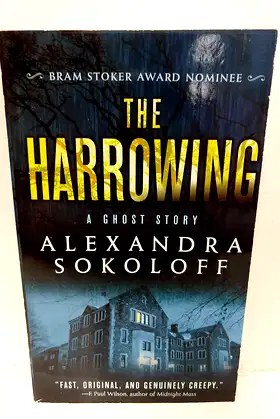
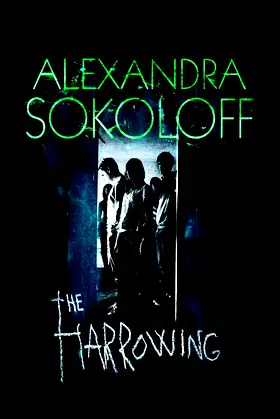
Baird College's Mendenhall echoes with the footsteps of the last home-bound students heading off for Thanksgiving break, and Robin Stone swears she can feel the creepy, hundred-year-old residence hall breathe a sigh of relief for its long-awaited solitude. Or perhaps it's only gathering itself for the coming weekend. As a massive storm dumps rain on the isolated campus, four other lonely students reveal themselves: Patrick, a handsome jock; Lisa, a manipulative tease; Cain, a brooding musician; and finally Martin, a scholarly eccentric. Each has forsaken a long weekend at home for their own secret reasons. The five unlikely companions establish a tentative rapport, but they soon become aware of a sixth presence disturbing the ominous silence that pervades the building. Are they the victims of a simple college prank taken way too far, or is the unusual energy evidence of something genuine---and intent on using the five students for its own terrifying ends? It's only Thursday afternoon, and they have three long days and dark nights before the rest of the world returns to find out what's become of them. But for now it's just the darkness keeping company with five students nobody wants and no one will miss.
At the start of screenwriter Sokoloff's first novel, a teen terror flick in prose, generic Baird College is emptying out for Thanksgiving break, but a few stalwart students have decided to stay on campus to avoid going home to their dysfunctional families. One night, under the influence of booze and drugs, they whip out a ouija board and inadvertently summon what they believe is the spirit of a student who died there decades before. In truth, it's something nastier, and the quintet spend the rest of the story desperately trying to send back to the void an evil entity that won't go gently. The characters, who include the mousy good girl and the nerd whose scholarly skepticism grows increasingly grating with each repeat expression, develop little personality outside of their carefully crafted types. The pyrotechnic climax, in which the kids prove unusually adept at occult subterfuge, stretches credibility but provides a suitably cinematic finale. (Sept.) Copyright © Reed Business Information, a division of Reed Elsevier Inc. All rights reserved.
Grade 10 Up–Robin, an outcast college student, has problems connecting with others because of her dark past. When she stays at school over the Thanksgiving holiday, she believes that she is alone in the gothic castle of a dormitory. However, four other students are also there. The first evening, they find themselves in a lounge together, and, after drinking and smoking pot, they discover a Ouija board. When Robin and another girl use it, they connect with a spirit who calls himself Zachary, a student who died in a fire in the dorm years before. But the five students have actually contacted something far more sinister and dangerous than a ghost. Soon the question becomes whether any of them will survive the encounter. The book reads like the script of a low-budget horror movie, and the characters never rise above stereotypes. Additionally, the story is undermined by the rushed ending. Skip this derivative work in favor of more original titles.–Tasha Saecker, Menasha Public Library, WI Copyright © Reed Business Information, a division of Reed Elsevier Inc. All rights reserved.
What better thing could strangers isolated in a big, near-deserted building while a raging storm takes out the electricity and compels the use of flickering candles possibly discover than an ancient, charred Ouija board? The previously unacquainted in question are five students sitting out Thanksgiving weekend in a 100-year-old residence hall. And that Ouija board turns wicked, of course, when it manifests a ghost named Zachary, who turns the place into a chaotic battleground for the forces of evil versus cosmic goodness and light. What seemed a sick joke one of the five was playing on the others has morphed into a situation in which no one can be trusted. Sokoloff sustains pace and suspense while encouraging the reader to identify with Robin, a young woman from a poor, alcohol-ravaged family, who yearns for acceptance. Will she get it from the all-American jock she lusts for; the slutty tease; the quiet, intellectual rabbi's son; and the brooding musician who are her companions for this scary ordeal? Good, engrossing fun. Whitney ScottCopyright © American Library Association. All rights reserved
Baird College's Mendenhall echoes with the footsteps of the last home-bound students heading off for Thanksgiving break, and Robin Stone swears she can feel the creepy, hundred-year-old residence hall breathe a sigh of relief for its long-awaited solitude. Or perhaps it's only gathering itself for the coming weekend. As a massive storm dumps rain on the isolated campus, four other lonely students reveal themselves: Patrick, a handsome jock; Lisa, a manipulative tease; Cain, a brooding musician; and finally Martin, a scholarly eccentric. Each has forsaken a long weekend at home for their own secret reasons. The five unlikely companions establish a tentative rapport, but they soon become aware of a sixth presence disturbing the ominous silence that pervades the building. Are they the victims of a simple college prank taken way too far, or is the unusual energy evidence of something genuine---and intent on using the five students for its own terrifying ends? It's only Thursday afternoon, and they have three long days and dark nights before the rest of the world returns to find out what's become of them. But for now it's just the darkness keeping company with five students nobody wants and no one will miss.
Chapter One It had been raining since possibly the beginning of time. In the top tier of the cavernous psychology hall, Robin Stone had long since given up on the lecture. She sat hunched in her seat, staring out arched windows at the downpour, feeling dreamily disconnected from the elemental violence outside, despite the fact that every few minutes the wind shook the building hard enough to rattle the glass of the windowpanes. In milder weather, Baird College was the very definition of pastoral. Wooded paths meandered between ivy-swathed stone buildings. Grassy hills rolled into the distance, dotted by trees . . . all unmarred by the slightest sight of civilization. But now the old oaks lashed in the wind under roiling dark clouds that spilled icy rain on the deserted quad. In the bleak light of the storm, the isolation seemed ominous, the campus hunkered down under the pelting rain like a medieval town waiting for the siege. The cold of the day had sunk into Robin's bones. The wind outside was a droning in her ears, like the hollow rush of the sea. Inside, Professor Lister's soft German accent was soporific, strangely hypnotic, as he quoted Freud from the wood-planked dais far below. "'The state of sleep involves a turning away from the real, external world, and there we have the necessary condition for the development of a psychosis. The harmless dream psychosis is the result of that withdrawal from the external world which is consciously willed and only temporary. . . .'" Robin's moody reflection stared back at her from the window: dark-eyed, somewhat untidy, elfin features framed by a tumble of nearly black hair. All in all, a chance of prettiness if she weren't so withdrawn, guarded. She pulled herself away from the glassy ghost of herself, blinked around her at a sea of students moored behind tiers of wooden desks. People were shifting restlessly, looking up at the clock above the blackboard. A little before three, Wednesday. Tomorrow was Thanksgiving, and everyone was impatient, eager to escape for the holiday. Everyone except Robin. The four-day weekend loomed before her like an abyss. Thanksgiving, right. Thanks for what? At least there would be no roommate. She sat with the thought of no Waverly for four days, and felt a spark of something--not pleasure, nothing so life-affirming as that, but a slight relief, a loosening of the concrete band that lately seemed to permanently encircle her chest. No mindless, venal chatter. No judging cornflower blue eyes. And no one else, either, Robin reminded herself. No one at all. The anxiety settled in again, a chill of unnamed worry. Four days in creepy old Mendenhall . . . completely alone . . . The professor's soft voice whispered in the back of her head. "'In psychosis, the turning away from reality is brought about either by the unconscious repressed becoming excessively strong, so that it overwhelms the conscious, or because reality has become so intolerably distressing that the threatened ego throws itself into the arms of the unconscious instinctual forces in a desperate revolt. . . .'" Robin glanced down at the professor, startled at the confluence of thought. She wrote slowly, "Reality has become so intolerably distressing. . . ." She stopped and quickly scribbled over the words, blackening them out. Somewhere close, another pen scratched furiously across paper. Robin glanced toward the sound. Across the aisle from her, a slight, intense, bespectacled young man was hunched in his seat, scribbling notes as if his life depended on it. A mini-tape recorder on the desk in front of him recorded the lecture as well, in the unlikely event that he missed something. Robin had seen him a few times around the dorm: pale skin and hollow circles under his eyes behind his glasses, shoulders hunched under the weight of an overstuffed backpack, always scurrying to or from class, as scattered and distracted as the White Rabbit. He looked younger than the other students, and older, too. Probably skipped a grade or two and rushed into college early, full throttle, driven by parents or some inner demon of his own. Robin knew something about that. She studied him, feeling relief in concentrating her attention on something outside herself. There was a coldness about him, an ancient guardedness that she recognized as unhappiness. His face always set and unsmiling, if possible, more tense and miserable than Robin herself. Yet there was something luminous about him, as well--almost holy, something like a monk in his ascetic intensity. She thought these things with detachment, as if from a great distance, merely observing. It did not occur to her to speak to him, or smile, or communicate in any way. It did not seem to her that they were on the same dimensional plane; she watched him through glass, as she watched the storm. So she was caught completely off guard when the young man turned and looked her straight in her eyes. She stared back, startled. The young man immediately blushed behind his glasses and quickly dropped his gaze to his yellow pad. Robin sat, flustered. The bells in the clock tower above the main plaza outside struck once, sounding the three-quarter hour. A hollow sound, reverberating over the campus. On the podium below, the white-haired professor paused, listening to the bell. The chime died, and he turned back to the class. "But while Freud contended that the forces that drive us come from within us, our own unconscious, his disciple and colleague Jung believed there was a universal unconscious around us, populated by ancient forces that exist apart from us, yet interact with and act upon us." He paused, looked around at the class. "So who was right? Do our demons come from without, or within us?" He half-smiled, then closed his binder. "And on that cheery note, we'll end early, since I know you're all eager to get away." The class collectively surged to its feet, reaching for coats and notebooks and backpacks in an orgy of release. The professor raised his voice over the tide. "I'll need all of you to discuss your term paper topics with me next week, so please make appointments by E-mail. Have a good Thanksgiving." Robin closed her notebook and stood, feeling as if she were rising through water, but only partway. The surface seemed far above her. She came through the double wooden doors of the psych building on a moving sea of students. The cold slapped her out of her sleepy daze and she halted on the wide marble steps of the building, blinking out over the quad. Raindrops splashed on her face, ran down into the collar of her shapeless wool coat. In the distance, the clock tower chimed the hour, three reverberating bongs. A sound of release--and doom. So now it begins, Robin thought . . . and had no idea what she meant. Students jostled her from behind, pushing her along down the steps. She fumbled in her backpack for her umbrella, forced it up above her head, and joined the streams of students surging through the uneven stone plaza. She looked at no one, spoke to no one. No one looked at her. She could have been a ghost. In the two months she'd been at Baird, she'd made exactly zero friends. It wasn't that she was a monster. With her fine pale features and thick dark hair, she had a darkling, changeling quality, intriguing, almost elemental. No, she wasn't hideous; it was just that she was invisible. She'd been in a fog of darkness for so long, it seemed to have dissolved her corporeal being. She walked on, blankly. Rain wept down the Gothic arches and neoclassic columns of the buildings around her, whispered through the canopies of oak. Someone else, someone normal, would have felt a moody pleasure in the agelessness of it. Any kind of adventure could be waiting over a stone bridge, under an ancient archway. . . . By all rights, she should have been wild with joy just to be there. With a--let's face it--lunatic mother who in her best, properly medicated periods was barely able to hold on to temp work, Robin would never have been able to afford a school like Baird. Even with her grades, the AP classes she'd loaded up on, hoping against hope that the extra credits would get her a scholarship and out . . . The scholarship hadn't come, but the miracle had. Her father, known to her only as a signature on a monthly child-support check, had come through with a college fund--full tuition at his alma mater. A few strings pulled, a favor called in from a college pal on the board, and Robin was in, free, saved. It had nothing to do with love, of course. Robin knew the money was guilty penance for abandoning his defective daughter to her defective mother. Who wouldn't have fled long ago . . . only I couldn't, Daddy, could I? He had a new family now--perfect golden wife, two perfect golden children. A voice in her head rose up, taunting her. He threw you away. Cast off. Cast out. You're nothing. Nothing-- She gasped in, for a moment almost choking on her own volcanic anger. Then she pushed it back down into the dark. When his letter came, her mother had raged and cried for days. Robin ignored the hysterics, coldly cashed the check, and packed her bags. Take his guilt money and get the hell out, fuck you very much. But get out to where? The school was fine--she was the one who was all wrong. There was some fatal heaviness about her, a yawning black hole in the center of her that repelled people. They could see her darkness, her bitter, bitter envy of the light. She'd escaped Mom but was stil...
Find it on
AmazonNo videos available yet.
No news articles linked to this title yet.

Overall
Overall rating of the media
Atmosphere
How immersive and tense is the atmosphere
Gore
Level and quality of gore/violence
Story
Quality of the storyline and plot
Writing
Quality of the written content
Character Development
Depth and growth of characters
Pacing
Flow and timing of the narrative