

BOOK
0
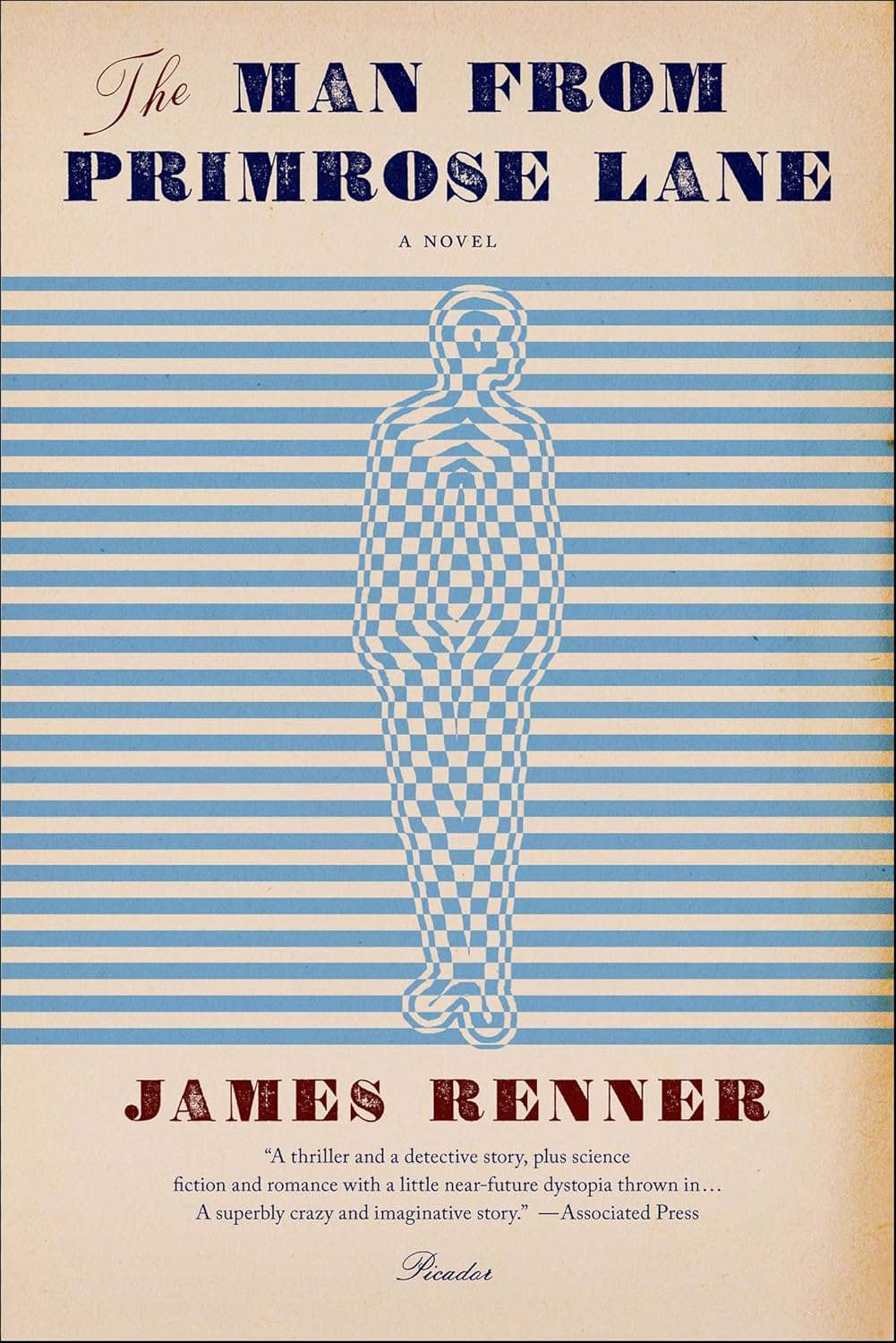
The acclaimed journalist’s genre-bending debut novel: “Fascinating and unpredictable, with shades of Stephen King and H.P. Lovecraft” (Guardian, UK).In West Akron, Ohio, there lived a reclusive elderly man who always wore mittens, even in July. He had no friends and no family; all over town, he was known as the Man from Primrose Lane. And on a summer day, someone murdered him.Fast-forward four years. David Neff, the bestselling author of a true-crime book about an Ohio serial killer, is a broken man after his wife’s inexplicable suicide. When an unexpected visit from an old friend introduces him to the strange mystery of “the man with a thousand mittens,” David decides to investigate. What he finds draws him back into a world he thought he had left behind forever. And the closer David gets to uncovering the true identity of the Man from Primrose Lane, the more he understands the dangerous power of his own obsessions.Deviously plotted and full of dark wit, James Renner’s The Man from Primrose Lane is an audacious debut that boasts as many twists as a roller coaster. But beneath its turns, it’s a spellbinding story about our obsessions: the dangerous sway they have over us and the fates of those we love.
“A thriller and a detective story, plus science fiction and romance with a little near-future dystopia thrown in…A superbly crazy and imaginative story.”
“Well written…Ambitious and innovative…If you like your fiction tidy and predictable, look elsewhere.”
“Fascinating and unpredictable, with shades of Stephen King and HP Lovecraft as well as Douglas Adams, [The Man from Primrose Lane] never loses touch with the human story of loss, guilt and fate that is at its core.”
“The Man from Primrose Lane barrels along, fueled by Renner's addictive storytelling….It's quite the interesting ride.”
“A well-told story filled with darkness, horror, humor, and surprising tenderness. And that's just the first part. There is a moment in this novel when the story moves in a way so unexpected I actually had to put it down and catch my breath. Go ahead, see what I mean. I'll wait here for you.”
“Features superbly drawn characters and escalates into a genre-bending narrative (noir, sci-fi, and more) of thrills and twists. A great choice for readers who enjoyed Tana French's In the Woods or any work by Philip K. Dick.”
“Brilliantly intricate… [with] a fantastic finish [and] compelling, interesting characters… I couldn't put The Man From Primrose Lane down.”
EPISODE ONETHE WORLD ACCORDING TO DAVID NEFF David Neff missed a lot of things about his wife, but the thing he missed the most was the way she used to sit on couches, leaning against one giant pillow, her knees tucked up against her chest, her legs trailing behind her as she watched a Lifetime movie or some ridiculous reality show. He pointed out to her once, before she died, that no man ever sits on a couch like that, that it was a uniquely feminine trait. It was a little thing that delighted him. He loved the carefree way she moved her feet to the rhythm of the lights on the screen. When he finally went through her things two months after she was in the ground, he’d found a photograph of her as a child, curled up on her parents’ sofa in the exact manner he remembered. He’d stuck the photo to the refrigerator. It was still there, next to the over-outlined caricature drawings of their four-year-old boy.Like most Thursday afternoons, David was on the living room floor, in front of the couch—her couch—with a bowl of SpaghettiOs in his lap, a bag of Kettle Chips to his right, watching an episode of SpongeBob SquarePants he’d seen five times, but TiVo’d anyway. The boy, Tanner, napped upstairs.David was a once-handsome man who had grown pudgy around the edges. His dark hair hung too long above his eyes, a bit too gray for thirty-four. Three-day-old stubble shaded his double chin. A dollop of dried ketchup was smeared across the front of his shirt, evidence of the barely won battle that had been Tanner’s lunch.The room around David appeared to be the remnants of a livable space that had been torn apart by some sort of laundry- and toy-filled IED. Every other week, Tanner’s great-aunt came by and picked the boy’s clothes off the mantel, lamps, and ceiling fan, laundered them, and returned them, folded, to the boy’s bedroom dresser. She collected the broken robots into dustbins, sorted stuffed frogs and Legos into their assorted tubs, and replaced the batteries in the boy’s plastic-ball shooter and tiny grand piano. It only took them two days to get the room out of order again. David didn’t mind the mess. And neither did Tanner.Because his wife’s death had been ruled a suicide, her insurance had not paid out and David had not been able to work a single day since. But he and the boy didn’t need the money. Royalties from David’s first book—The Serial Killer’s Protégé—had climbed to the seven-figure mark a couple years ago and sales remained strong, thanks, in part, to a Rolling Stone article that had forever labeled him as “the best true crime writer since Truman Capote.” David no longer kept track of how much he had in the bank, but he knew it was more than he’d ever imagined making in his life.After his wife’s death and until just a moment from right now, David had resigned himself to the fact that The Serial Killer’s Protégé would also be his only book, and that that was okay, because Tanner was alive and he could live out the remainder of his days keeping his boy safe and comfortable and happy.But then there was a knock at the front door.David wasn’t expecting company. Tanner’s aunt wasn’t due for a few days. He assumed it was a neighborhood kid pushing school band–sale candy, so he ignored it. But then the knock came again, too loud to be anything but an adult.He walked to the door and peered through the porthole. There was a man on his doorstep. A thin man with wire-rim glasses and a ring of hair circling a bald dome.Paul.David winced. He didn’t want to see Paul. He didn’t want to talk to Paul. It was Paul’s fault that he wasn’t able to grieve the way he sometimes felt he deserved—in a penniless gutter with other heartbroken souls.Paul Sheppard was his publisher, the man who had read David’s proposal for a book based on notes left behind by convicted killer Ronil Brune and recognized a modicum of talent. Before The Serial Killer’s Protégé, Paul had been an exclusively local publisher, the sort that shipped glossy copies of Cleveland Steelworker Memories and Cleveland’s Haunted History to local indie bookstores. Today, he kept an office in Manhattan.Reluctantly, David opened the door.“He’s alive!” Paul shouted, raising his arms in the air like Dr. Frankenstein.“Shhhh! You’ll wake the kid,” he said. He motioned for Paul to come in.“Sorry.” Stepping into the main room, Paul shook his head and whistled. “I saw this documentary on Discovery the other day,” he said. “It was about this woman who lives in Manhattan and she’s this ridiculous pack rat and never throws anything away. She had this path carved out in clutter she could use to get to the bathroom and kitchen.”“Yeah?” prodded David.“You’re like this far away from becoming that woman,” he said. “Her family had her committed, you know.”“Thank God you’re not my family, Paul,” he said, smiling a little. “Don’t sit on that!” He jumped to the recliner over which Paul was squatting and batted away yesterday’s Beacon Journal. Underneath was a plastic dish that had once held a microwavable Salisbury steak dinner. David tossed it to the far corner of the room, where it landed next to a wastebasket. “I wasn’t expecting company.”“I left you twenty messages. The only reason I knew you weren’t dead is you keep depositing my checks.”Paul sat on the chair as David collapsed on the sofa, sending a mostly empty biggie-sized soda tumbling to the floor. “It is nice to see you,” David said sincerely. “How’s biz?”“You know,” said Paul, making a seesaw gesture. “Protégé is still selling. I think half the universities in the country are teaching it in their journalism programs, so that helps it move every semester. I just signed this new up-and-comer from Pittsburgh, whose manuscript knocks me out.”“It’s not a memoir, is it? Tell me it’s not another memoir.”“In fact, it is a memoir. It’s about an alcoholic steel smelter who went to prison for grand theft and, when he got out, cleaned himself up by slowly constructing a jet-powered semi truck in his garage. It wouldn’t kill you to blurb it.”“Is that why you came over?”“Of course not,” said Paul, a thin smile playing at one corner of his mouth. From his sports jacket pocket, the publisher pulled a bound galley of a book. He tossed it to David, who snatched it out of the air one-handed.On the front was a grainy black-and-white picture of a grassy hill soaked in summer heat. Atop the hill sat a 1970s-era police cruiser, its driver’s-side door ajar. Behind the car stretched a row of old-growth pine trees, gnarled branches like arthritic hands. David knew this photograph. He’d discovered it, in fact, tucked into a box labeled MISCELLANEOUS in the Press archives at Cleveland State. It was a picture of a crime scene, an artifact of one of the many unsolved cases he’d written about before he’d become completely obsessed with Ronil Brune. The title of the book was The Lesser Mysteries of Greater Cleveland. At the bottom was David’s name.“What’s this?” he asked.“Your next book,” said Paul. “That’s just a mock-up, but I wanted you to see it, to feel the weight of it in your hands. It’s a good cover, no?”“It’s a great cover, Paul,” he said. “Only problem is, I didn’t write this.”“You did. It’s twelve of your best true crime articles from your Independent days, Beverly Jarosz, Sam Sheppard, Lisa Pruett. I cleaned up the language and moved things around a bit here and there—don’t look at me like that, you were still learning dramatic narrative structure back then—and I put them all together into this little trade paperback. Something for next summer’s beach crowd, I’m thinking. Something to tide everyone over until the next David Neff book.”“I don’t need the money.”“I don’t, either.”“Then why?”Paul glanced around the room, then back at David. “I think you need something to remind you why you were ever a writer in the first place,” said Paul. “A little New England collegiate lecture tour? Some free publicity in the trades? Groupies?”“True crime groupies are mostly middle-aged women who look like my high school home-ec teacher,” said David. “Nobody wants to buy a bunch of old stories. Anyone who wanted to read them has read them online already.”“Ah,” said Paul, raising a finger. “They’re not all reprints. Check out the table of contents.”“‘The Curious Case of the Man from Primrose Lane?’”“Your next project,” said Paul. “It’s the next mystery you’re going to investigate, the new piece we’ll use to market the book.”“The Man from Primrose Lane? Never heard of him. Who is he?”“Geez, David. Don’t you read the paper anymore?” Paul regarded his friend silently for a moment, studying his features, perhaps to discern if there was any trace of the old David Neff in there someplace. “You used to be the eternal optimist,” he said. “You thought you could solve all of these mysteries, remember?”“How’d that work out?”“Are you fucking blind? Look around you. What paid for this house? These toys? The Volkswagen in the g...
Find it on
AmazonNo videos available yet.
No news articles linked to this title yet.

Overall
Overall rating of the media
Atmosphere
How immersive and tense is the atmosphere
Gore
Level and quality of gore/violence
Story
Quality of the storyline and plot
Writing
Quality of the written content
Character Development
Depth and growth of characters
Pacing
Flow and timing of the narrative