BOOK
0
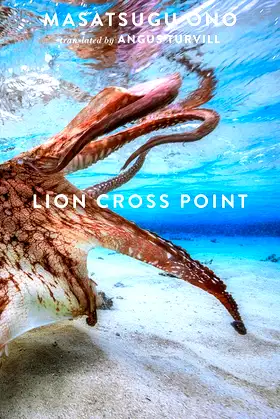
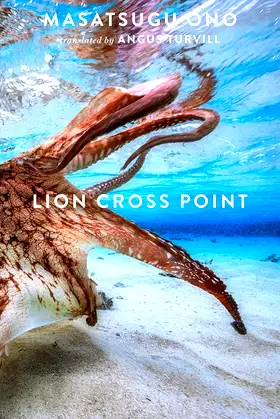
By the winner of the Akutagawa Prize, Japan's most prestigious literary awardHow does a shy, traumatized boy overcome the shame, anger, and sadness that silence him? In Lion Cross Point, celebrated Japanese author Masatsugu Ono turns his gentle pen to the mind of ten-year-old Takeru, who arrives at his family’s home village amid a scorching summer, carrying memories of unspeakable acts against his mother and brother. As Takeru befriends Mitsuko, his new caretaker, and Saki, his spunky neighbor, he meets more of his mother’s old friends, discovering her history and inching toward a new idea of family and home. All the while he begins to see a strange figure called Bunji—the same name as a delicate young boy who mysteriously vanished long ago on the village’s breathtaking coastline at Lion Cross Point. At once a subtle portrayal of a child’s sense of memory and community, an empowering exploration of how we find the words to encompass our trauma, and a spooky Japanese ghost story, Lion Cross Point is gripping and poignant, reminiscent of Kenzaburō Ōe’s best work. Acts of heartless brutality mix with surprising moments of pure kindness, creating this utterly truthful, cathartic tale of an unforgettable young boy.
". . .Ono, who won the Akutagawa Prize, Japan’s most prestigious award for emerging fiction writers, is so skilled at conveying emotion that Takeru and his world are mesmerizing, and often heart-rending."
“It’s the shifting relationship between Takeru’s shameful memories of what transpired and his gradual adjustment to the kindhearted people and landscapes of his mysterious new surroundings that makes the novel both unsettling and quietly moving.”
“Ono’s heartrending portrayal of how memory untangles after tragedy smooths the way for Takeru’s growing resilience.”
"Masatsugu Ono’s Lion Cross Point pulls off a number of narrative elements that I admire in fiction. . . . A moving and (literally) haunting novel."
"This is a book of the first order. A haunting mystery, it is about parents and children, about war and peace. Surely this book means that Masatsugu Ono belongs in the first ranks of not just Japanese literature but world literature."
“A mesmeric fusion of fable, ghost story and haunting depiction of family trauma. . . . It’s the shifting relationship between Takeru’s shameful memories of what transpired and his gradual adjustment to the kindhearted people and landscapes of his mysterious new surroundings that makes the novel both unsettling and quietly moving.”
"Lion Cross Point is a MASTERPIECE. Just finished it. It is too beautiful; hard to imagine that much depth of emotion is possible in 120 pages."
"Ono uses minimalist language and metaphor to create a gentle yet powerful rendering of the inner turmoil of a boy struggling to comprehend acts of kindness and violence."
"Masatsugu Ono’s lucid, spare novel explores the question: What is finally more mysterious than family? It is not the unraveling of a mystery, but the tangible evocation of mystery itself as it rises from anecdotes and intuitions, from the layering of the innuendos of memory with the overtones and undertones of dream and seascape, that distinguishes this hauntingly written and beautifully translated book."
"Masatsugu Ono’s work vibrates with the sounds of voices whose meaning has yet to be discovered. In Lion Cross Point, even those who have been deprived of their voice find their place among us."
"Masatsugu Ono, one of the most important Japanese novelists of the post-Murakami generation, has created a lyrical, psychologically astute novel that will only whet international appetites for more of his work."
How does a shy, traumatized boy overcome the shame, anger, and sadness that silence him? In Lion Cross Point, celebrated Japanese author Masatsugu Ono turns his gentle pen to the mind of ten-year-old Takeru, who arrives at his family’s home village amid a scorching summer, carrying memories of unspeakable acts against his mother and brother. As Takeru befriends Mitsuko, his new caretaker, and Saki, his spunky neighbor, he meets more of his mother’s old friends, discovering her history and inching toward a new idea of family and home. All the while he begins to see a strange figure called Bunji—the same name as a delicate young boy who mysteriously vanished long ago on the village’s breathtaking coastline at Lion Cross Point. At once a subtle portrayal of a child’s sense of memory and community, an empowering exploration of how we find the words to encompass our trauma, and a spooky Japanese ghost story, Lion Cross Point is gripping and poignant, reminiscent of Kenzaburō Ōe’s best work. Acts of heartless brutality mix with surprising moments of pure kindness, creating this utterly truthful, cathartic tale of an unforgettable young boy.
from Lion Cross Point by Masatsugu Ono, translated by Angus TurvillTakeru looked at the tree again. Bunji wasn’t there anymore. But he could see him plodding along the narrow concrete road between the fields that led north to the seawall. He was bent forward, as though carrying something heavy on his back. Against his small thin body Bunji’s hands looked strangely large, dangling weakly by his thighs. Beyond him were hills. A hill to the west, one of the two that formed the bay, was beginning to cast a purple shadow over the village, a sign that night was not far off. A half-transparent moon hung in the sky. From time to time there was the noise of a vehicle on the bay road, which had been straightened during the coastal protection program. The cicadas were as loud as ever. The cries of black hawks fell from the sky like quoits, hoops of sound thrown down toward trees and telephone poles. The hawks themselves, descending more swiftly than their cries, settled here and there on the poles, folded their scruffy wings, and stared fixedly toward something more distant than tomorrow.Takeru thought of Bunji’s eyes and wondered if they could see this scenery. Tottering along the road Bunji looked spurned by the world outside himself, by this land. But from what Mitsuko had said, Bunji had died without ever leaving, without ever going beyond the boundaries of the green hills and dark blue sea. So, how could it be that there was no place for him here, where he’d been born and lived his whole life? His eyes looked as though they couldn’t see what was in front of him, as if―though no one else was there to see it either―the scene hid itself from him, refused to let him see it. So his vision couldn’t expand outward, and had no alternative but to go inward. But what was there inside? Any memories that might rise up from the dark depths inside him would be memories of this land between the green hills and dark blue sea, this land that was now sinking into the depths of night. There was nothing else inside him but the very scenery that so stubbornly refused to accept him. Even if he’d tried to remember any other landscape he wouldn’t have been able to―there was nowhere else he knew. And he couldn’t have created fake memories for himself. Mitsuko said he hadn’t been bright, hadn’t gone to school. If you’ve got nowhere to go in reality, then at least you’d want your mind to take you somewhere. But if you don’t understand what people say, if you can’t read or write, how could you imagine another world? Rejected both from within and without, where was Bunji trying to go? Was he unable to go anywhere, and thus had no choice but to remain here? The expression of Bunji’s eye was stuck fast in the surface of its lens. Clear but at the same time blurred. It was just the same as…whom? Takeru must have known from the start. But he would only realize later that every time a word for that person, or an image of them, came into his mind, he tried to get rid of it immediately, as though crumpling up a yellowing scrap of paper on which it had appeared. Takeru seemed to have been given the task of seeing Bunji, even when everyone else’s sight rejected him. Who or what had imposed this duty on him? This place, of course. There was no other possibility. In which case, the place was not necessarily ignoring Bunji, not necessarily rejecting him entirely. Didn’t that make sense? If Takeru could see Bunji so clearly, that meant that the landscape―everything alive and dead from which the landscape was formed―was, to at least a very small degree, yielding to Bunji, yielded something of the outline and density of existence, and so was preventing, if only just, his complete disappearance. Doesn’t that make sense? Yes. It’s a reasonable idea. Bunji faded into the dusk, and then Takeru saw his brother in the darkness instead, asleep on his stomach, his face flat against the tatami mat. The top half of his body was naked, and an ant was crawling up his thin arm. Before any other ants could appear, Takeru opened his eyes. It was only then that he realized they’d been closed.
Find it on
AmazonNo videos available yet.
No news articles linked to this title yet.

Overall
Overall rating of the media
Atmosphere
How immersive and tense is the atmosphere
Gore
Level and quality of gore/violence
Story
Quality of the storyline and plot
Writing
Quality of the written content
Character Development
Depth and growth of characters
Pacing
Flow and timing of the narrative