

BOOK
0
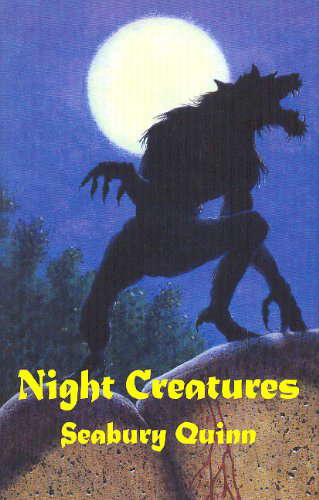
The name of Seabury Quinn is inextricably linked with the 'unique magazine', WEIRD TALES, to which he contributed some one hundred and fifty-nine stories, making him that publication's most prolific contributor. His most conspicuous success was the series of tales featuring the occult detective Jules de Grandin, which always left readers clamouring for more. Indeed, de Grandin almost became to Quinn what Sherlock Holmes became to Arthur Conan Doyle: so overwhelmingly popular a creation that he threatened to overshadow completely his author's other successes.However, Seabury Quinn, like Conan Doyle, had a great deal more to offer than a single character. During his lifetime Quinn read widely in the fields of horror, supernatural, and weird fiction, as well as ranging further afield through books devoted to the occult, mysticism, witchcraft, legends, Satanism, and ancient religious customs. He was thus able to imbue his weird fiction with historical and sociological trappings which gave them an immediacy and vibrancy several cuts above the usual pulp offerings; and this, combined with his sheer skill in storytelling, keeps his stories fresh and alive today.The eleven stories gathered together for NIGHT CREATURES—only one of which features Quinn's plucky phantom fighter de Grandin—were all published in WEIRD TALES between 1923 and 1947, and few have been reprinted since. They concern werewolves and witches, vampires and demons, and even a conventional ghost or two; but they are far more than variations on standard themes. Quinn was as concerned with the minds and hearts of his characters as he was with the horrors of their situations; and the result is a collection of stories which is as compassionate and poignant as it is chilling and horrifying.
Find it on
AmazonNo videos available yet.
No news articles linked to this title yet.

Overall
Overall rating of the media
Atmosphere
How immersive and tense is the atmosphere
Gore
Level and quality of gore/violence
Story
Quality of the storyline and plot
Writing
Quality of the written content
Character Development
Depth and growth of characters
Pacing
Flow and timing of the narrative