
BOOK
0
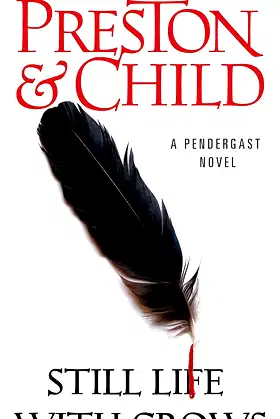
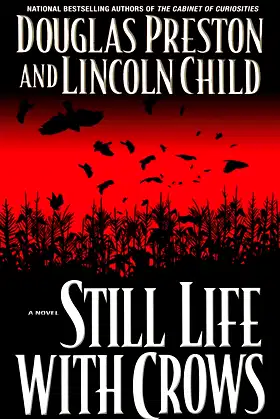
When a series of murders strikes small-town Kansas, FBI Special Agent Pendergast must track down a killer or a curse -- either way, no one is safe. A small Kansas town has turned into a killing ground.Is it a serial killer, a man with the need to destroy?Or is it a darker force, a curse upon the land?Amid golden cornfields, FBI Special Agent Pendergast discovers evil in the blood of America's heartland.No one is safe.
That FBI Special Agent Pendergast, one of the most charismatic thriller heroes in memory, dominates this latest novel from Preston/Child is the good news; that he's working the least interesting case of his literary career (other outings include The Cabinet of Curiosities and Reliquary) is the bad. An unusual serial killer is wreaking havoc in a small corn-growing town in Kansas; he leaves outlandish signatures, such as a mutilated body within a circle of crows on stakes and a ring of broken corn stalks. On his own initiative, Pendergast, no stranger to bizarre murders, shows up to investigate, and the authors make much hay from the contrast between the lean, infinitely refined and impossibly erudite Pendergast, a distinct descendant of Sherlock Holmes, and the down-home milieu he finds himself in. As if to emphasize his ancestry, the authors give Pendergast a Watson here: one Corrie Swanson, a rebellious, pierced and tattooed teenage girl whom he hires as his driver and guide. Further killings occur, which rumor and Pendergast tie to a 19th-century massacre of a band of outlaws by Indians. (As Pendergast explains to Corrie, he arrives at this conclusion through a "form of mental concentration, one of my own devising, which combines the memory palace with elements of Chongg Ran, an ancient Bhutanese form of meditation.") Not surprisingly, the relatively hick local cops don't like Pendergast, nor do the local politicians, who hope their town will be chosen for a lucrative experiment in genetically modified crops. When Corrie is dragged off to the killer's hideaway in a massive cave system, however, cops and Pendergast unite in an extended underground cat-and-mouse chase that will entertain readers despite their likely disappointment at the absurd, even ludicrous, identity of the villain. This may be minor Preston/Child, but it is major Pendergast; those for whom he's the cup of tea will drink deep.Copyright 2003 Reed Business Information, Inc.
The authors of such hits as Relic (1992) and The Cabinet of Curiosities [BKL Je 1 & 15 02] bring back Special Agent Pendergast, the FBI man whose slightly archaic dialogue, unique mode of dress, and seemingly endless array of esoteric facts make him a fascinating lead character. This time out Pendergast is in Medicine Creek, Kansas, a small town that appears to be home to its very own serial killer. The novel begins with a gruesome murder, after which we're introduced to wily Sheriff Dent Hazen, a man who doesn't take kindly to out-of-towners investigating crimes on his turf. Just as we're getting to know Hazen, the pace kicks into high gear, with more bodies and a full-tilt investigation. As usual, Preston and Child deftly mix the real and the surreal, creating an atmosphere in which everything, for reasons we can't quite nail down, seems a tad off-kilter. Call it creeping paranoia, perhaps, or the dreadful certainty that something awful is about to happen. Whatever you call it, it's a recipe for success. David PittCopyright © American Library Association. All rights reserved
Still Life with CrowsBy Douglas J. PrestonWarner AdultCopyright © 2003 Douglas J. PrestonAll right reserved.ISBN: 9781586215279Chapter OneMedicine Creek, Kansas. Early August. Sunset.The great sea of yellow corn stretches from horizon to horizon under an angry sky.When the wind rises the corn stirs and rustles as if alive, and when the wind diesdown again the corn falls silent. The heat wave is now in its third week, and dead airhovers over the corn in shimmering curtains.One road cuts through the corn from north to south; another from east to west.Where the two roads cross lies the town. Sad gray buildings huddle together at theintersection, gradually thinning along both roads into separate houses, thenscattered farms, and then nothing. A creek, edged by scraggly trees, wanders infrom the northwest, loops lazily around the town, and disappears in the southeast. Itis the only curved thing in this landscape of straight lines. To the northeast rises acluster of mounds surrounded by trees.A giant slaughterhouse stands south of the town, lost in the corn, its metal sidesscoured by years of dust storms. The faint odor of blood and disinfectant drifts in aplume southward from the plant, riding the fitful currents of air. Beyond, just overthe horizon, stand three gigantic grain silos, like a tall-masted ship lost at sea.The temperature is exactly one hundred degrees. Heat lightning flickers silentlyalong the distant northern horizon. The corn is seven feet high, the fat cobs clusteredon the stalks. Harvest is two weeks away. One. Twilight is falling over the landscape.The orange sky bleeds away into red. A handful of streetlights blink on in the town. Ablack-and-white police cruiser passes along the main street, heading east into thegreat nothingness of corn, its headlights stabbing into the rising darkness. Somethree miles ahead of the cruiser, a column of slow-circling turkey vultures rides athermal above the corn. They wheel down, then rise up again, circling endlessly,uneasily, rising and falling in a regular cadence.Sheriff Dent Hazen fiddled with the dashboard knobs and cursed at the tepid air thatstreamed from the vents. He felt the vent with the back of his hand but it wasn'tgetting any cooler: the AC had finally bit the dust. He muttered another imprecationand cranked down the window, tossing out his cigarette butt. Furnacelike air boiledin, and the cruiser filled with the smell of late-summer Kansas: earth, cornstalks. Hecould see the circling turkey buzzards rise and dip, rise and dip above the dyingsmear of sunset along the horizon. One ugly motherfucker of a bird, thought Hazen,and he glanced over at the long-barreled Winchester Defender lying on the seatbeside him. With any luck, he'd get close enough to assist two or three of them intothe next world.He slowed and glanced once again at the dark birds silhouetted against the sky. Whythe hell aren't any of them landing? Turning off the main road, he eased the cruiseronto one of the many rutted dirt lanes that cut their way through the thousandsquare miles of corn surrounding Medicine Creek. He moved forward, keeping awatch on the sky, until the birds were almost directly overhead. This was as close ashe was going to get by car. From here, he'd have to walk.He threw the cruiser into park and, more out of habit than necessity, snapped on thelightbar flashers. He eased his frame out of the cruiser and stood for a momentfacing the wall of corn, drawing a rough hand across his stubbled chin. The rowswent in the wrong direction and it was going to be a bitch getting through them. Justthe thought of shouldering through all those rows made him weary, and for amoment he thought about putting the cruiser in reverse and getting the hell back totown. But it was too late for that now: the neigh-bor's call had already been logged.Old Wilma Lowry had nothing better to do but look out her window and report thelocation of dead animals. But this was his last call of the day, and a few extra hourson Friday evening at least guaranteed him a long, lazy, boozy Sunday fishing atHamilton Lake State Park.Hazen lit another cigarette, coughed, and scratched himself, looking at the dry ranksof corn. He wondered if it was somebody's cow who'd wandered into the corn andwas now dead of bloat and greed. Since when was it a sheriff 's responsibility tocheck on dead livestock? But he already knew the answer: ever since the livestockinspector retired. There was nobody to take his place and no longer a need for one.Every year there were fewer family farms, fewer livestock, fewer people. Most peopleonly kept cows and horses for nostalgic reasons. The whole county was going to hell.Realizing he'd put off the task long enough, Hazen sighed, hiked up his janglingservice belt, slipped his flashlight out of its scabbard, shouldered the shotgun, andpushed his way into the corn.Despite the lateness of the hour, the sultry air refused to lift. The beam of his lightflashed through the cornstalks stretching before him like endless rows of prison bars.His nose filled with the smell of dry stalks, that peculiar rusty smell so familiar it waspart of his very being. His feet crunched dry clods of earth, kicking up dust. It hadbeen a wet spring, and until the heat wave kicked in a few weeks back the summersun had been benevolent. The stalks were as high as Hazen could ever remember, atleast a foot or more over his head. Amazing how fast the black earth could turn todust without rain. Once, as a kid, he'd run into a cornfield to escape his older brotherand gotten lost. For two hours. The disorientation he'd felt then came back to himnow. Inside the corn rows, the air felt trapped: hot, fetid, itchy.Hazen took a deep drag on the cigarette and continued forward, knocking the fatcobs aside with irritation. The field belonged to Buswell Agricon of Atlanta, andSheriff Hazen could not have cared less if they lost a few ears because of his roughpassage. Within two weeks Agricon's huge combine harvesters would appear on thehorizon, mowing down the corn, each feeding half a dozen streams of kernels intotheir hoppers. The corn would be trucked to the cluster of huge grain silos just overthe northern horizon and from there railed to feed lots from Nebraska to Missouri, todisappear down the throats of mindless castrated cattle, which would in turn betransformed into big fat marbled sirloins for rich assholes in New York and Tokyo. Ormaybe this was one of those gasohol fields, where the corn wasn't eaten by man oreven beast but burned up in the engines of cars instead. What a world.Hazen bullied his way through row after row. Already his nose was running. Hetossed his cigarette away, then realized he should probably have pinched it off first.Hell with it. A thousand acres of the damn corn could burn and Buswell Agriconwouldn't even notice. They should take care of their own fields, pick up their owndead animals. Of course, the executives had probably never set foot in a realcornfield in their lives.Like almost everyone else in Medicine Creek, Hazen came from a farming family thatno longer farmed. They had sold their land to companies like Buswell Agricon. Thepopulation of Medicine Creek had been dropping for more than half a century and thegreat industrial cornfields were now dotted with abandoned houses, their emptywindow frames staring like dead eyes over the billowy main of crops. But Hazen hadstayed. Not that he liked Medicine Creek particularly; what he liked was wearing auniform and being respected. He liked the town because he knew the town, everylast person, every dark corner, every nasty secret. Truth was, he simply couldn'timagine himself anywhere else. He was as much a part of Medicine Creek asMedicine Creek was a part of him.Hazen stopped suddenly. He swept his beam through the stalks ahead. The air, fullof dust, now carried another smell: the perfume of decay. He glanced up. Thebuzzards were far above now, directly over his head. Another fifty yards and hewould be there. The air was still, the silence complete. He unshouldered his shotgunand moved forward more cautiously.The smell of decay drifted through the rows, sweeter by the moment. Now Hazencould make out a gap in the corn, a clearing directly ahead of him. Odd. The sky hadflamed its red farewell and was now dark.The sheriff raised his gun, eased off the safety with his thumb, and broke throughthe last corn row into the clearing. For a moment he looked around in wildincomprehension. And then, rather suddenly, he realized what he was looking at.The gun went off when it hit the ground and the load of double-ought buckshot blewby Hazen's ear. But the sheriff barely noticed.Continues...Excerpted from Still Life with Crowsby Douglas J. Preston Copyright © 2003 by Douglas J. Preston. Excerpted by permission. All rights reserved. No part of this excerpt may be reproduced or reprinted without permission in writing from the publisher.Excerpts are provided by Dial-A-Book Inc. solely for the personal use of visitors to this web site.
This production would have been better without the intrusion of the occasional (and too loud) underlying music, which is made completely unnecessary by René Auberjonois's fine performance. He breathes believability into the very different main characters, troubled 18-year-old Corrie Swanson and the older, odd Special Agent Pendergrast. Together they investigate the ritual murders of several people in a Kansas town. The story rushes to a disturbing conclusion, the plot filled with turns along the way. The abridgment has left a story both coherent and thrilling. S.D. 2004 Audie Award Finalist © AudioFile 2004, Portland, Maine-- Copyright © AudioFile, Portland, Maine
Find it on
AmazonNo videos available yet.
No news articles linked to this title yet.

Overall
Overall rating of the media
Atmosphere
How immersive and tense is the atmosphere
Gore
Level and quality of gore/violence
Story
Quality of the storyline and plot
Writing
Quality of the written content
Character Development
Depth and growth of characters
Pacing
Flow and timing of the narrative