
BOOK
0
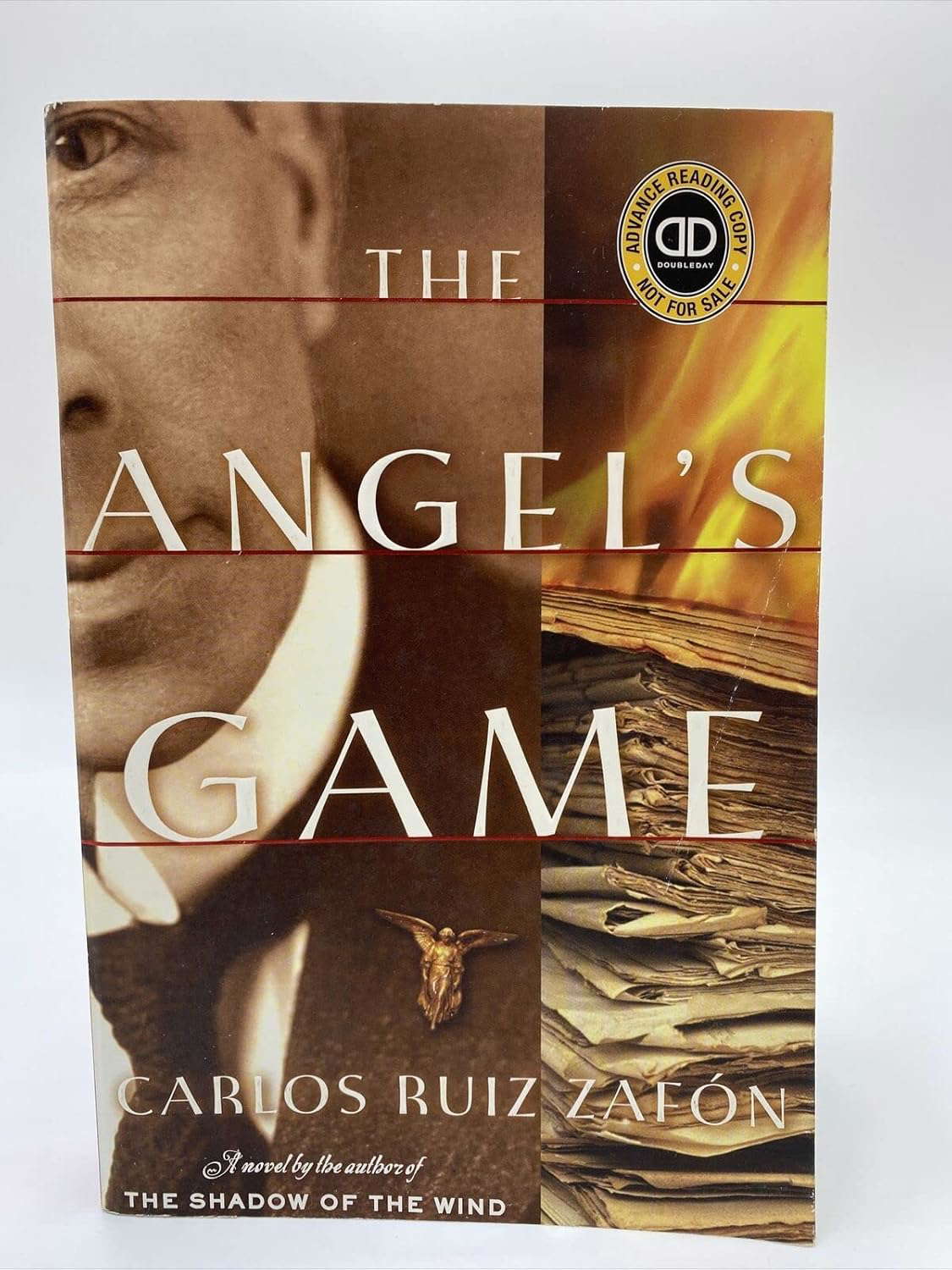
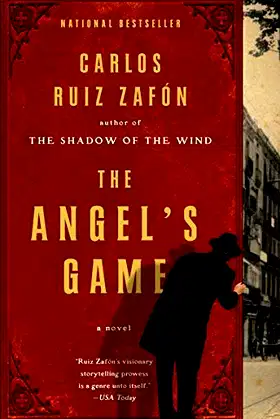
From master storyteller Carlos Ruiz Zafon, author of the international phenomenon The Shadow of the Wind, comes The Angel’s Game — a dazzling new page-turner about the perilous nature of obsession, in literature and in love.The whole of Barcelona stretched out at my feet and I wanted to believe that when I opened those windows — my new windows — each evening its streets would whisper stories to me, secrets in my ear, that I could catch on paper and narrate to whomever cared to listen…In an abandoned mansion at the heart of Barcelona, a young man, David Martin, makes his living by writing sensationalist novels under a pseudonym. The survivor of a troubled childhood, he has taken refuge in the world of books and spends his nights spinning baroque tales about the city’s underworld. But perhaps his dark imaginings are not as strange as they seem, for in a locked room deep within the house lie photographs and letters hinting at the mysterious death of the previous owner. Like a slow poison, the history of the place seeps into his bones as he struggles with an impossible love. Close to despair, David receives a letter from a reclusive French editor, Andreas Corelli, who makes him the offer of a lifetime. He is to write a book unlike anything that has ever existed — a book with the power to change hearts and minds. In return, he will receive a fortune, and perhaps more. But as David begins the work, he realizes that there is a connection between his haunting book and the shadows that surround his home.Once again, Zafon takes us into a dark, gothic universe first seen in The Shadow of the Wind and creates a breathtaking adventure of intrigue, romance, and tragedy. Through a dizzyingly constructed labyrinth of secrets, the magic of books, passion, and friendship blend into a masterful story.From the Hardcover edition.
Book Description From master storyteller Carlos Ruiz Zafón, author of the international phenomenon The Shadow of the Wind, comes The Angel’s Game--a dazzling new page-turner about the perilous nature of obsession, in literature and in love. “The whole of Barcelona stretched out at my feet and I wanted to believe that, when I opened those windows, its streets would whisper stories to me, secrets I could capture on paper and narrate to whomever cared to listen...”In an abandoned mansion at the heart of Barcelona, a young man, David Martín, makes his living by writing sensationalist novels under a pseudonym. The survivor of a troubled childhood, he has taken refuge in the world of books and spends his nights spinning baroque tales about the city’s underworld. But perhaps his dark imaginings are not as strange as they seem, for in a locked room deep within the house lie photographs and letters hinting at the mysterious death of the previous owner.Like a slow poison, the history of the place seeps into his bones as he struggles with an impossible love. Close to despair, David receives a letter from a reclusive French editor, Andreas Corelli, who makes him the offer of a lifetime. He is to write a book unlike anything that has ever existed--a book with the power to change hearts and minds. In return, he will receive a fortune, and perhaps more. But as David begins the work, he realizes that there is a connection between his haunting book and the shadows that surround his home.Once again, Zafón takes us into a dark, gothic universe first seen in The Shadow of the Wind and creates a breathtaking adventure of intrigue, romance, and tragedy. Through a dizzingly constructed labyrinth of secrets, the magic of books, passion, and friendship blend into a masterful story. Carlos Ruiz Zafón on The Angel's Game Years ago, when I began working on my fifth novel, The Shadow of the Wind, I started toying around with the idea of creating a fictional universe that would be articulated through four interconnected stories in which we would meet some of the same characters at different times in their lives, and see them from different perspectives where many plots and subplots would tie around in knots for the reader to untie. It sounds somewhat pretentious, but my idea was to add a twist to the story and provide the reader with what I hoped would be a stimulating and playful reading experience. Since these books were, in part, about the world of literature, books, reading and language, I thought it would be interesting to use the different novels to explore those themes through different angles and to add new layers to the meaning of the stories. At first I thought this could be done in one book, but soon I realized it would make Shadow of the Wind a monster novel, and in many ways, destroy the structure I was trying to design for it. I realized I would have to write four different novels. They would be stand-alone stories that could be read in any order. I saw them as a Chinese box of stories with four doors of entry, a labyrinth of fictions that could be explored in many directions, entirely or in parts, and that could provide the reader with an additional layer of enjoyment and play. These novels would have a central axis, the idea of the Cemetery of Forgotten Books, set against the backdrop of a highly stylized, gothic and mysterious Barcelona. Since each novel was going to be complex and difficult to write, I decided to take one at a time and see how the experiment evolved on its own in an organic way.It all sounds very complicated, but it is not. At the end of the day, these are just stories that share a universe, a tone and some central themes and characters. You don’t need to care or know about any of this stuff to enjoy them. One of the fun things about this process was it allowed me to give each book a different personality. Thus, if Shadow of the Wind is the nice, good girl in the family, The Angel’s Game would be the wicked gothic stepsister. Some readers often ask me if The Angel’s Game is a prequel or a sequel. The answer is: none of these things, and all of the above. Essentially The Angel’s Game is a new book, a stand-alone story that you can fully enjoy and understand on its own. But if you have already read The Shadow of the Wind, or you decide to read it afterwards, you’ll find new meanings and connections that I hope will enhance your experience with these characters and their adventures. The Angel’s Game has many games inside, one of them with the reader. It is a book designed to make you step into the storytelling process and become a part of it. In other words, the wicked, gothic chick wants your blood. Beware. Maybe, without realizing, I ended up writing a monster book after all... Don’t say I didn’t warn you, courageous reader. I’ll see you on the other side. --Carlos Ruiz Zafón(Photo © Isolde Ohlbaum)
Starred Review. Fans of Zafón's The Shadow of the Wind and new readers alike will be delighted with this gothic semiprequel. In 1920s Barcelona, David Martin is born into poverty, but, aided by patron and friend Pedro Vidal, he rises to become a crime reporter and then a beloved pulp novelist. David's creative pace is frenetic; holed up in his dream house—a decrepit mansion with a sinister history—he produces two great novels, one for Vidal to claim as his own, and one for himself. But Vidal's book is celebrated while David's is buried, and when Vidal marries David's great love, David accepts a commission to write a story that leads him into danger. As he explores the past and his mysterious publisher, David becomes a suspect in a string of murders, and his race to uncover the truth is a delicious puzzle: is he beset by demons or a demon himself? Zafón's novel is detailed and vivid, and David's narration is charming and funny, but suspect. Villain or victim, he is the hero of and the guide to this dark labyrinth that, by masterful design, remains thrilling and bewildering. (June) Copyright © Reed Business Information, a division of Reed Elsevier Inc. All rights reserved.
Readers worldwide loved Shadow of the Wind; critics are more skeptical about The Angel's Game. Certainly, Zafon knows how to tell a story: the novel meshes forbidden love, magical realism, religion and ideas, literature, and gothic horror in a compelling tale. He also knows how to set a scene: here, the architecture, slums, and modernist leanings of Barcelona become a character in their own right. Still, complaints marred the reviews. A few critics commented that the story, despite its far-fetched subplots, takes itself too seriously; its philosophical musings don't quite work. Others complained of the dark, labyrinthine plot, purple prose, and predictability. Still, fans of The Shadow of the Wind will relish this prequel; after all, storytelling -- the heart of the novel -- is "the master [Zafon] serves, and the devil he knows" (New York Times Book Review).
Zafón’s international best-seller, The Shadow of the Wind (2004), a book-steeped fantasia set in post–World War II Barcelona, introduced us to Daniel Sempere and the Cemetery of Forgotten Books, a secret library where books are guarded against oblivion. The Angel’s Game, a prequel of sorts set in the 1920s, features another Daniel—Daniel Martín—an orphan who learns the writing trade at a newspaper, then finds success with a pseudonymous series of gothic potboilers called City of the Damned. After his lone literary effort falls flat, his health failing, he accepts a commission from a mysterious publisher, Andreas Corelli, to write an audacious book for an astronomical sum—but soon has reason to suspect that his handshake deal is worse than any contract he has signed. Once again, Zafón proves himself a magician, vividly invoking bygone Barcelona while unscrolling a byzantine plot at breakneck pace. The crumbling houses, supernatural secrets, and emotionally responsive weather might be a bit much for some readers to digest, though for others it will be a feast. But what would have kept The Angel’s Game itself from being someday consigned to the Cemetery of Forgotten Books would have been a stronger connection between storybook evil and the real-life kind. While Zafón portrays Martín as a successful seller of entertainments who longs to be a serious scribe, his own unfinished thoughts about religion and totalitarianism show his priorities. Pity, because he seems the perfect author to help prove that serious stuff can also be entertaining as hell. --Keir Graff
Fans of Zafón’s The Shadow of the Wind and new readers alike will be delighted with this gothic semiprequel. In 1920s Barcelona, David Martin is born into poverty, but, aided by patron and friend Pedro Vidal, he rises to become a crime reporter and then a beloved pulp novelist. David’s creative pace is frenetic; holed up in his dream house
“One gorgeous read”
“Diabolically good”
“Superbly entertaining”
“Breathtaking”
“Wondrous”
“Magic”
“Absolutely marvelous”
“Infectious”
“Outstanding”
“Lavish”
“Gripping”
From The Washington Post's Book World/washingtonpost.com Reviewed by Louis Bayard Caveat lector: If you believe the only proper place for pulp is in your orange juice, then, for pity's sake, steer clear of Carlos Ruiz Zafón. In his much-loved "The Shadow of the Wind" and in this new offering, no trope of popular fiction is off limits, and nothing succeeds like excess. You will either nod approvingly when someone bangs typewriter keys until his fingers bleed or an old widow croaks, "This city is damned. Damned," or else you will strap yourself down for a minimalist drip of Raymond Carver and Ann Beattie. Word magic is Zafón's subject and also his MO, and he's not particular about where he finds it. The hero of "The Angel's Game" is a penurious young author named David Martín, who spends his days churning out Grand Guignol penny dreadfuls. His one true love, Cristina, has been claimed by David's mentor, the rakish Don Pedro Vidal, who dwells in a grand villa in the hills. David, by contrast, molders in a gloomy, funky-smelling tower in Barcelona's oldest and darkest quarter. He's being bled dry by his publishers, he has almost no friends and no life to speak of. Did I mention he's got terminal brain cancer? Along comes Andreas Corelli, a suave Parisian with an enticing offer: He will give David 100,000 francs to write a book or, more precisely, "create a religion." A year's work, and David will be free and clear. Or will he? Our hero is a little slow on the uptake, but the alert reader will note that Corelli has icy cold lips and the leer of a jackal and a taste for midnight meetings and chiaroscuro compositions. He neither ages nor blinks, and his estate is guarded by a trio of dogs, presumably descendants of the three-headed Cerberus. "You and I, my friend, are going to do great things together," promises Corelli. Sure enough, David's health takes an immediate change for the better, the nasty publishers who've been keeping him on slave wages die in a convenient fire, and even the lovely Cristina shows signs of wanting to return. If David can just finish that book he's contracted to write, he might finally taste happiness. And if you think I've given away too much of the story, please know that it's just beginning and that you are in exceptionally good hands the whole way. Zafón can write up a storm. In fact, he can write up all sorts of storms: rain, ice, fire. It's hard, really, to find anything missing from his arsenal: zesty atmosphere, crackling dialogue, arresting epigrams ("Theory is the practice of the impotent. . . . Sooner or later, the word becomes flesh and the flesh bleeds.") Plus a lively troupe of players, notably Isabella, the shopkeeper's daughter who barges her way into David's house and our affections. Best of all: 1920s Barcelona, a city whose blend of old-world rot and modernist aspiration makes it ideally suited to the author's purposes. Zafón gets full mileage from the brothels and Gothic piles and numberless necropolises and mausoleums, and for good measure, he devises a resting place all his own: an underground Cemetery of Forgotten Books, where visitors are encouraged to adopt some obscure tome and keep it alive for future generations. It's safe to say "The Angel's Game" won't be forgotten anytime soon, if only because it offers such a glut of reading pleasure. Only a churl -- that is, a reviewer -- would ask himself: At what point does excess become excessive? For me, the question arose somewhere after the 12th or 13th corpse. I couldn't quite figure out why all these people were dying in such hyperbolic fashion. (Something to do with curses and imprisoned souls and the Witch of Somorrostro.) More worrisomely, I couldn't figure out what stake I had in any of it. The leads are partly to blame -- David's a bit of a downer, and Cristina's a simp -- and the book's postlude, intended to evoke love's timelessness, succeeds only in being creepy. Without that secure emotional infrastructure, the chinks in Zafón's edifice gape a little wider. Why does David wait the length of a whole chapter before reading an urgent letter from his mistress? And what's with the long and frankly tedious philosophical debates between David and Corelli? And why does someone with a satanically guaranteed life span worry about being killed? And in a book so rife with texts, why is there not a single passage from the book David has contracted to write? Come to think of it, why does the Devil need a ghostwriter in the first place? Perhaps he is just, like Zafón, a sucker for the printed word. "Every book, every volume you see, has a soul," intones Barcelona's caretaker of forgotten books. "The soul of the person who wrote it and the soul of those who read it and lived and dreamed with it. Every time a book changes hands, every time someone runs his eyes down its pages, its spirit grows and strengthens." I gently beg to differ. Not every book has a soul; not every book cries out to be remembered. As for the spirit of literature growing and strengthening . . . well, to quote another fictional sojourner in 1920s Spain: "Isn't it pretty to think so?" In the end, we are best advised to treat "The Angel's Game" as a dream from which it would be imprudent to awake. But it's nice while it lasts. Copyright 2009, The Washington Post. All Rights Reserved.
A writer never forgets the first time he accepted a few coins or a word of praise in exchange for a story. He will never forget the sweet poison of vanity in his blood and the belief that, if he succeeds in not letting anyone discover his lack of talent, the dream of literature will provide him with a roof over his head, a hot meal at the end of the day, and what he covets the most: his name printed on a miserable piece of paper that surely will outlive him. A writer is condemned to remember that moment, because from then on he is doomed and his soul has a price. My first time came one faraway day in December 1917. I was seventeen and worked at The Voice of Industry, a newspaper that had seen better days and now languished in a barn of a building that had once housed a sulfuric acid factory. The walls still oozed the corrosive vapor that ate away at furniture and clothes, sapping the spirits, consuming even the soles of shoes. The newspaper’s headquarters rose behind the forest of angels and crosses of the Pueblo Nuevo cemetery; from afar, its outline merged with the mausoleums silhouetted against the horizon–a skyline stabbed by hundreds of chimneys and factories that wove a perpetual twilight of scarlet and black above Barcelona. On the night that was about to change the course of my life, the newspaper’s deputy editor, Don Basilio Moragas, saw fit to summon me, just before closing time, to the dark cubicle at the far end of the editorial staff room that doubled as his office and cigar den. Don Basilio was a forbidding- looking man with a bushy moustache who did not suffer fools and who subscribed to the theory that the liberal use of adverbs and adjectives was the mark of a pervert or someone with a vitamin deficiency. Any journalist prone to florid prose would be sent off to write funeral notices for three weeks. If, after this penance, the culprit relapsed, Don Basilio would ship him off permanently to the "House and Home" pages. We were all terrified of him, and he knew it. "Did you call me, Don Basilio?" I ventured timidly. The deputy editor looked at me askance. I entered the office, which smelled of sweat and tobacco in that order. Ignoring my presence, Don Basilio continued to read through one of the articles lying on his table, a red pencil in hand. For a couple of minutes, he machine- gunned the text with corrections and amputations, muttering sharp comments as if I weren’t there. Not knowing what to do, and noticing a chair placed against the wall, I slid toward it. "Who said you could sit down?" muttered Don Basilio without raising his eyes from the text. I quickly stood up and held my breath. The deputy editor sighed, let his red pencil fall, and leaned back in his armchair, eyeing me as if I were some useless piece of junk. "I’ve been told that you write, Martin."I gulped. When I opened my mouth only a ridiculous, reedy voice emerged. "A little, well, I don’t know, I mean, yes, I do write...""I hope you write better than you speak. And what do you write– if that’s not too much to ask?""Crime stories. I mean...""I get the idea."The look Don Basilio gave me was priceless. If I’d said I devoted my time to sculpting figures for Nativity scenes out of fresh dung I would have drawn three times as much enthusiasm from him. He sighed again and shrugged his shoulders. "Vidal says you’re not altogether bad. He says you stand out.""Of course, with the sort of competition in this neck of the woods, one doesn’t have to run very fast. Still, if Vidal says so."Pedro Vidal was the star writer at The Voice of Industry. He penned a weekly column on crime and lurid events–the only thing worth reading in the whole paper. He was also the author of a dozen modestly successful thrillers about gangsters in the Raval quarter carrying out bedroom intrigues with ladies of high society. Invariably dressed in impeccable silk suits and shiny Italian moccasins, Vidal had the looks and the manner of a matinee idol: fair hair always well combed, a pencil moustache, and the easy, generous smile of someone who feels comfortable in his own skin and at ease with the world. He belonged to a family whose forebears had made their pile in the Americas in the sugar business and, on their return to Barcelona, had bitten off a large chunk of the city’s electricity grid. His father, the patriarch of the clan, was one of the newspaper’s main shareholders, and Don Pedro used its offices as a playground to kill the tedium of never having worked out of necessity a single day in his life. It mattered little to him that the newspaper was losing money as quickly as the new automobiles that were beginning to circulate around Barcelona leaked oil: with its abundance of nobility, the Vidal dynasty was now busy collecting banks and plots of land the size of small principalities in the new part of town known as the Ensanche. Pedro Vidal was the first person to whom I had dared show rough drafts of my writing when, barely a child, I carried coffee and cigarettes round the staff room. He always had time for me: he read what I had written and gave me good advice. Eventually, he made me his assistant and would allow me to type out his drafts. It was he who told me that if I wanted to bet on the Russian roulette of literature, he was willing to help me and set me on the right path. True to his word, he had now thrown me into the clutches of Don Basilio, the newspaper’s Cerberus. "Vidal is a sentimentalist who still believes in those profoundly un-Spanish myths such as meritocracy or giving opportunities to those who deserve them rather than to the current favorite. Loaded as he is, he can allow himself to go around being a free spirit. If I had one hundredth of the cash he doesn’t even need I would have devoted my life to honing sonnets and little twittering nightingales would come to eat from my hand, captivated by my kindness and charm.""Senor Vidal is a great man!"I protested. "He’s more than that. He’s a saint, because although you may look scruffy he’s been banging on at me for weeks about how talented and hardworking the office boy is. He knows that deep down I’m a softy and, besides, he’s assured me that if I give you this break he’ll present me with a box of Cuban cigars. And if Vidal says so, it’s as good as Moses coming down from the mountain with the lump of stone in his hand and the revealed truth shining from his forehead. So, to get to the point, because it’s Christmas and because I want your friend to shut up once and for all, I’m offering you a head start, against wind and tide.""Thank you so much, Don Basilio. I promise you won’t regret it.""Don’t get too carried away, boy. Let’s see, what do you think of the indiscriminate use of adjectives and adverbs?""I think it’s a disgrace and should be set down in the penal code,"I replied with the conviction of a zealot. Don Basilio nodded in approval. "You’re on the right track, Martin. Your priorities are clear. Those who make it in this business have priorities, not principles. This is the plan. Sit down and concentrate, because I’m not going to tell you twice."The plan was as follows. For reasons that Don Basilio thought best not to set out in detail, the back page of the Sunday edition, which was traditionally reserved for a short story or a travel feature, had fallen through at the last minute. The content was to have been a fiery narrative in a patriotic vein about the exploits of Catalan medieval knights who saved Christianity and all that was decent under the sun, starting with the Holy Land and ending with the banks of our Llobregat delta. Unfortunately, the text had not arrived in time or, I suspected, Don Basilio simply didn’t want to publish it. This left us, only six hours before deadline, with no other substitute for the story than a full- page advertisement for whalebone corsets that guaranteed perfect hips and full immunity from the effects of buttery by-products. The editorial board had opted to take the bull by the horns and make the most of the literary excellence that permeated every corner of the newspaper. The problem would be overcome by publishing a four- column human interest piece for the entertainment and edification of our loyal family-oriented readership. The list of proven talent included ten names, none of which, needless to say, was mine. "Martin, my friend, circumstances have conspired so that not one of the champions on our payroll is on the premises or can be contacted in time. With disaster imminent, I have decided to give you your first crack at glory.""You can count on me.""I’m counting on five double-spaced pages in six hours, Don Edgar Allan Poe. Bring me a story, not a speech. If I want a sermon, I’ll go to Midnight Mass. Bring me a story I have not read before and, if I have read it, bring it to me so well written and narrated that I won’t even notice."I was about to leave the room when Don Basilio got up, walked round his desk, and rested a hand, heavy and large as an anvil, on my shoulder. Only then, when I saw him close up, did I notice a twinkle in his eyes. "If the story is decent I’ll pay you ten pesetas. And if it’s better than decent and our readers like it, I’ll publish more.""Any specific instructions, Don Basilio?"I asked. "Yes. Don’t let me down.". . . I spent the next six hours in a trance. I installed myself at a table that stood in the middle of the editorial room and was reserved for Vidal, on the days when he felt like dropping by. The room was deserted, submerged in a gloom thick with the smoke of a thousand cigarettes. Closing my eyes for a moment, I conjured up an image, a cloak of dark clouds spilling down over the city in the rain, a man walking under cover of shadows with blood on his hands and a secret in his eyes. I didn’t know who he was or what he was fleeing from, but during the next six hours he was going to become my best friend. I slid a page into the typewriter and without pausing, I proceeded to squeeze out everything I had inside me. I quarreled with every word, every phrase and expression, every image and letter as if they were the last I was ever going to write. I wrote and rewrote every line as if my life depended on it, and then rewrote it again. My only company was the incessant clacking of the typewriter echoing in the darkened hall and the large clock on the wall exhausting the minutes left until dawn. . . . Shortly before six o’clock in the morning I pulled the last sheet out of the typewriter and sighed, utterly drained. My brain felt like a wasp’s nest. I heard the heavy footsteps of Don Basilio, who had emerged from one of his brief naps and was approaching unhurriedly. I gathered up the pages and handed them to him, not daring to meet his gaze. Don Basilio sat down at the next table and turned on the lamp. His eyes skimmed the text, betraying no emotion. Then he rested his cigar on the end of the table for a moment, glared at me, and read out the first line: Night falls on the city and the streets carry the scent of gunpowder like the breath of a curse. Don Basilio looked at me out of the corner of his eye and I hid behind a smile that didn’t leave a single tooth uncovered. Without saying another word, he got up and left with my story in his hands. I saw him walking toward his office and closing the door behind him. I stood there, petrified, not knowing whether to run away or await the death sentence. Ten minutes later–it felt more like ten years to me–the door of the deputy editor’s office opened and the voice of Don Basilio thundered right across the department. "Martin. In here. Now."I dragged myself along as slowly as I could, shrinking a centimeter or two with every step, until I had no alternative but to show my face and look up. Don Basilio, the fearful red pencil in hand, was staring at me icily. I tried to swallow, but my mouth was dry. He picked up the pages and gave them back to me. I took them and turned to go as quickly as I could, telling myself that there would always be room for another shoeshine boy in the lobby of Hotel Coln. "Take this down to the composing room and have them set it,"said the voice behind me. I turned round, thinking I was the object of some cruel joke. Don Basilio pulled open the drawer of his desk, counted out ten pesetas, and put them on the table. "This belongs to you. I suggest you buy yourself a better suit with it–I’ve seen you wearing the same one for four years and it’s still about six sizes too big. Why don’t you pay a visit to Senor Pantaleoni at his shop in Calle Escudellers? Tell him I sent you. He’ll look after you.""Thank you so much, Don Basilio. That’s what I’ll do.""And start thinking about another of these stories for me. I’ll give you a week for the next one. But don’t fall asleep. And let’s see if we can have a lower body count this time–today’s readers like a slushy ending in which the greatness of the human spirit triumphs over adversity, that sort of rubbish.""Yes, Don Basilio."The deputy editor nodded and held out his hand to me. I shook it. "Good work, Martin. On Monday I want to see you at the desk that belonged to Junceda. It’s yours now. I’m putting put you on the crime beat.""I won’t fail you, Don Basilio.""No, you won’t fail me. You’ll just cast me aside sooner or later. And you’ll be right to do so, because you’re not a journalist and you never will be. But you’re not a crime novelist yet, even if you think you are. Stick around for a while and we’ll teach you a thing or two that will always come in handy."At that moment, my guard down, I was so overwhelmed by gratitude that I wanted to hug that great bulk of a man. Don Basilio, his fierce mask back in place, gave me a steely look and pointed toward the door. "No scenes, please. Close the door. And happy Christmas.""Happy Christmas.". . . The following Monday, when I arrived at the editorial room ready to sit at my own desk for the very Þrst time, I found a coarse gray envelope with a ribbon and my name on it in the same recognizable type that I had been typing out for years. I opened it. Inside was a framed copy of my story from the back page of the Sunday edition, with a note saying: "This is just the beginning. In ten years I’ll be the apprentice and you’ll be the teacher. Your friend and colleague, Pedro Vidal."
Find it on
AmazonNo videos available yet.
No news articles linked to this title yet.

Overall
Overall rating of the media
Atmosphere
How immersive and tense is the atmosphere
Gore
Level and quality of gore/violence
Story
Quality of the storyline and plot
Writing
Quality of the written content
Character Development
Depth and growth of characters
Pacing
Flow and timing of the narrative