
BOOK
0
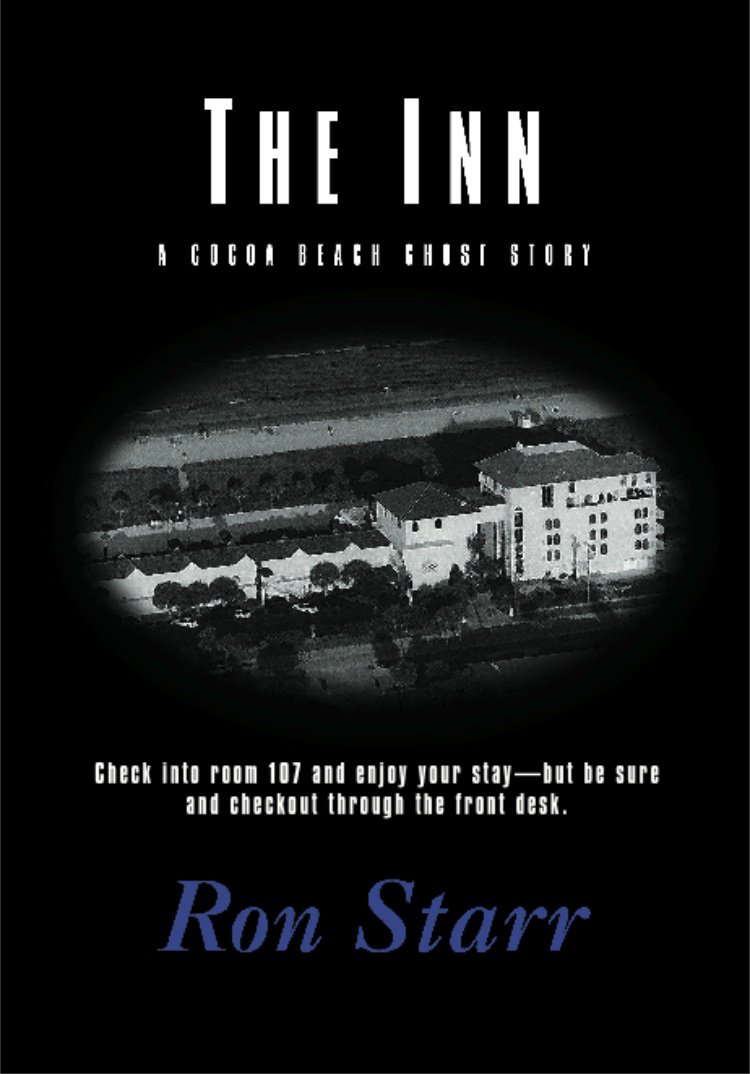
Stay as a welcome guest of The Inn at Cocoa Beach, and if you have the nerve—request room 107. For it is within these walls that many have met a fate few can imagine and even fewer desire. Maybe you'll be one of the lucky ones who check in and checkout without experiencing anything beyond a periodic ice-cold breath of air caressing the back of your neck, or a feeling that an ethereal spirit is watching you, or a nagging sensation defined only by your soul—something is not right about the room.Or maybe you'll be one of the unlucky few to have all your senses explode as you discover first hand what is not right about room 107. These guests check in but never check out—at least not through the front desk.Meet Jerry Kelly, the Inn's desk manager who first discovers a series of clues that encourage him to search deeper into the mystery behind room 107. And then follow Kurt and Sabrina, the hero and heroine from Welcome to the Ahwahnee, as they track a mysterious disappearance in Seattle. The Adler's search leads them to The Inn at Cocoa Beach where they enlist the aid of Lucius Silva Flavius, a lovable but cantankerous local historian, and Jerry Kelly. Ride along with these four and other intriguing and mysterious characters as they delve deep into a mystery that appears more impenetrable each time they uncover a new clue. And finally, live every frightening moment as the four confront a mind-boggling ancient secret.
THE WOMAN'S CONSTRICTED AIRWAY absorbed her initial scream. Eyes wide and mouth formed into an eerie oval, she resembled a silent movie damsel in distress. She convulsed. The action cleared her throat and allowed her second scream to escape. The shrill and piercing sound rode a strong offshore current, swept over an exposed walkway, through a weatherproof double paned slider, and across a breezeway separating the decorative lobby of The Inn at Cocoa Beach from its northern two-story wing. Diminished after forcing its way through dense plate glass, the woman's cry failed to shatter the concentrated focus of ten individuals gathered in the lobby. A few of the ten sat. A few stood, short in front, taller to the rear. Mesmerized by the pictures flashing across a console television, an impenetrable halo of silence encircled the ten. Trained to remain cool while covering a cataclysmic event, an unseen broadcaster attempted to recall his lessons and deliver a steady and calm report. His voice, however, refused to cooperate. It cracked with emotion as live video shots presented each new and gut-wrenching scene. Except for a sullen teenager who rejected its potential implications after a single attempt to alert his parents, the woman's third scream elicited the same reaction as her previous. The teenager touched his father's arm. "Pop's?" he said. The man brushed his son's hand aside in a blatant act of dismissal. The teenager responded in a manner practiced often since puberty transformed his voice, his body, his mind, and his attitude into a brooding adolescent unknown to his parents. He slumped deeper into the soft couch cushion. Their eyes locked on a now visible and trembling television reporter, the boy's mother and father leaned closer to the TV. Stricken with a combination of horror and anguish, they watched and listened as the broadcaster described a frightening volcanic eruption to a camera concerned neither with the event nor the man's roller coaster emotions. Earlier that day, Sunday, May 18, 1980, and three time zones to the west, dawn in the Pacific Northwest arrived. It brought neither clouds nor humidity. The rising sun's brilliance allowed Washington's magnificent Cascade volcanic peaks to glimmer as if fulfilling every child's dream of a perpetual ice cream cone. One mountain peak above all others stood out, Mount St. Helens, located ninety-six miles south of Seattle and fifty-six miles northeast of Portland. The snow and ice covered symmetry of Mount St. Helens' peak earned it the nickname, Mount Fuji of America. At 7:00 a.m. Pacific Daylight Time, David A. Johnston, a volcanologist with the U. S. Geological Survey stationed at an observation point six miles north of Mount St. Helens, radioed in the results of laser measurements taken earlier that morning. The USGS command center located in Vancouver, Washington received David's report and agreed with his analysis. Current volcanic activity showed no change to a protruding bulge that continued to grow daily. David relaxed for a moment. He smiled at the giant eyeball peering at him from the mountain's northern flank. One hour and thirty-two minutes later at twenty seconds after 8:32 a.m. and without warning, a magnitude 5.1 earthquake below the volcano allowed hell to escape from the bowels of the earth and visit the surface. The bulge collapsed. The north flank of the volcano plunged into the valley below. The first few moments of Mount St. Helens' instant transition from benign and beautiful to malignant and monstrous witnessed the largest landslide in recorded history. The landslide, however, proved a minor prelude to what followed as the hot and pressurized rock held captive within the north flank below the bulge erupted in a twenty-four megaton display of power. 1,314 feet of the mountain disappeared not up, but out from the blast. The explosion's violence sent 3.7 billion cubic yards of volcanic ash screaming to the north. The eruption and resulting destruction killed fifty-seven people including David A. Johnston. Six miles from the blast, Johnston radioed the following words before a 660-degree blast of superheated air traveling at 300 MPH vaporized him, "Vancouver! Vancouver! This is it!" Harry R. Truman, an eighty-three year-old curmudgeon who refused to leave his home on Spirit Lake at the base of Mount St. Helens, received a similar fate for his audacity to challenge the mountain's intent. His comment, "If the mountain goes, I'm going with it," captured worldwide attention in the two months prior to the eruption. The sounds of the lobby door crashing open ripped Jerry Kelly's attention from a distant disaster and focused it on an urgent and nearby calamity. Jerry spun around. He glimpsed Andrew Keskes, the Inn's intern and jack-of-all-trades, prone on the floor, mouth agape, and hand pointed towards the open door. Confused, Jerry moved to assist Andrew as the woman's fourth plaintive attempt to seek assistance arrived in wave after wave. Jerry's refocused mind swirled between three thoughts. What the hell? Please, not on my first day as Desk Manager! And, Move old man--move! The third thought prevailed and Jerry sprinted for the lobby door as fast as his sixty year-old legs allowed him to move. He left a crowd split between events unfolding three thousand miles away and those within shouting distance. A single person followed Jerry, the sullen teenager. Jerry crossed the tile breezeway and threw open the slider. He planted his left foot and started to turn right towards the source of the unabated cries--but he skidded to a stop after seeing a naked blonde three doors away. The woman directed her screams into room 107. Unconcerned with her nudity, the woman's hands covered her ears as if trying to shut out the terrifying sounds escaping her throat.
Find it on
AmazonNo videos available yet.
No news articles linked to this title yet.

Overall
Overall rating of the media
Atmosphere
How immersive and tense is the atmosphere
Gore
Level and quality of gore/violence
Story
Quality of the storyline and plot
Writing
Quality of the written content
Character Development
Depth and growth of characters
Pacing
Flow and timing of the narrative