
BOOK
0
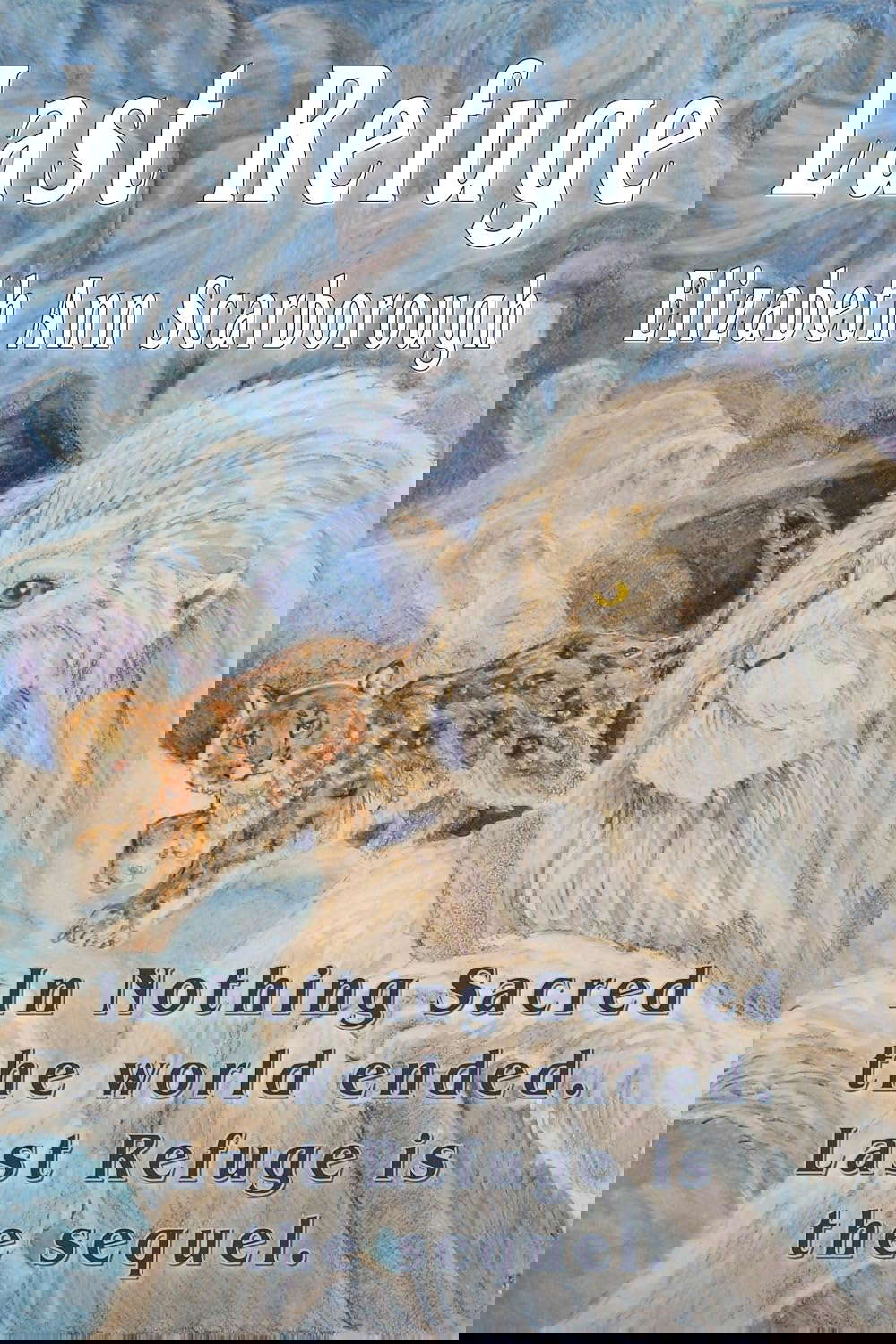
In NOTHING SACRED, Elizabeth Ann Scarborough took a detour from her humorous classic and contemporary fantasies to write her “obligatory science fiction writer’s end-of-the-world book.” The bad news is the world has ended. The good news is LAST REFUGE is the sequel. Why does the end of the world seem so much more dire than the end of our own lives, since, according to modern non-theology based theory, we won’t know the difference one way or the other. Using the Tibetan Buddhist background of NOTHING SACRED, the answer to that was, if the Buddhists are right, when the end of the world comes not only will our own present lives be ended, but there will be no life forms left into which we may reincarnate. The children of Kalapa compound, safe from the war and the aftermath as it is felt in most of the world, discover that the problems work in reverse in Shambala. Babies are born there at a deliberately amazing rate but no one dies within the borders. Consequently, in time, there are no unembodied spirits in Shambala left to inhabit the babies, cursing the poor children with a spiritual birth defect. Heir to the duties of Ama-La, young Chime Cincinnati, as the guide to Shambala , cannot rest until she leaves the safety of the compound to lead refugees to it. She is helped in this by Mike, a young man who has always been like an older brother to her. These two face all of the standard fantasy characters, but with a Tibetan twist--there is an evil wizard who is king of his own compound, a hideously evil demon who is enough to give anyone nightmares, a yeti, an American princess, and far too many ghosts, not to mention Mu Mao the magnificent, a reincarnated wise man who was good enough to finally be allowed to ascend to life as a cat.
After the nuclear destruction of the world, the residents of the magically hidden land of Shambala realize that they may be humanity's sole survivors. When the women of Shambala begin bearing babies without souls, however, one young woman decides that the time has come to offer refuge to the homeless spirits of the world. Scarborough's sequel to Nothing Sacred ( LJ 3/15/91) blends Tibetan mysticism with various world myths, producing a strangely satisfying real-world fantasy with moments of humor, horror, and ecstatic vision. A good purchase for fantasy collections.Copyright 1992 Reed Business Information, Inc.
Sequel to Nothing Sacred (1991), continuing the tale of Shambala, a Shangri-La-like magical paradise hidden in the Himalayas. Nuclear war has ravaged the world, but Shambala has been protected by its enchantments. Nearly 20 years have passed, however, and disaster has struck in Shambala: New babies are being born without souls. Chime Cincinnati, the reincarnation of the Terton, Shambala's emissary to the outside world, decides she must venture into the wastelands to discover what's gone wrong. Along with Mike (son of Viveka Vanachek, the previous book's heroine), she enters a world populated by the ghosts of the billion dead (and a few degenerated survivors). Eventually, they reach another protected valley, ruled by the distinctly unholy Master Meru. It's up to Chime to outwit Meru and guide the living and the dead to safety in Shambala. Despite the colorful setting, the story has little energy, and the pace is further slowed by a long and pointless subplot. Any exoticism the Buddhist background might have added is lost in Scarborough's paradoxically rationalistic portrayal of the supernatural (the ghosts retain their lifetime identities, even such expressions as ``Sheesh!''), and the humor meshes poorly with the darker images and the apocalyptic landscape. The novelties that made the first book interesting cannot rescue this one. -- Copyright ©1992, Kirkus Associates, LP. All rights reserved.
Find it on
AmazonNo videos available yet.
No news articles linked to this title yet.

Overall
Overall rating of the media
Atmosphere
How immersive and tense is the atmosphere
Gore
Level and quality of gore/violence
Story
Quality of the storyline and plot
Writing
Quality of the written content
Character Development
Depth and growth of characters
Pacing
Flow and timing of the narrative