
BOOK
0
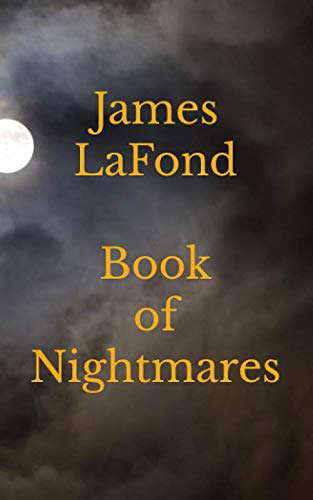
James LaFond’s Book of Nightmares is a short collection of the author’s dreams, largely from March 2019. LaFond’s dreams are violent, sexual, whimsical, sometimes long and sometimes short. They provide a glimpse into the subconscious mind of a man who is uncommonly candid with his conscious mind, which he has shared with readers in many memoirs of his life as a grocer in one of the world’s most dangerous cities.“I’ll dare say, James, from what you write here, an astute reader can only infer that you don’t understand why your dreams are violent and why they really exist. This is the general nature of dreams: they humiliate and torture. The Czech novelist and philosopher, Ladislav Klima, said, ‘Dreams are masochistic.’ Also, more a student of Carl Jung than of Sigmund Freud, psychiatrist Maurice Nicoll, once a student of G.I. Gurdjieff, wrote in the last chapter on responsibility in his book, Dream Psychology: ‘No one must expect to live in contact with the unconscious without being constantly humiliated. The honest man dreams of theft. The pious man dreams lascivious dreams. The shadow and undeveloped parts of the self dwell in the unconscious and show themselves in dreams.’”-Charles Steiner, EditorAbout the author: James LaFond is the most well-read and well-fought man alive today, and the most prolific writer, having over 150 books in print. He is a historian, diarist, biographer, tabletop game designer, stick fighter, machete duelist, boxing coach and train riding traveling prophet.
Find it on
AmazonNo videos available yet.
No news articles linked to this title yet.

Overall
Overall rating of the media
Atmosphere
How immersive and tense is the atmosphere
Gore
Level and quality of gore/violence
Story
Quality of the storyline and plot
Writing
Quality of the written content
Character Development
Depth and growth of characters
Pacing
Flow and timing of the narrative