

BOOK
0
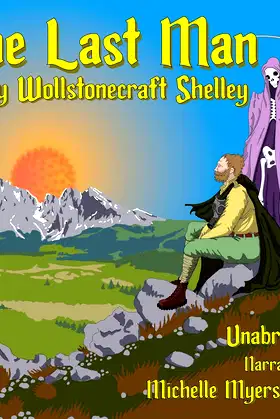
The Last Man is a post-apocalyptic science fiction novel by Mary Shelley, which was first published in 1826. The book tells of a future world that has been ravaged by a plague. The novel was harshly reviewed at the time, and was virtually unknown - having been eclipsed by Shelley's more popular works - until a scholarly revival in the 1960s. It contains semi-biographical portraits of Romantic figures in Shelley's circle, particularly Shelley's late husband Percy Bysshe Shelley and Lord Byron.Plot Summary: IntroductionMary Shelley states in the introduction that in 1818 she discovered, in the Sibyl's cave near Naples, a collection of prophetic writings painted on leaves by the Cumaean Sibyl. She has edited these writings into the current narrative, the first-person narrative of a man living at the end of the 21st century, commencing in 2073 and concluding in 2100. Despite the chronological setting, the world of The Last Man appears to be relatively similar to the era in which it was written.Failure of Romantic Political IdealsThe Last Man not only laments the loss of Shelley's friends, but also questions the Romantic political ideals for which they stood. In a sense, the plague is metaphorical, since the revolutionary idyll of the élite group is corroded from within by flaws of human nature. As literary scholar Kari Lokke writes, "in its refusal to place humanity at the center of the universe, its questioning of our privileged position in relation to nature, then, The Last Man constitutes a profound and prophetic challenge to Western humanism." Specifically, Mary Shelley, in making references to the failure of the French Revolution and the Godwinian, Wollstonecraftian, and Burkean responses to it, "attacks Enlightenment faith in the inevitability of progress through collective efforts".IsolationHugh Luke argues, "By ending her story with the picture of the Earth's solitary inhabitant, she has brought nearly the whole weight of the novel to bear upon the idea that the condition of the individual being is essentially isolated and therefore ultimately tragic". Shelley shares this theme of tragic isolation with the poetry of Lord Byron and William Wordsworth.Science and MedicineJust as her earlier and better known novel Frankenstein (1818) engaged with scientific questions of electromagnetism, chemistry, and materialism, The Last Man finds Shelley again attempting to understand the scope of scientific inquiry. Unlike the earlier novel's warnings about Faustian over-reaching, this novel's devastating apocalypse strongly suggests that medicine had become too timid and ultimately come too late.
"What is there in our nature that is for ever urging us on towards pain and misery?""I spread the whole earth out as a map before me. On no one spot of its surface could I put my finger and say, here is safety.""It is a strange fact, but incontestable, that the philanthropist, who ardent in his desire to do good, who patient, reasonable and gentle, yet disdains to use other argument than truth, has less influence over men's minds than he who, grasping and selfish, refuses not to adopt any means, nor awaken any passion, nor diffuse any falsehood, for the advancement of his cause."
Find it on
AmazonNo videos available yet.
No news articles linked to this title yet.

Overall
Overall rating of the media
Atmosphere
How immersive and tense is the atmosphere
Gore
Level and quality of gore/violence
Story
Quality of the storyline and plot
Writing
Quality of the written content
Character Development
Depth and growth of characters
Pacing
Flow and timing of the narrative