
BOOK
0
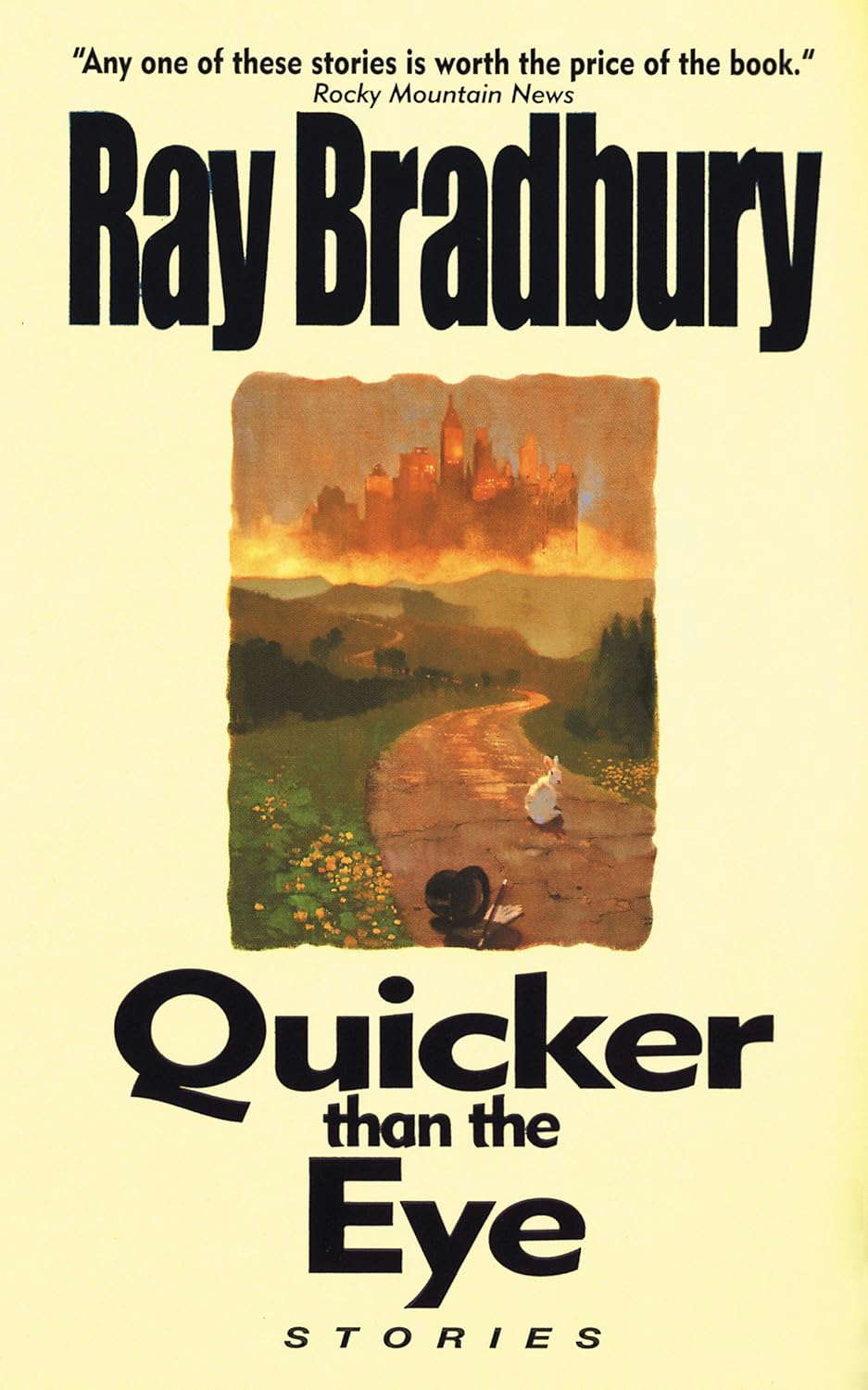
The internationally acclaimed author of The Martian Chronicles, The Illustrated Man, and Fahrenheit 451, Ray Bradbury is a magician at the height of his powers, displaying his sorcerer's skill with twenty-one remarkable stories that run the gamut from total reality to light fantastic, from high noon to long after midnight. A true master tells all, revealing the strange secret of growing young and mad; opening a Witch Door that links two intolerant centuries; joining an ancient couple in their wild assassination games; celebrating life and dreams in the unique voice that has favored him across six decades and has enchanted millions of readers the world over.
From the sentimental to the spooky, this grab bag of 21 recent tales from the seemingly ageless imagination of Bradbury whimsically explores themes of love, nostalgia, magic, literature and mortality. In his first collection since The Toynbee Connector (1988), Bradbury, who's 76, displays a particular fascination with evading the strictures of time through science, history, literature, the supernatural or simple reminiscence. The realistic "The Other Highway" describes a family's drive down an old, unused highway to an almost forgotten world. "At the End of the Ninth Year" develops the idea that the human body fully remakes itself at the molecular level every nine years. In "Last Rites," an inventor uses his time machine to reassure his literary heroes?Melville, Poe, Wilde?on their deathbeds that they will be cherished by future generations. Ghost stories like "That Woman on the Lawn," "Another Fine Mess" and "The Witch Door" transport characters across lifetimes or centuries, while "Dorian in Excelsus," a creepy homage to Wilde, blends the supernatural with the fitness craze. Some of these pieces wax maudlin, but Bradbury stirs in a healthy measure of wit with his wide-eyed wonder. Fans won't be disappointed with this hopeful, introspective, addition to his oeuvre. Copyright 1996 Reed Business Information, Inc.
The venerable author of such classic fantasy novels as Something Wicked This Way Comes (1963) offers a new collection of short stories that is slated for a 50,000-copy first printing.Copyright 1996 Reed Business Information, Inc.
Bradbury's career began in the 1930s in the fiction magazines called "pulps," after the cheap paper on which they were printed. Pulp style was cheap, too: rock-bottom simple in diction and syntax, utterly stock in setting and characterization, and dependent on gimmickry and jokes to propel plot, hopefully very quickly. Bradbury mastered the style and, in the science fiction that is his best-known work, occasionally surpassed it. He has written far more sentimental fantasy than sf, though, and the 22 stories in this book are of that sort. They are about such things as the ghosts of Laurel and Hardy hauling a phantom piano up the same L.A. front steps they used in their most famous short film, a man turning off the freeway onto the old highway and taking his family to a withered town he remembers from his boyhood, and a young soldier's visit to the small-town library where he encountered the wonders of literature when he was a mischievous 12-year-old. Some may find them brittlely charming. Others, however, may find them cloying and worse: the librarian in the story of the soldier's return is so stereotypical that even the most indulgent member of that tolerant profession will wince. Ray Olson
A collection of 21 tales from the Grandfather fantasist--none of which have appeared in book form before, though the publishers disdain to tell us where they have appeared before, if they have, or when they were written. Also, the fantasy elements are mostly small or absent altogether; and--a Bradbury trademark--many of the stories lean heavily on nostalgia, or come drenched in sentiment: imaginary children, ghosts, fairgrounds and magic shows, dead dogs, mad inventors, mysterious doorways, books, graveyards, adolescence. Other tales offer startling ideas that unfortunately are obscured or damaged by poor or eccentric dramatizations: a U-boat captain turned psychoanalyst; the world's architects forming a grand historical conspiracy to build cities where they'll inevitably be destroyed, thus ensuring an endless supply of work; a Victorian pastiche about a vampire predator; and a Dorian Gray variant. Finally, still sentimental but closer to vintage Bradbury, are ``Last Rites,'' wherein a time traveler enters the past to reassure authors neglected during their own lifetimes (Melville, Poe, Wilde) that posterity will celebrate their work; and ``The Very Gentle Murders,'' a funny, edgy, ironic tale of a cackling octogenarian couple dodderingly scheming to murder each other. So-so material for the most part; fans hoping for another Martian Chronicles or October Country face certain disappointment. (First printing of 50,000; author tour) -- Copyright ©1996, Kirkus Associates, LP. All rights reserved.
The internationally acclaimed author of The Martian Chronicles, The Illustrated Man, and Fahrenheit 451, Ray Bradbury is a magician at the height of his powers, displaying his sorcerer's skill with twenty-one remarkable stories that run the gamut from total reality to light fantastic, from high noon to long after midnight. A true master tells all, revealing the strange secret of growing young and mad; opening a Witch Door that links two intolerant centuries; joining an ancient couple in their wild assassination games; celebrating life and dreams in the unique voice that has favored him across six decades and has enchanted millions of readers the world over.
Find it on
AmazonNo videos available yet.
No news articles linked to this title yet.

Overall
Overall rating of the media
Atmosphere
How immersive and tense is the atmosphere
Gore
Level and quality of gore/violence
Story
Quality of the storyline and plot
Writing
Quality of the written content
Character Development
Depth and growth of characters
Pacing
Flow and timing of the narrative