
BOOK
0
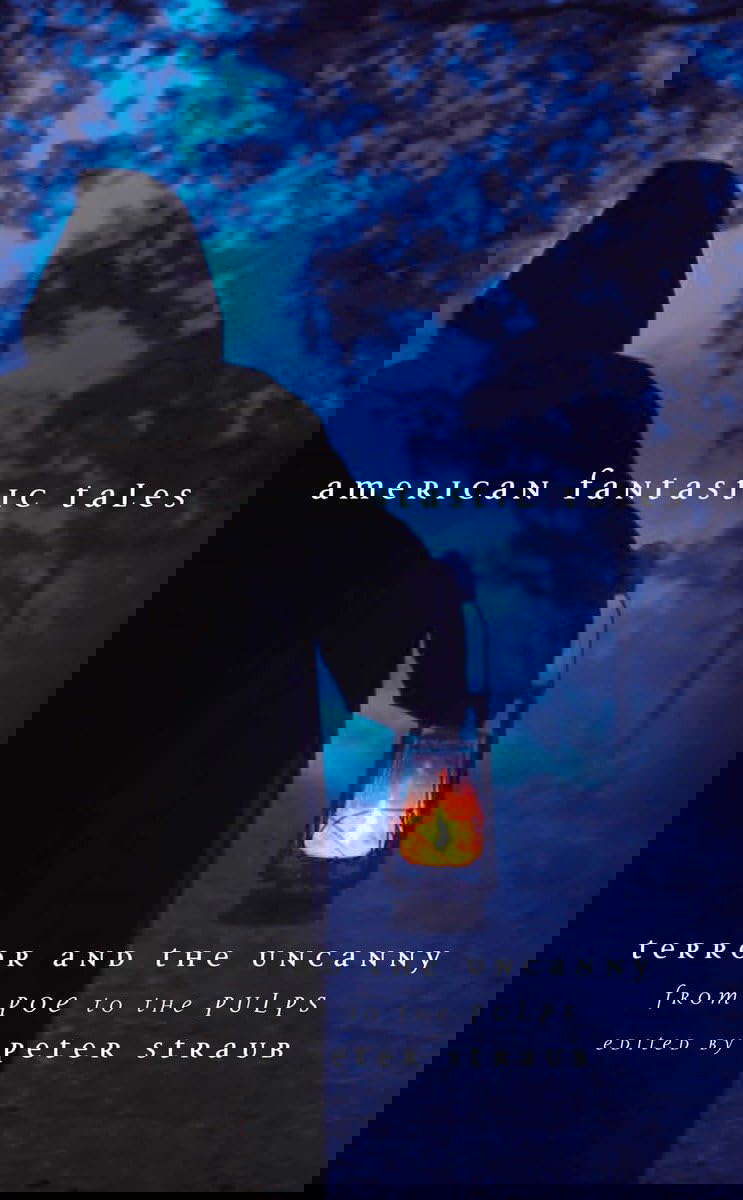
From early on, American literature has teemed with tales of horror, of hauntings, of terrifying obsessions and gruesome incursions, of the uncanny ways in which ordinary reality can be breached and subverted by the unknown and the irrational. As this pathbreaking two-volume anthology demonstrates, it is a tradition with many unexpected detours and hidden chambers, and one that continues to evolve, finding new forms and new themes as it explores the bad dreams that lurk around the edges—if not in the unacknowledged heart—of the everyday. Peter Straub, one of today’s masters of horror and fantasy, offers an authoritative and diverse gathering of stories calculated to unsettle and delight.This first volume surveys a century and a half of American fantastic storytelling, revealing in its forty-four stories an array of recurring themes: trance states, sleepwalking, mesmerism, obsession, possession, madness, exotic curses, evil atmospheres. In the tales of Irving, Poe, and Hawthorne, the bright prospects of the New World face an uneasy reckoning with the forces of darkness. In the ghost-haunted Victorian and Edwardian eras, writers including Henry James, Edith Wharton, Mary Wilkins Freeman, Charlotte Perkins Gilman, and Ambrose Bierce explore ever more refined varieties of spectral invasion and disintegrating selfhood.In the twentieth century, with the arrival of the era of the pulps, the fantastic took on more monstrous and horrific forms at the hands of H. P. Lovecraft, Robert E. Howard, Robert Bloch, and other classic contributors to Weird Tales. Here are works by acknowledged masters such as Stephen Crane, Willa Cather, Conrad Aiken, and F. Scott Fitzgerald, along with surprising discoveries like Ralph Adams Cram’s “The Dead Valley,” Emma Francis Dawson’s “An Itinerant House,” and Julian Hawthorne’s “Absolute Evil.”American Fantastic Tales offers an unforgettable ride through strange and visionary realms.LIBRARY OF AMERICA is an independent nonprofit cultural organization founded in 1979 to preserve our nation’s literary heritage by publishing, and keeping permanently in print, America’s best and most significant writing. The Library of America series includes more than 300 volumes to date, authoritative editions that average 1,000 pages in length, feature cloth covers, sewn bindings, and ribbon markers, and are printed on premium acid-free paper that will last for centuries.
Starred Review. In a time when the Fantastic is regaining popularity in American literature, this wide-ranging collection of horror and supernatural stories is a welcomed reeducation into the genre's roots. Some of the selections are already unquestioned classics-Hawthorne's "Young Goodman Brown," Poe's "Berenice," Gilman's "The Yellow Wall Paper." Although, any reader may find Robert E. Howard, Clark Ashton Smith, Henry S. Whitehead, David H. Keller, Seabury Quinn, Francis Stevens, H.L. Lovecraft and August Derleth just as worthy. Even those most well-acquainted with the genre will be pleasantly surprised with the tales by lesser-known writers, such as Willa Cather's "Consequences" and Gertrude Atherton's "The Striding Place." Editor Straub highlights a Feminist strain with female writers of the late 19th and early 20th centuries: Harriet Prescott Spoofed, Kate Chopin, Madeline Yale Wynne, Alice Brown-to name a few, offering an interesting reassessment of a crucial era in fantastic fiction.
From The Washington Post's Book World/washingtonpost.com Reviewed by by Dennis Drabelle Inside this double-decker set lurks more spookiness than you can shake a broomstick at: four score and more tales, written by horripilating favorites (H.P. Lovecraft, Stephen King, Poppy Z. Brite); mainstream powerhouses (Nathaniel Hawthorne, Willa Cather, John Cheever); and revenants from the crypt of literary obscurity (Madeline Yale Wynne, W.C. Morrow, Seabury Quinn). Until now, the best and bulkiest anthology of its kind was Herbert A. Wise and Phyllis Fraser's "Great Tales of Terror and the Supernatural" (1944). But these new, paired volumes, edited by novelist Peter Straub of "Ghost Story" fame, almost double the length of "Great Tales" while casting a wider net. Wise and Fraser eschewed authors who published mainly in pulp magazines (with the notable exception of Lovecraft), but Straub embraces pulpiness in the first volume's subtitle. The idea seems to be that, whatever the source, all goose bumps are created equal. I'll shiver to that. Few of Straub's choices feature ghosts as such, yet so much weirdness stalks through these volumes that one can only flail at it. The news about Madeline Yale Wynne, for example, is good. Her entry, "The Little Room," is a sleek little number, with just the right measure of ambiguity. The protagonist remembers playing in a certain room during childhood stays with her aunts; but when she returns years later, that room is -- and always has been -- a "shallow china-closet." Or so say the aunts, who tense up when the subject is raised. Did something awful happen in there? Have they remodeled the house to wall up any lingering after-effects? Wynne rides her premise for all it's worth, toying with the reader for 13 pages until -- well, step into "The Little Room" yourself. I also recommend "Mr. Lupescu," by Anthony Boucher, after whom a well-known mystery writers' convention is named. The story takes a familiar subject, a kid with an imaginary friend, and transforms it into a tour de force with not one but two climactic shocks. I recently read it aloud to friends at a country house, and the reaction was everything an amateur bogeyman could ask for. Speaking of familiar subjects, M. Rickert's "The Chambered Fruit" works a nice variation on W.W. Jacobs's classic story "The Monkey's Paw": You may think that having a beloved relative come back from the dead would be heavenly, but in this case it's hellish. One of the more rewarding stories is T.E.D. Klein's "The Events at Poroth Farm," and not just because it's well told. The narrator is a teacher who happens to be mapping out a course in the Gothic literary tradition, and he occasionally interrupts his account of those baleful "events" at the farm to tell us what he's reading for work and what he thinks of it. So, for example, when he brings up Arthur Machen's "The White People," he adds that "it must be the most persuasive horror tale ever written." This is an assessment I happen to agree with, and by including Klein's tale, Straub has handed readers an unexpected bonus: a mini-survey of the very field that his anthology covers. (For the record, Machen was a Brit, so "The White People" is ineligible for "American Fantastic Tales.") Some stories are included because they simply have to be: You can't very well do justice to the dark side of the American soul if you leave out Charlotte Perkins Gillman's "The Yellow Wall Paper" or Ellen Glasgow's "The Shadowy Third" (and both, as it happens, are unforgettable). Other choices seem to represent dogged recovery efforts by the editor. How nice, for example, to find not only a story by Nathaniel Hawthorne but also one by Julian, his overshadowed son. Occasionally, Straub may claim too much for one of his picks. He calls Kelly Link a "central figure" among the ultra-ambitious new horror writers who defy the limitations of genre. Maybe so, but the Link story he presents, "Stone Animals," has a fatal flaw: The animal menaces are bunnies! My mind kept drifting to President Jimmy Carter and the "killer rabbit" that once rocked his boat. On the whole, however, the two volumes are a model of the editorial art. Brimming over with dread, these stories represent a recurrent meeting of two minds: that of the writer who wants to make flesh crawl and that of the reader whose flesh is hot to get a move on. [email protected] Copyright 2009, The Washington Post. All Rights Reserved.
Find it on
AmazonNo videos available yet.
No news articles linked to this title yet.

Overall
Overall rating of the media
Atmosphere
How immersive and tense is the atmosphere
Gore
Level and quality of gore/violence
Story
Quality of the storyline and plot
Writing
Quality of the written content
Character Development
Depth and growth of characters
Pacing
Flow and timing of the narrative