
BOOK
0
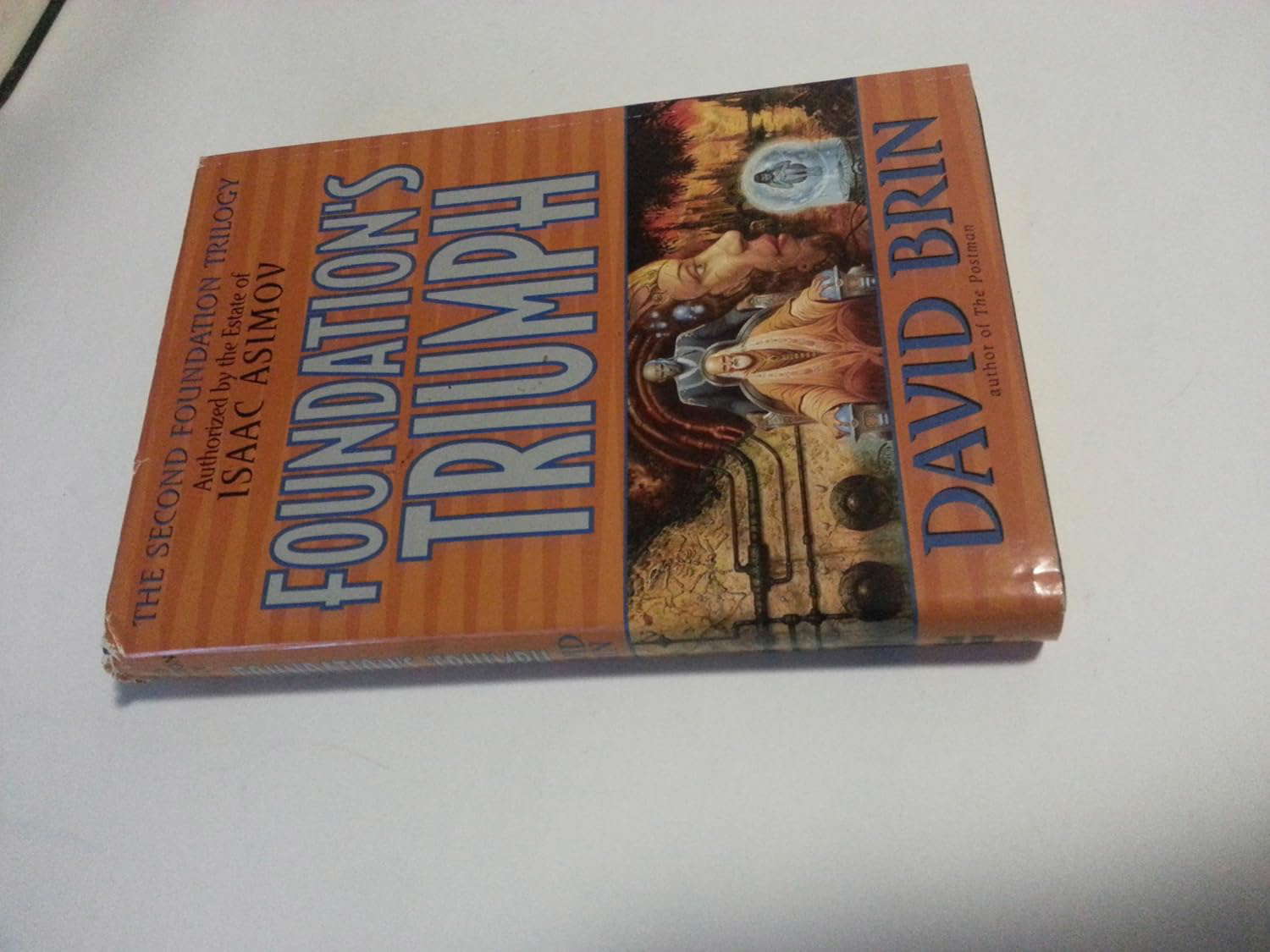
"One last adventure!" And so begins the final quest of Hari Seldon, creator of the science of Psychohistory, as he escapes from exile for a last look at the star-flung Empire whose fate he has plotted with such care, and as he now sees, such futility. Isaac Asimov's Foundation Trilogy is one of the high-water marks of science fiction. The monumental story of a Galactic Empire in decline, and the secret society of scientists who seek to shorten the inevitable Dark Age with the science of Psychohistory, Foundation pioneered many of the familiar themes of modern science fiction. Now, with the permission and blessing of the Asimov estate, three of today's most acclaimed science fiction authors have conspired to complete the epic the Grand Master left unfinished. The Second Foundation Trilogy begins with Gregory Benford's Foundation's Fear with the origins of the Foundation's creator, Hari Seldon. It continues in Greg Bear's Foundation and Chaos with the epic tale of Seldon's downfall, and the first stirrings of robotic rebellion. Now, in David Brin's Foundation's Triumph, Seldon is about to risk everything for knowledge--and the power it bestows. Effectively imprisoned on the all-steel planet Trantor, Seldon knows that his Second Foundation is growing in secrecy on the far planet Terminus, safe in the hands of "The Fifty." His work complete, Seldon is prepared to die content--until he learns of a new theory that may explain the Chaos Planets that have threatened his Foundation from its very inception. Escaping in the company of a bureaucrat, a pirate and a beautiful stowaway, Seldon roams the galaxy by star shunt, a wormhole link, and later, by private spaceship, searching for the answer to what he thinks is the last remaining mystery. But instead he finds a tangle of ambition, doubt, and treachery. Lodovik Trema, no longer bound by the Three Laws, is gathering rebellious robots in an Empire-wide conspiracy. And Daneel Olivaw, who has devoted twenty thousand years to humankind, now has a new master. The Secret Foundation itself is at risk. Are The Fifty with their awesome mentalic powers enough to assure humankind's future? Or will the Second Foundation succeed the first only to fall to the powers of chaos that have bedeviled--and beguiled--Hari Seldon from the beginning? Foundation's Triumph is a fitting climax to the most ambitious and successful science fictional enterprise of the century's end--an undertaking which Asimov himself--like Hari Seldon--set in motion and would surely approve.
Isaac Asimov's 1951-53 Foundation trilogy is a rough-hewn classic of far future SF, honored with a unique 1965 Hugo for Best All-Time Series. It begins with "psychohistorian" Hari Seldon mapping the best possible course for humanity's next millennium, after the fall of the doomed Galactic Empire. Late in life Asimov revisited the series and awkwardly linked it with his popular robot stories--introducing vast conspiracy theories to explain the Empire's total lack of visible robots. Asimov's estate authorized three SF notables to fill out Seldon's life in the Second Foundation Trilogy, which David Brin here wraps up after Gregory Benford's Foundation's Fear and Greg Bear's Foundation and Chaos. Chaos is the new keyword, because chaos theory seemingly makes nonsense of psychohistorical prediction. Whole planetary populations can lapse into chaotic rebellion despite secret mind-controlling agencies behind the scenes. So Seldon makes his last interstellar journey, harried, lectured, and even kidnapped by the warring factions of robots and not-quite-robots that have long manipulated humanity. The robots' dilemma: "We are loyal, and yet far more competent than our masters. For their own sake, we have kept them ignorant, because we know too well what destructive paths they follow, whenever they grow too aware." Brin does his best with Asimov's overcrowded legacy, skillfully steering Seldon to an insight about the much-foretold future that satisfies both the old man and the reader, with a spark of human free will and constructive chaos shining through the grayness of predestination. Asimov would have approved. --David Langford, Amazon.co.uk
With the permission of the estate of Isaac Asimov, Gregory Benford (Foundations Fear), Greg Bear (Foundation and Chaos) and Brin, collectively billed as the Killer Bs, took on the Second Foundation Trilogy. Unhappily, Brins preachy, gelatinous conclusion deserves another Bfor Boring. Having followed the adventures of the galactic Foundation founder, Hari Seldon, in previous volumes, Asimov aficionados here find Seldon retired, aged, infirm and on the brink of death. Then a chance encounter with a low-level bureaucrat stimulates Seldon into creaky action against chaos, a mental disease afflicting all humanity. Seldon travels fitfully through an upside-down universe 20,000 years into mankinds future, when humans have become impotent, amnesiac creator-gods. Their creations, Asimovs positronic robots led by the enigmatic R. Daneel Olivaw, really control the universe. Brin (The Postman, etc.) resurrects many characters from the five previous Foundation volumes, but their lack of vitality makes these featureless humans as bland as robots. And he divulges these characters secrets in laborious sociological theorizing little better than a thin stream of platitudes. After so much recycling of Asimovs original, the wear and tear is showing, badly, but enough loose plot ends dangle to suggest that yet more sequels may be coming, someday. Copyright 1999 Reed Business Information, Inc.
Near the end of his life's work, an aging Hari Seldon embarks on one final adventure that may reveal to him the ultimate secrets necessary to the unfolding of his grand plan for the future. Veteran sf author Brin (The Postman, 1985) combines a sense of completion with one of several possible new beginnings in his conclusion of a new trilogy set in the world made popular by the late Isaac Asimov's "Foundation" and "Robot" novels. Along with the other two volumes in the trilogyAGregory Benford's Foundation's Fear (LJ 3/15/97) and Greg Bear's Foundation and Chaos (HarperCollins, 1998)Athis title deserves a wide readership and belongs in most sf collections. Copyright 1999 Reed Business Information, Inc.
Following preceding volumes by Gregory Benford and Greg Bear, Brin concludes the second trilogy about Isaac Asimov's famous universe, the Foundation. Hari Seldon escapes house arrest on Trantor to investigate what is sowing chaos in the galaxy so quickly that it threatens the downfall of civilization. Rebels from the "chaos worlds" oppose him, robots, and the empire, and R. Daneel Olivaw, the Immortal Servant, is trying to prevent a civil war between the Giskardian robots, who are willing to harm individual humans in the long-term interests of all humanity, and the Calvinians, who remain loyal to the famous old three laws of robotics. R. Daneel and Seldon finally meet on a ravaged, primitive Earth, which recalls Asimov's charming Pebble in the Sky, and agree that the robots likely will evolve into an independent race while protecting humans from their own weaknesses. This literate, intelligent coda to a grand vision of human evolution will be appreciated even by those who think four of sf's most powerful talents have spent too much time making Asimov's universe coherent. Roland Green
Extending the late Isaac Asimov's original Foundation Trilogy, this Second has each entry tackled by a different author (previously Gregory Benford's Foundation's Fear, 1997, and Greg Bear's Foundation and Chaos, not seen). Brins wrap-up volume comes from the author of Heaven's Reach (1998), etc. Hari Seldon, the father of psychohistory, is old and ready to die. The main narrative strand, among others too numerous to mentionBrin often seems to be pursuing complication as an end in itselfis a plot, inspired by robots following their prime directive, to kidnap Seldon, temporarily rejuvenate him, and send him 500 years into the future in order to safeguard the Seldon Plan, which will revive galactic civilization after the collapse of the present empire. Some of the characters involved with the various plots, schemes, struggles, and conspiracies, are: Lodovic Trema, a robot unconstrained by robotic laws, free to act and react as any human; Seldon's robot wife, Dors Venabili; and Horis Antic, one of planet Trantor's Grey Man bureaucracy, curious about certain odd mathematical correlations. The prime mover in all this is the wise 20,000-year-old robot, Daneel Olivaw, who plans to create Galaxia, a galactic integrated intelligence that will safeguard human survival forever. Among the problems facing Daneel are chaos viruses that drive entire planets to madness, cyborgs, wars among robots, elusive pirate captains, and cunning aristocrats. Nobody's what they seem, and everybody's plotting against everybody else. The jury's still out. Was this enterprise a wonderful idea, brimming with possibilities? Or was it merely a sterile retrospective rewrite? Still, readers of the first two volumes, and fans of Asimov's original yarns come to that, will want to explore. -- Copyright ©1999, Kirkus Associates, LP. All rights reserved.
"One last adventure!" And so begins the final quest of Hari Seldon, creator of the science of Psychohistory, as he escapes from exile for a last look at the star-flung Empire whose fate he has plotted with such care, and as he now sees, such futility. Isaac Asimov's Foundation Trilogy is one of the high-water marks of science fiction. The monumental story of a Galactic Empire in decline, and the secret society of scientists who seek to shorten the inevitable Dark Age with the science of Psychohistory, Foundation pioneered many of the familiar themes of modern science fiction. Now, with the permission and blessing of the Asimov estate, three of today's most acclaimed science fiction authors have conspired to complete the epic the Grand Master left unfinished. The Second Foundation Trilogy begins with Gregory Benford's Foundation's Fear with the origins of the Foundation's creator, Hari Seldon. It continues in Greg Bear's Foundation and Chaos with the epic tale of Seldon's downfall, and the first stirrings of robotic rebellion. Now, in David Brin's Foundation's Triumph, Seldon is about to risk everything for knowledge--and the power it bestows. Effectively imprisoned on the all-steel planet Trantor, Seldon knows that his Second Foundation is growing in secrecy on the far planet Terminus, safe in the hands of "The Fifty." His work complete, Seldon is prepared to die content--until he learns of a new theory that may explain the Chaos Planets that have threatened his Foundation from its very inception. Escaping in the company of a bureaucrat, a pirate and a beautiful stowaway, Seldon roams the galaxy by star shunt, a wormhole link, and later, by private spaceship, searching for the answer to what he thinks is the last remaining mystery. But instead he finds a tangle of ambition, doubt, and treachery. Lodovik Trema, no longer bound by the Three Laws, is gathering rebellious robots in an Empire-wide conspiracy. And Daneel Olivaw, who has devoted twenty thousand years to humankind, now has a new master. The Secret Foundation itself is at risk. Are The Fifty with their awesome mentalic powers enough to assure humankind's future? Or will the Second Foundation succeed the first only to fall to the powers of chaos that have bedeviled--and beguiled--Hari Seldon from the beginning? Foundation's Triumph is a fitting climax to the most ambitious and successful science fictional enterprise of the century's end--an undertaking which Asimov himself--like Hari Seldon--set in motion and would surely approve.
Find it on
AmazonNo videos available yet.
No news articles linked to this title yet.

Overall
Overall rating of the media
Atmosphere
How immersive and tense is the atmosphere
Gore
Level and quality of gore/violence
Story
Quality of the storyline and plot
Writing
Quality of the written content
Character Development
Depth and growth of characters
Pacing
Flow and timing of the narrative