BOOK
0
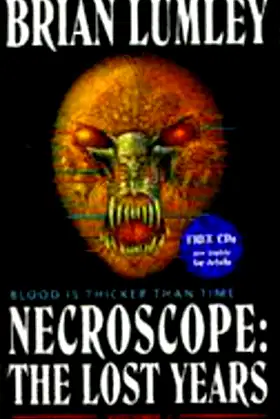
A new novel in the best-selling vampire series fills in the life of the great vampire hunter, Harry Keogh, recounting Keogh's most perilous encounter with the undead while desperately searching for his missing wife and son.
After a three-book sojourn in the mythical "Vampire World" of The Last Aerie (1994), Lumley's epic Necroscope saga returns to contemporary Europe for this ripping yarn of espionage and occult intrigue set during the years separating the second (Vamphyri!) and third (The Source) novels of the projected nine-volume series. British intelligence agent Harry Keogh, who can converse telepathically with the dead, appears here, younger and less experienced than when last seen. He has just vanquished Soviet vampire nemesis Boris Dragosani and learned how to travel through space and time, but his problems are only beginning. His wife and infant son disappear. For different reasons, both his colleagues at British intelligence and new acquaintance Bonnie Jean ("B.J.") Mirlu have used posthypnotic suggestion to prevent him from fully exploiting his extrasensory powers. With his usual aplomb, Lumley whips potentially confusing story elements into a fleet supernatural thriller that successfully prepares the Necroscope saga for a shift from its outdated Cold War setting to the current European political climate. In a literary landscape overpopulated with sympathetic soul-searching members of the Undead, Lumley's Necroscope novels are refreshing reminders that sometimes a vampire is just a bloody entertaining monster. Copyright 1995 Reed Business Information, Inc. --This text refers to the paperback edition.
The sixth volume of Lumley's vampire series, Necroscope, harks back to an earlier period in the life of Harry Keogh, who is the Necroscope. In it, Keogh is inexperienced, still on Earth, seeking his lost family, and caught in the murderous rivalry between two potent vampires. This set of ingredients produces a story that certainly succeeds at keeping the reader turning pages. Lumley hasn't quite dispensed with his tendency toward purple prose, however, and also, the book has the usual problem of the prequel--suspense that is undermined by the knowledge that the protagonist will survive, for his further adventures already exist. Yet wherever the other Necroscope yarns have been popular, this one will be, too. Roland Green --This text refers to the paperback edition.
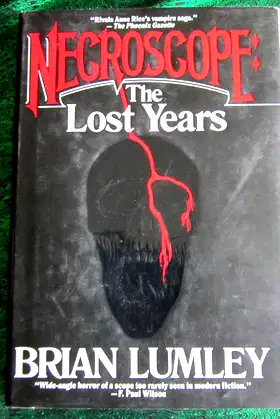
“Rival's Anne Rice's vampire saga.”
“Wide-angle horror of a scope too rarely seen in modern fiction.”
Harry Keogh is moving on. Though the search for his missing wife and child continues, his heart now lies in Edinburgh with Bonnie Jeana beautiful Scottish werewolf whose friendly pack and flourishing pub have given him a place he can almost call home. But from the rocky heights of Sicily, the diabolical Francezci brothers plot the wolf-pack's destruction; and down in the terrible Pit beneath Le Manse Madonie, an ancient evil schemes. The vampires conspire. They reach a decision. They choose a vector. Mafia thug Mike Milazzo is no good to anyone, anytime, anywhere]]which makes him perfect. Disposable. The brothers infect him with a deadly poisonan engineered plague that even a werewolf could never surviveand they offer him a terrible bargain: successfully contaminate the wolf-pack, and receive the antidote. Fail, and die! Mike has everything to lose. So does Harry Keogh. But the Necroscope lost everything once before, and he isn't about to do it again]] --This text refers to the paperback edition.
Find it on
AmazonNo videos available yet.
No news articles linked to this title yet.
No tags available.

Overall
Overall rating of the media
Atmosphere
How immersive and tense is the atmosphere
Gore
Level and quality of gore/violence
Story
Quality of the storyline and plot
Writing
Quality of the written content
Character Development
Depth and growth of characters
Pacing
Flow and timing of the narrative