
BOOK
0
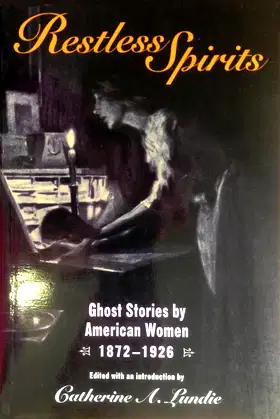
Just as dreams have long been associated with the unconscious, ghost stories have often served as forums for otherwise unapproachable issues. This volume brings together a lively selection of ghost stories by women writers who use the genre to reveal and challenge prevailing cultural discourses on the nature and status of women. Depicting marriage, motherhood, female sexuality, spinsterhood, widowhood, and the intersection of madness and medical practice, the authors displace their critiques of dominant ideologies onto the supernatural, thus shielding themselves from critical recrimination. Their evocative works provide an invaluable resource for insights into women's writing and lives.Originally published in popular magazines, the twenty-two stories in this collection are set in all corners of the United States and were written by a range of authors known and unknown, including Edith Wharton, Kate Chopin, and Zora Neale Hurston. Whether depicting a servant who helps save the reputation of her master's dead first wife, a ghostly mother who haunts a stranger until he agrees to adopt her orphaned daughter, or a ghost who revisits her beloved husband only to discover his long-standing preference for her sister, these tales possess great psychological richness and offer first-rate entertainment even as they explore the social and psychological realities of women's lives. Each story is preceded by a biographical headnote.
A generous collection of 22 ghostly tales, some by well-known writers, most by long (and sometimes unjustly) forgotten authors. The volume is prefaced by editor Lundie's long and informative Introduction, which divides the stories thematically into five major categories: marriage, motherhood, sexual rivalry, madness, and widowhood or separation. What keeps this from being a really superior anthology of its kind is the overfamiliarity of some of its contents (Edith Wharton's ``The Lady's Maid's Bell,'' Ellen Glasgow's ``The Past,'' Helen R. Hull's ``Clay-Shuttered Doors,'' Mary E. Wilkins Freeman's ``Luella Miller,'' for example--superior stories, one and all--have been anthologized, as it were, to death), and the indifferent quality of several pieces (including, most egregiously, Cornelia A.P. Comer's ``The Little Gray Ghost'' and Josephine Daskam Bacon's ``The Gospel''). Lundie makes insupportable claims for such work as Mary Heaton Vorse's overheated tale about a young woman possessed by the very contrary spirit of her predecessor (``The Second Wife'') and Charlotte Perkins Gilman's ``The Giant Wistaria,'' a shrill and obviously deeply personal fictional defense of an unhappy woman's suicide (Gilman would later take her own life). Much better are Zora Neale Hurston's colorful, folkloric ``Spunk''; Hildegarde Hawthorne's compact and beautifully written tale of a wronged woman who ensures that she and her straying lover will remain united forever (``A Legend of Sonora''); (the ever underrated) Harriet Prescott Spofford's intricate ``Her Story,'' a subtle, boldly drawn portrayal of a woman who is declared mad and institutionalized by her unloving husband--and who may in fact be a victim of demonic possession; and M.E.M. Davis's clever, atmospheric story, set on a vividly evoked Louisiana plantation, about a young woman's fianc seduced by the determined ghost of her passionate mother--capped by a very satisfying surprise ending. To be skimmed, then, rather than read straight through, but nevertheless a collection that fills long-standing gaps in the fields of both supernatural fiction and women's studies. -- Copyright ©1996, Kirkus Associates, LP. All rights reserved.
Find it on
AmazonNo videos available yet.
No news articles linked to this title yet.

Overall
Overall rating of the media
Atmosphere
How immersive and tense is the atmosphere
Gore
Level and quality of gore/violence
Story
Quality of the storyline and plot
Writing
Quality of the written content
Character Development
Depth and growth of characters
Pacing
Flow and timing of the narrative