
BOOK
0
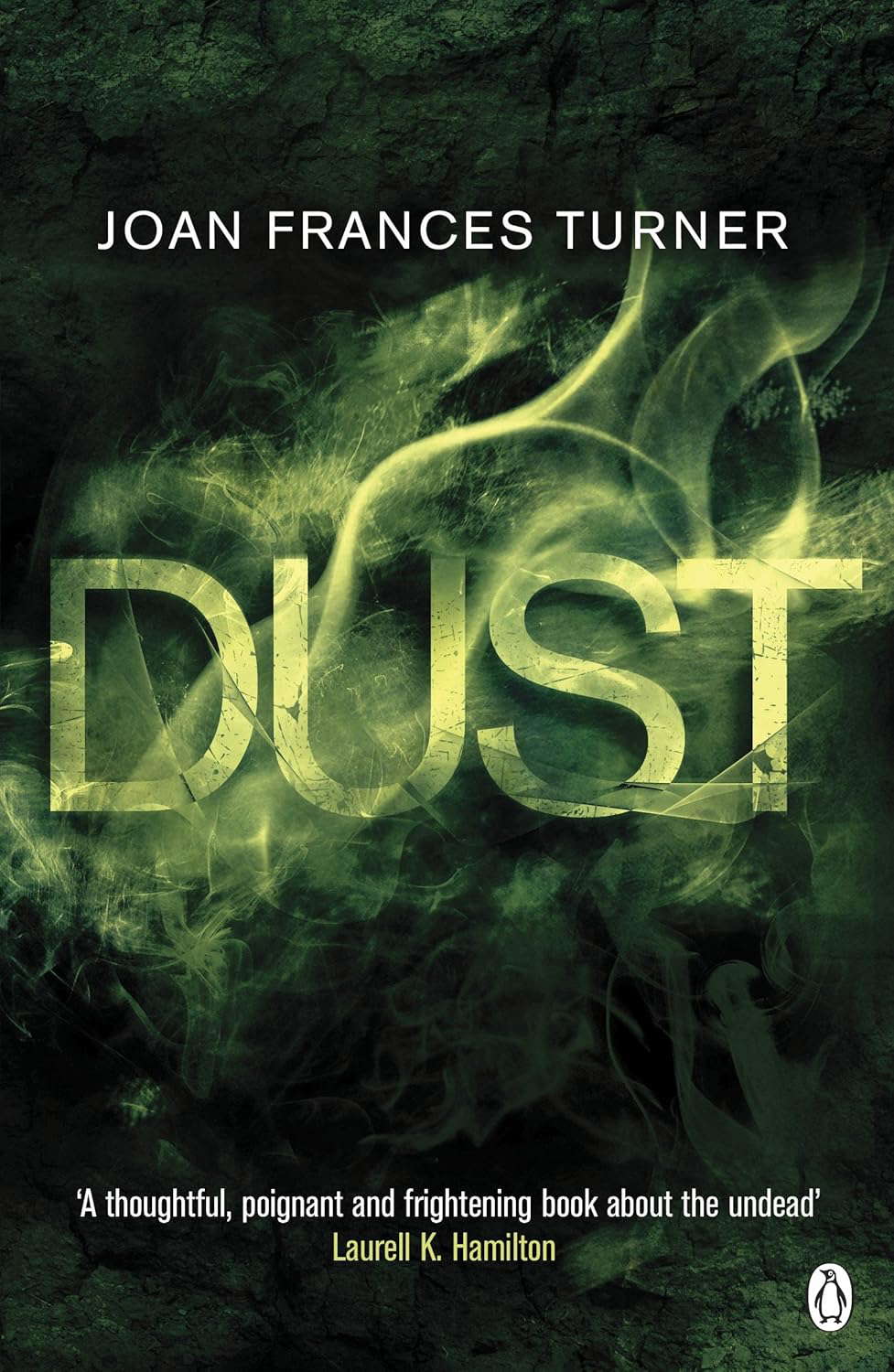
After she was buried, Jessie awoke and tore through the earth to arise, reborn, as a zombie. Jessie's gang is the Fly-by-Nights. She loves the ancient, skeletal Florian and his memories of time gone by. She's in love with Joe, a maggot-infested corpse. They fight, hunt, dance together as one-something humans can never understand. There are dark places humans have learned to avoid, lest they run into the zombie gangs.But now, Jessie and the Fly-by-Nights have seen new creatures in the woods-things not human and not zombie. A strange new illness has flamed up out of nowhere, causing the undeads to become more alive and the living to exist on the brink of death. As bits and pieces of the truth fall around Jessie, like the flesh off her bones, she'll have to choose between looking away or staring down the madness-and hanging onto everything she has come to know as life . . .
Joan Frances Turner on Dust It started with George Romero, but then it almost always does. Friday night, October sometime in the mid-1990s, and the original 1968 Night of the Living Dead was the only thing on television. I'd never seen it and had no particular interest in zombies, but the only alternative was my contracts law textbook so why not? And from the moment poor doomed Johnny solemnly intoned "They're coming to get you, Bar-buh-rah!", the movie had me, and it kept me, and the ending was a punch in the gut. The grainy black and white, the clumsy acting, the slapdash storyline and foolish self-destructive characters and almost nonexistent special effects weren't deterrents, they were the whole point. It all looked like ancient footage from some amateur documentary, and real people act foolish at the worst possible times. I never saw the remake, or any of the sequels: It wasn't the idea of zombies, themselves, that had me, it was that particular story. I didn't seek out any other. Flash forward to 2003, and Carnival of Souls. More cheap black and white, shot on a shoestring in the middle of nowhere, and when Mary Henry's hand emerged from the depths of a Kansas lake long after she should have drowned they had me, again. Were those technically zombies, though, or were they ghosts? It had to be the former, for no ghost appears in the flesh as she did, walks among the living almost but not quite one of them, inspires their unwitting yet visceral disgust: They could, so to speak, smell the decay all inside her. That fascinated me, as did the titular carnival at the Saltair Pavilion. Zombies like to dance, it turns out, to eerie, calliope-style music that seems to come from nowhere. Interesting. What George Romero started Herk Harvey finished, and I couldn't get zombies, themselves, out of my mind. They were ubiquitous, actually, when you started paying attention, but the more I learned about zombies and the popular imagination the duller and less satisfying it all was. Zombies, it turned out, were nothing but a joke. Talk funny. Walk funny. Ugly. Smelly. Filthy. Can't speak English right. Eat disgusting food. Spread disease. Mentally inferior. Lights on, nobody's home. They'll steal and devour everything you hold dear, including yourself. Shoot them. Kill them. Cleanse the earth of their kind. It's a moral imperative. I was urged at every step, in this particular mythology, to ally myself with The Good Guy, the clean upright English-speaking human alpha male and his ragtag gun-toting buddies who were making the world safe for the One True Species, one bullet-riddled skull at a time. The hell with that. Zombies--actually, Jessie's absolutely right, let's dispense with that misappropriated West African word--the undead are nothing but people who died. Your mother, "Good" Guy, your spouse, your sibling, your child, your friend, your neighbor, you yourself, and what if you only think they're all monsters? What if dead people still have minds of their own, can laugh and fight and form friendships and love each other and grieve--and kill, as you do, for malice and sport as much as from hunger? What if the moans and groans you hear are an actual language? What if the undead have a "life" span, slowly aging and decaying and crumbling into dust just as inert bodies do in the coffin? What if the creature in your crosshairs still remembers you, loves you, can't plead for what you once were to each other before you pull the trigger? (For that matter, what if your incredibly tedious guns don't even do the job? That's the first determination I made when I sat down to write Dust, that there would be no Deus Ex Firearms whatsoever. Fire itself, that'd work to kill them, but then fire has the disadvantage of spreading like, well, wildfire. As does bio-weaponry, but then we're getting ahead of ourselves.) If Dust could be summed up in one sentence, it would be a lyric from Stephen Sondheim's Sweeney Todd: "The history of the world, my sweet, is who gets eaten and who gets to eat." It presupposes a world where the living dead are not some new aberration but have existed alongside the humans they once were for thousands of years, an uneasy harmony occasionally broken up by unfortunate incidents such as, say, the famous Pittsburgh Massacre of '68. Other elements came into play: the Greek myth of Erysichthon, which haunted me since I first read it as a child, about a man the gods punish for his hubris with a hunger so insatiable he ultimately devours...himself. Luc Sante's beautiful, unsentimental prose poem "The Unknown Soldier," in which the forgotten dead assert their right to speak for themselves. The eerie photographs and morbid newspaper clippings from Michael Lesy's Wisconsin Death Trip. The unsettling banjo music in the end credits of the cult horror film The Last Broadcast, which inspired the notion that the undead express their strongest emotions through telepathic music: "brain radios." That and eerie waltzes in Carnival of Souls inspired the spontaneous psychic dances, the only moments of true peace and harmony the undead ever enjoy. Eating, in this world, is identity: The living eat dead meat. The dead eat meat so recently living that it's still warm and pulsing with life. The dead find the living's dietary habits as abominable, disgusting, taboo as the reverse. Every human alive, in our world as well as theirs, pins a far greater part of their self-image than they realize on what goes into their mouths. It was a joke then that Jessie, the fervent vegan in life, began a ravenous flesh-hunter in death, and yet it was also entirely to be expected. Armed with the facts--such as they were--in September 2003 I jotted down a sparse page of disjointed notes: character names, story locales (the Calumet Region of northwest Indiana, besides being my easily accessible home geography, was both underserved in fiction and had enough urban-suburban-rural-industrial variety to make it interesting), a little folkloric rhyme the undead liked to sing amongst themselves but never made it into the book. The slang--"hoo" for humans, "rotter" and "feeder" and "bloater" and " 'maldie" for each other--also came early because it was fun to think up. Jessie simply walked in right at the start and announced herself, an angry, lonely girl abused in life, abandoned in death, yearning for love and acceptance but furious at the world. It was inevitable she'd take instantly to the jarring, aggressive, insatiably hungry culture of the undead, also inevitable that she'd write off her human family entirely only to have them return to be her undoing. Joe started as a parody, one of those "teen angel" hoods-with-a-heart-of-gold from the fifties pop songs who dies in a drag race gone wrong, and then he surprised me by showing himself as lonely and yearning as Jessie, if not more so, under the brutal surface. It was inevitable, again, that they'd both fall in love. Florian, a literal walking skeleton, was always meant to be the paterfamilias of Jessie's surrogate family, but I never expected him to turn out gentle, genuinely wise, the only true parent she ever really had. Actually they all surprised me, as I worked little by little on draft one, draft two, draft three through 2003, 2004, 2005, 2006, 2007. Renee, the lamb thrown into a pit of snarling wolves, grew up amazingly fast and became not just Jessie's friend, but her ally. Linc--only kindhearted from Jessie's perspective, no human would want to run into him--was supposed to be merely Joe's foil, the "geek" to his "jock," but then quietly, stubbornly, relentlessly worked his way up from the margins of the story to the center. Teresa, the gang leader, was even more selfish and cruel that I'd imagined. (The rival gang the Rat Patrol were exactly as selfish and cruel as I'd imagined, so at least I had some control over the proceedings.) Lisa, Jessie's neurotic mess of a human sister, proved she could be there for Jessie in death as she never was in life. Jim, her brother, began as the most cardboard sort of villain, missing only a mustache to twirl, then I remembered that the truest antagonists are those who genuinely believe they're acting out of kindness and love. Only when Jim tried to "save" Jessie, did it become clear how much he--like all Good Guys--utterly feared and despised what she'd become. Death him/her/itself, the trickster, the demon, the angel, the destroyer, the salvager, was there from the beginning, though he didn't announce himself right away to me any more than to Jessie: Like any trusting parent, he first and foremost wanted to let his undead children try and fend for themselves. Since the first inspiration for Dust was a pair of B-movies, other midnight drive-in fixtures seemed entirely appropriate: The meteor that causes extraterrestrial chaos upon landing. The semi-secret laboratory with "noble" purpose gone horribly wrong. The pandemic plague--but why just consider what would happen if the living became undead, why not consider what might happen if the undead were brought back to life? Untouchable life, even? What if Death the trickster, in his eagerness to consume the earth, thus ultimately ended up tricking himself? It's all well and good to talk about Herk Harvey and banjos and falling meteors, but what truly inspired Dust was of course my own fear of death. There's another song, by the musician Exuma, that embodies it: "You won't go to heaven, you won't go to hell/You'll remain in your graves with the stench and the smell." What if the "afterlife" took place right on earth, and you rotted slowly, inexorably, feeling the first bugs nest and hatch on your body? What if you actually had to watch your loved ones grieving you, as Jessie and Renee both did, and be yards away and yet an eternity removed, unable now to be anything to them but a monster? What if pain, fear, longing, grief, the hungers of the body don't stop when life stops? What if Death isn't an angel of mercy, but a real live son of a bitch? As it turns out, then, for me as for everyone else the undead were an embodiment of fear. But they surprised me, yet again, by becoming embodiments of hope as well. Life doesn't end after death, not really. To become something new, alien, unimagined, is not to lose oneself, one's identity and thoughts and needs and wants, they just express themselves a little differently. Nobody's lost to anyone forever; if there is no afterlife, there is at least the "eternity" of memory. To lose one family is to gain another. Betrayal by loved ones can lead to new, stronger bonds that are about real trust. Nearly everyone's stronger and more capable than they imagine, when put to the test. Flesh is just flesh and if it rots, well, that's only natural. But that's all very Hallmark Hall of Fame and ultimately it was also about having some fun whistling in the graveyard. Dust was a chance to play with all sorts of notions of life and death: ordinary mortal existence, living consciousness trapped in dead decaying bodies, seemingly "live" flesh rotting and dying from the inside out, invulnerable immortality through the back door. As Jessie says, "How many kinds of living and dead and living dead and dead living had I been in just these few months, these few days, after the stasis of plain old human living and dying? I deserved some kind of existential medal." Tell me about it, it was hard to keep up. It also felt like finding the pulse of something real, and true, about life and death under all the campiness of traditional zombie mythology. Both the B-movie folklore and the insomniac anxieties inspired the book in equal measure, and both deserve their due. It starts with a silly story, some actors shuffling around sideways in worn-out clothes, and ends with real people, real fears, real hopes. But then, it almost always does. --Joan Frances Turner
Turner offers an original variation on the near-ubiquitous zombie theme in her debut novel, but her concept doesn't really coalesce by book's end. Rather than being mindless, drooling, shambling monsters, the undead can communicate with each other, struggle for leadership, and form emotional attachments when they're not chowing down on raw meat. Jessica Anne Porter, undead these nine years, is vehemently opposed to the word "zombie," which she considers racist. She belongs to a zombie gang called the Fly-by-Nights that battles other gangs over Wisconsin territory. The inevitable gore ("the nauseating, liquid softness of her brains scrambled eggs under my pounding fist"), and the main activities of daily unliving ("nothing to do but eat raw flesh and sleep too much and fight about nothing") don't offer much for readers to connect with. Copyright © Reed Business Information, a division of Reed Elsevier Inc. All rights reserved.
*Starred Review* Meet 15-year-old Jessica Anne Porter. She’s a plucky teenager from suburban Chicago who spends most of her time looking for something to eat and finding a safe place to bed down for the night. Jessie’s not a homeless person, though. She’s an undead person. Turner’s debut is a massively entertaining and seriously revisionist zombie novel. How revisionist? Well, her characters communicate with each other eloquently (although, to humans, it sounds like a lot of grunts). They remember their past lives. They have thoughts and emotions, and when a new kind of creature, a sort of human-zombie hybrid, appears out of nowhere, they feel fear. The author has taken the familiar zombie clichés and given them a good shake. Jessie, who has been dead for nine years, is as real and human a character as anyone you’re likely to meet in the pages of a mainstream novel, and Turner has created a new zombie mythology that is smart, scary, and viscerally real. Recommend this one highly to horror fans, even those who claim to have sated themselves on zombies. HIGH-DEMAND BACKSTORY: Will this audacious first novel launch the latest hot trend in undead fiction? Don’t bet against it. --David Pitt
“MASSIVELY ENTERTAINING . . . Turner has created a new zombie mythology that is smart, scary and viscerally real.”
“SPECTACULAR . . . A great, unsettling portrait of raw hunger and hope.”
“AMAZING . . . Joan Frances Turner has done for zombies what Anne Rice did for vampires.”
“A TRULY ORIGINAL IDEA told from a viewpoint that will surprise and horrify.”
“WELL WRITTEN . . . A new and unique take on zombies.”
2Nine years ago, I was alive. Nine years ago, Jessica Anne Porterwas fifteen and lived in a nice house in the very wellguardedtown of Lepingville, an hour out of Chicago, and gotokay grades and wanted to do something someday with animalrights. Her hair was auburn dyed something brighter, Iforget what. I don't see bright colors well anymore. She had amother, father, a sister in her first year of college, a brother inhis last—neither of them could wait to get out of the house,they barely spoke to her parents. And her parents barely spoketo each other. Then one day they were in a rare good moodand took her out to dinner, and then there was the Toyota ridehome.Dad took the back roads home, the scenic tour. You weren'tsupposed to do that, you were supposed to stay on the mainhighway with the blindingly sulfurous roadside lights (the"environmental hazards," as we called them, you never put itmore directly than that, supposedly hated bright light) andthe toll booths. Each booth had a FUNDING COMMUNITY SAFETYsign so you wouldn't throw a tantrum as you forked over yourmoney, a sentry bearing an emergency flamethrower. See?Safety. Suck on that, you suburban cheapskates. The small,cramped booths could serve as safe houses in a pinch, if a"hazard" somehow surprised you on the road. They had to letyou in, that was the law. But my dad had paid four tolls ineighteen miles just to get to the restaurant and my mom complainedthe road lights gave her headaches and it was a prettynight and for once nobody was screaming at each other sowhy not take the old road, the long way home? Rest your eyes.Have a bit of peace and quiet.It was two miles from the county line, where the formerindustrial park gave way to beachy dune grass and rows ofhalf-built condos sat empty along the roadside, silhouetted inweirdly dim, soft white road lights. The old-fashioned kind.This was after they finally passed the moratorium on residentialbuilding in rural areas, the one the developers held up aslong as they could, until the "hazards" somehow got into thatgated community near the Taltree Preserve; whose woods,fields and ex-farmlands these are, even they then managed tofigure out. Nothing hazardous that night, though, just thedark sky and the low fuzzy whiteness and everything peaceful and sleepy until suddenly there were two blinding headlightsbearing down on us from the wrong side of the road, howlingbrakes and screaming and then, like the lost breath from ahard stomach punch, everything gathered into a fist andstruck, and then stopped.I remember a pickup truck, yellow, gone faded saffronunder the road lights. And a woman's voice, not my mother's,moaning over and over like some nauseated prayer while I layon the pavement dying, Oh Christ, oh God, oh Christ oh Christoh Christ oh my God and I thought, Lady, it's a little late forthat now isn't it? Her voice was washed out, staticky with thebuzz of a million angry flies eating her up, and the buzzingbecame louder and louder and there were new flashing lights,red ones, but it was too late, I was all eaten up, and I closedmy eyes and fell asleep for a long time.Then, days or weeks or months after the funeral, Iwoke up.In old horror movies where someone gets buried alive,there's always that moment where they blink into the darkness,pat and grope around the coffin walls and let out thatbig oxygen-wasting scream as the screen goes black. Me,though, I knew I was dead, really dead and not put away bymistake, and another giant fist was gripping my brain andnerves and shoving away shock, surprise, bewilderment, onlyletting me think one thing: Out. And I knew, with absolutecertainty, that I would break free. I didn't seem to need airanymore, so I could take my time.I tried putting my hands out just like in the movies, to feel the force and weight I was fighting—six feet under, that's alot of piled-up dirt—and that's how I found out my right armwas shot to pieces. The left could rattle the box a bit, but notenough. I raised my legs, each movement a good long achystretch after the best nap in the world, and pressed my palm,knees, feet against the white satiny padding overhead. Felt arattle. Pressed harder. Heard a creak.Then I kicked.The first blow tore through the satin lining and slammedinto the wood without a moment's pain; the second splinteredit, cracked it, and I kicked and kneed and punched until I hitshards of timber and musty air and then, so hard my wholebody rattled, a solid concrete ceiling overhead. A grave liner,Teresa explained to me later, another box for my box, but I feltreal panic at the sight and had to make myself keep kicking,harder, harder, and that awful concrete became fine whitedust that gave way to an avalanche of dirt. I was gulping downmouthfuls of mud and I was sad for my shirt, they'd buriedme in my favorite T-shirt that read ANIMALS ARE NOT OURS TO EAT, WEAR, OR EXPERIMENT ON and now it was plastered mutewith damp black dirt, but I kept swimming one-handed, kicking,tunneling upward through a crumbling sea. The moisttides of soil were endless, then I felt something finer andpowdery-dry and my good hand found thin cords of grassroots,poked through the green carpet-weave and ripped along jagged slit open to the air. The air—I didn't need it,maybe, but as I lay there drained and exhausted and felt itcool on my dirt-caked back I almost cried.The sunset was a needle-thrust in my eyes. I crouched inmy own grave hole, retching up pebbles and earth, and gaspedat the smells of the world: the turned soil, the broken grassstems I clutched in my fist, graveside flowers old and new, thetrees and plants and the thousands of people and animalsthat'd left scents behind traversing the cemetery grounds. Myown dead, dirty stink, and it still didn't shock me, I was toodistracted by the other million fits and starts of odor floodingmy nostrils—this was how to experience the world, this noteof mushrooms sprouting in damp grass, this trace of old rubberfrom a sneaker sole, compared to this banquet eyes andears told you nothing! My head pounded, painlessly, like agreat throbbing vein: the hard pulsations of my new brain, myundead brain, but I didn't know that yet. I reached up, likesomeone would be there to lift me, and touched somethingrough and cold. A tombstone, my tombstone: August 14, 2001.I died on August 14, 2001, but what day was it now? Wherewas I now? Where would I go, where will I sleep, do I have tosleep—I smelled it before I saw it, darting quick and confusedacross the grass. Rabbit. Fresh, living rabbit.Every other scent and smell in the world instantly vanished.Hunger rattled my skull and shook my bones—porkchops, hamburgers, steaks rare and bloody, everything thatwould have made me vomit when I was alive but I had to havethem now, I had to have them raw and oozing juice and if Ididn't get that rabbit, if I didn't kill it and devour it now, I hadnothing to live for at all. I staggered to my feet and stood there trembling, legs stiff and exhausted, but before I couldeven try to run for my food something bloated and rotten inthe shape of a man, his dark suit jacket torn and spilling fatlittle white grubs, crawled on all fours from the pile of dirt thathad been his grave. The grave next to mine. The rabbit hadhalted too soon, crouching frozen with fear by our collectivetombstone, and as I watched it spasm and kick against death,as I watched my father sink long teeth into its skull and spitout soft tufts of brown fur, I was small again and only wantedto scream and cry, Daddy, why did you take my toy?Something crawled from behind a yew tree, feverish andfast. A woman in the rags of my mother's favorite blue sweaterfell on him, grabbing the rabbit's meaty hindquarters for herself,and held on tight and chewed no matter how hard hepunched and kicked, so hard she sobbed between bites:Whap, cry, swallow, whap, cry, swallow.But, Daddy, that's my toy.They rolled on the ground, snarling with rage.And you. What are you doing in my mom's favorite sweater?But they'd dropped the rabbit carcass, fighting that hard,and I was so hungry and it was so good and I knew the answersto my questions, I already knew.A garter snake slithered over my mother's foot and theyboth went crazy, grabbing fistfuls of grass where it had shotout of reach. Arguing again, fighting forever, only with soundsnow and no words—screeching violins, deafening poundingdrums. I was gone already, walking away. I never saw themagain.I scraped a deep, gouging ridge in my back, crawlingthrough a gap I'd torn in the cemetery fence, and felt only apaper cut. A pinprick. I ran my tongue along my teeth andalmost screamed; the fence's barbed wire was nothing, butmy teeth had all grown long and blade-edged and when Ipulled my hand from my mouth, there was something thickand syrupy from the new cut on my tongue and fingers, almostlike blood but black. Coffin liquor, Florian told me later,my own putrefaction flowing through my veins. My hand wasswollen and livid, the veins and arteries gone dark.I could barely walk. I staggered, tried crawling like mymom had but with the bad arm that wasn't any better. CALUMETCOUNTY MEMORIAL PARK, read the sign; that told me I wasin the middle of nowhere, if you insist on burying instead ofburning they make you do it far away from everything anddon't come crying to us if the funeral procession gets attacked,but where this particular nowhere was I had no idea. Otherthan me and that garter snake, no sign of life. I crawled andstumbled and crawled again, pushing through grass, gravel,leaves and underbrush. Snapping branches scared me, a singlecar speeding by terrified me; it'd find me and run medown if it got a chance. I didn't feel like a monster but I knewI looked like one. I cried from fear, wept from hunger, blacksyrupy tears splattering my muddy shirt.I kept walking, deep into the countryside, no company butthe animals I was too scared to stop and hunt. What the hellwas I looking for? My throbbing skull started pounding inearnest, yielding to real pain, and my ears were flooded with a sudden off-kilter symphony of screeches, buzzes, trumpetsquawks, strings sliced shrilly in half. The buzzing like flies,that sound I remembered from dying. I shook my head to getrid of it, like real flies stuck in my head, and it grew louderand sharper and became muffled disjointed words:—another one—grave—Joe—see—I started shaking. Never mind what had happened to meand my parents, never mind the guard posts along the highwaysand every Lepingville entrance and exit, never mind allthe school safety drills and town committee handouts aboutthe others, the "hazards," the reasons you either burn like aGood Responsible Person or you get buried behind barbedwire in No Humans' Land—never mind all that because itcouldn't be true, I couldn't be true——circles—follow—Circles, dizzy and hunger-sick around the same clumpof trees, and I couldn't find those voices or escape them but Itried to follow them not knowing why: hot-hotter-COLD—turn left—warmer-warmer-COLD—not so far left—so hungryhotter-COLD—straight ahead—too quiet—turn around. Myguts twisted hot-hotter—ON FIRE with emptiness, no moremeat, no nothing. Voices faded, returned in tinny crashes ofmusic, then vanished. I was on the worst ice-cream truck chasein the history of the world, but if I kept going the voices wouldfind me, they'd tell me where to go and feed me and takeme in—but then I took a wrong turn and it was cold-colderabsolutezero, every sound gone. The clouds overhead seemed to burst and collapse like bubbles, inky night pouring in as Istood there covered in mud and black blood. All alone.I doubled over, threw my head back and screamed. Frankenstein'smonster, roaring, and it felt so good that I crouchedin the leaves and shouted louder, ripping myself inside outwith hunger and fear. Something small and furry shot pastme, terrified of the sounds I was making, and I could havechased it but my head pounded and throbbed and everythingbefore my eyes melted, sliding off my plane of vision as I succumbedto the vertigo. A spoon heated seething red scrapedmy gut away piece by piece, slow starvation cauterizing myinsides, and I pounded my forehead, my good fist, against theground and wailed.I don't know how long I lay there. Silence, my horriblecrying met with utter silence, and then I felt what I thoughtwas an insect brushing my face. No, not an insect—soft swollenfingers. A stench pressed in on all sides, I was fresh andsweet in comparison, but I was too tired to move and itcouldn't mean anything. I was all alone.The fingers touched my ruined right arm, lifted it. It fellback with a soft thud. Chit-chit, I heard, a strange wet-dryclick like someone chewing a mouthful of popcorn kernels. Ipulled myself upright, and looked.The whole right side of his face was smashed in, concaveforehead and crushed cheekbone and one eye bugging precariouslyfrom a broken socket. He was purplish-black, anddirty white: Maggots seethed from every pore and crawled across him in excited wriggly piles, blowflies waving andblooming and wilting, the bits of bone they'd scraped cleanglinting like tiny mosaic tiles. Scraps of jeans and a leatherjacket clung to the sticky seething mess of his flesh. He wasbig, big-shouldered, a good foot taller; chit-chitter, he went,even standing still.Behind him were more stinking, seething masses shapedlike people, their skin in the thin moonlight every colorbruises go: some barely rotten at all, one shriveled and bonyas an unwrapped mummy, one so bloated and gas-blackenedit scared me. Standing right behind Bug Man was a halfskeletonwith wild dark hair and silver rings clinking on herfinger bones, eyes bulging nearly out of her head as she sizedme up, grinned and let out a loud, belching guffaw. They allgroaned with laughter. Their teeth looked the way mine felt,long and jagged and dull gray like tarnished blades.I can't explain it. You can be a monster yourself and stillscream, puke, faint seeing what you are staring back at you,but none of it seemed monstrous. It was pretty, almost, theweirdest kind of pretty, seeing how they were all young or oldin their own inhuman way, how slowly and methodically thebugs took care of everything, how clean bones and pulsatingbrains were underneath the skin. How natural it all was. Butthen those teeth, so dull and dirty but a glint at the tips, if youlooked closely, the flash of a needle that could crunch throughbones and penetrate to the marrow. Under their laughter athrumming sound, not quite musical but not quite merenoise, and the longer I stared the more the shapeless sounds took on outlines, defined themselves, by whom I was lookingat: That one there, with the bleary laugh, a trumpet; the onewith the thin sad face, banjo; the black-haired scarecrow withthe rings, shrill strings. Bug Man's noise was louder and strongerthan the rest, so I mistook him for the leader. Electricguitar, that would blast you flat to the ground if you got tooclose.I reached out and touched his face. Chit-chit, said thebugs. He grunted, almost belched the crude shape of words,a caveman with a rotted tongue—but soon as all that hrruhhrruh-mmmuhhhhh shot through my head it became wavesof sound, transformed radio waves, and then words preciseand clear as pieces of glass glittering on the beach."I'm Joe," he said. "Happy birthday."The others mumbled something in turn but I couldn't hearthem properly just yet, only their noises that were almost butnot quite trumpets and banjos and strings. The smell of freshflesh wafted over me, and Joe the Bug Man stepped aside assomeone in a ragged black fedora emerged from the trees,something swinging from his hand, and dropped a warm furryjust-dead thing right at my feet. A possum, its neck neatlysnapped.My stomach gurgled and Fedora Man snorted, walkingaway. Dark drops fell on the carcass, plink-plonk, and Joelaughed, reached out to wipe the black drool from my mouth."Go on. Eat."I ate and ate and couldn't stop. Rich raw meat. Warmblood. Leftovers from God's refrigerator. When I looked up again, putting down the bones I'd been chewing to twigs toget at the marrow, they were all standing over me. The darkhairedone with the rings smiled."I'm Teresa," she said. Jerked her head toward a soft, bloatedgaseous mass with a lone lamplike eye and ragged remnants ofred hair. "That's Lillian. Remember her name, even if you don'tremember mine."Lillian, the chieftainess, though of course I didn't knowthat yet. Teresa was her second in command back then, alreadyplanning, scheming. They both watched me crunch anotherbone down to splinters, then Teresa smiled."Good girl," she said. "Now, time to earn your food."Her fists caught me in the jaw, chest, gut, and when theyall piled on me at once, my gang induction, all that meat camerocketing straight up again. Dry bony feet kicked me, squelchingrotting ones, and Joe sat there watching it all happen. Icrawled through a gap in the fists and feet, even one-armed itwas better than tottering on legs that would never work properlyagain, and I rose up and punched Joe hard in the gut andhe gasped, laughed harder, and hit me back more viciouslythan all the others. I hung on. Bones cracked, his and mine.They only pulled me off when we were both dizzy and spittingout mouthfuls of bilious dark blood, and even one-armed I'dpassed my test so well that Teresa, then Lillian, beat me upagain so I'd remember who was in charge. I couldn't move forthree days. They brought me rabbit, squirrel, the dog-ends ofdeer. They'd been needing someone new who could really fight, they said, and didn't hide their surprise that the someonewas me.But there wasn't anyone to fight, not in the middle of nowherein a former county park with only squirrels and deerand each other for company. They were the first gang for me,the only gang, and so I didn't question why we all stayed outhere when other gangs routinely marauded in the poorer, unguardedhuman areas, the ones whose property taxes justcouldn't float guard teams and electrified fences and infraredvideo security, it's like they all want to be attacked, too bad,so sad, why don't they all just quit their goddamned whiningand move somewhere else?"You broke six of my ribs," Joe told me, when I could standand walk again; he said it nose-to-nose clenching my goodarm hard enough to snap but there was admiration in hiseyes, that little hiss in his voice that someone gets whenyou're not at all what they expected, when they realize they'renot gonna get what they want without a fi ght and they like it.That singular sound of: Damn, woman. "Six. You stomped melike a fucking cardboard box.""I'm hungry," I told him, and there wasn't any whining inmy voice, no please-feed-me, just a hard flat-out demand forwhat I required. He liked demands, I could tell already. Hearingthem, issuing them. "I'm always hungry.""You're supposed to be."He pulled me aside from the group, from everyone smirkingat us both. Florian, the walking skeleton with the watery blue eyes, he was the only other one of them I liked. "It's timeyou learn to hunt," Joe said. "I'll show you how. Lillian's a shithunter, don't let her tell you anything. You'll be good at it. Putsome of that crazy to use."Plenty to hunt. Plenty to hunt far outside our attenuatedneck of the woods. Plenty of low-hanging two-legged fruitrotting on the vine in Gary and East Chicago and South Chicagoand parts of Hammond and Whiting, plenty of what Ikept being told, over and over again, secondhand, have heard,they say, everybody knows, is the only real meat. But turnsout, I didn't want brains, I didn't need hoos; meat was meat,any fresh kill would do, and it did for all of us, for all theirtalk."So just what the hell are we looking for?" I asked Joe onour first watch patrol together at the wood's very edge, sittingside by side against a tree trunk, not watching anything butthe wind kicking up the dry dead stalks of a neighboring cornfield gone to weeds. "There's nobody here. There's never anybody,Ben said, nothing but feral cats and every now and thena crazy-ass bum—""Do they still go around saying you can shoot us?" Joe interrupted,squinting into the painfully blue sky. High noon, thewhole rest of the gang deep asleep. "Guns don't work. Not pistols,not machine guns, not automatic rifles, never be afraidof any little hoo who comes at you waving a gun—""So Sam said." I'd started liking Sam too, not half so wornout and dusty as Florian but with so much wearier, saddereyes. "But they don't say that anymore. Didn't.""Fire. That's it. Or a good stomp to the head, till your skull's kicked in." He folded his arms, a little humorous glint in his eye. "Like a flattened cardboard box. Otherwise you'll just crumble to dust, whenever it's your time. Stomping, or fire. Ever seen a crazy hoo-vigilante wandering around the woods with a flamethrower, thinking he's gonna toast our collective asses once and for all?""So what would we do then?" They don't go for controlled rural burns anymore, once they realized all that does is send the surviving "hazards" crowding closer and closer to hoo-territory. Gotta eat. Of course, hell with what the government does or doesn't do, all it takes is one crazy redneck with a book of matches. It's just been sheer luck. "By the time we see him, already too late.""What do we do then?" Joe chuckled, still gazing up at the sky. "Mostly we die. But at least we die knowing who got us, and we don't die alone." He raked one leather-jacketed shoulder against the tree bark, working away at the ceaseless bug-itch of his own rotten skin. "Died alone once. I'm not doing it again." He turned to look at me, narrow dark eyes staring from a seething feeding sea. "Never. Ever."I stared back, watching the perpetual movement of his skin as the maggots and flies crawled around and into every niche of flesh, made the worn creased jacket sleeves wriggle all of their own accord. Dead? Bursting with life, literally, all the life you could possibly want, that d-word applied to any of us was so ludicrous and willfully oblivious and just plain bigoted and how old and aged was Joe, anyway? Not by hoo-measure, but by our own lights? He'd said he died sometime in the fifties but couldn't remember just when. I'd forget too, he said, in time."I don't want to die alone either," I said. "Again."Joe just laughed and shook his head. "Not a larva on her yet, and she's already hand-wringing—you have any idea how many decades Florian's got on you? Sam? You're a goddamned baby. You're so young.""And you're not so damned old either," I said. Asked. Worried. "However much you brag." Silence. "Right?"His eyes were adrift and lost in his own face, that whole ocean of insect life; I had to look that much harder at him to read his expressions, gauge his mood. Keep my attention on him constantly. If it had been me I'd have been creeped out, someone staring at me all the time like that, watching every last thing I do. Joe, he didn't mind."I'm not so old," he said, softly. Then he grinned. "And I can't drop even if I wanted to, now I've got a goddamned diaper-shitting baby to feed—"I hit him, and he laughed again and louder and we wrestled until I shrieked for my arm, not my good arm, goddammit. The sky was pure cloudless blue that whole afternoon and the sun pressed in hard on dark-loving undead eyes but it was still beautiful, the sky, the woods, even that ratty old cornfield, all ours.What the hell were we looking for? He never did answer that question. Him or anyone else.They were the first gang, the only gang for me. Lingering out here in the middle of nowhere, years and years, shy kids at the perimeter of the playground, hiding and skulking when there was not a thing to hide from, there had to be a reason for that, it had to be some sort of deliberate strategy. I thought. It couldn't be that some of them stayed out here because it was easy. Because they really had been big noises in faster, stronger, more aggressive gangs, but they'd washed out or been thrown out or left thinking they'd be king hoo-killers all on their own, crowned and canonized, and it never happened.Because they were old, some of them, older and dustier than they liked to say. Because they were young, and hiding was easier. Because they just didn't care for killing, not really, not once the hunger that never really left you got put in its place up on the shelf for another few hours, and that was a shameful thing even fleetingly to think so they just kept very quiet.And then there was me. And now that I knew I could fight and that it wasn't hard to hunt I could have left any time, kept to myself for years or decades and avoided all the trouble that came after. I stayed because of Joe—his smile, the loud pounding music in his head, the way he hit right back and looked at me afterward with shrewdness, new respect, and then something more. Every time. What would repulse any sane human, the bugs, the smell, the casual brutality, the gleeful killing, meant less than nothing to me now. Even knowing then and later that I should have collected my strength and wits, turned around and left for good, no looking back. I stayed because of him.Like I said, I was fifteen.
No one will accuse Turner of trying to romanticize zombies or a world that may contain them. This book is just plain creepy, with a malady sweeping the earth until it seems that no one can stay dead. The undead join together in gangs for protection and to search for fresh meat. Eventually, most rot away into dust. The youngest, Jesse, tells the story. Narrator Eva Amurri clearly reflects the dwindling of their strength and of any hope that the gang members can help each other. As members of the gang fade away, Amurri presents them as less and less substantial. Despite the darkness of the book, Amurri maintains a sense of camaraderie among the gang members. J.E.M. © AudioFile 2010, Portland, Maine
Find it on
AmazonNo videos available yet.
No news articles linked to this title yet.

Overall
Overall rating of the media
Atmosphere
How immersive and tense is the atmosphere
Gore
Level and quality of gore/violence
Story
Quality of the storyline and plot
Writing
Quality of the written content
Character Development
Depth and growth of characters
Pacing
Flow and timing of the narrative