BOOK
0
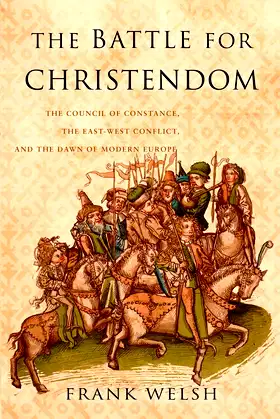
At the dawn of the fifteenth century, Islam invaded Europe from the East and it seemed that Christendom itself was under threat. In an attempt to save the Christian world, the Holy Roman Emperor Sigismund called a conference at Constance, beside the Rhine. The council attracted the greatest minds in the western world, as well as innumerable princes, lawyers, and prostitutes. In The Battle for Christendom, eminent historian Frank Welsh delves into this important incident and shows that it is in fact one of the central moments in European history. Schism had ravaged the Catholic Church and three Popes were claiming the seat of St. Peter's. The event would be a critical turning point in European history--the last event of the medieval world, heralding the dawn of the renaissance and the rise of humanism. Yet it would also hold a darker truth and with the burning of the Czech divine, Jan Hus, saw first moments of the Reformation. The story rises to a conclusion on the battlements of Constantinople in 1453 where, despite all of Sigismund's attempts to repel the Ottomans, Islam rose up once more. In Welsh's lively retelling, The Battle for Christendom is an exciting and readable story that holds lessons for our own times of international turmoil.
At the beginning of the 15th century, Christendom was in full decline, attacked from the outside by Islam and disrupted from within by schism regarding the office of the Pope. Until the Council of Constance (1414–1418), three popes—Gregory XII in Rome, Benedict XIII in Avignon and John XXIII in Germany—ruled Christendom, provoking schism. In 1387, Sigismund, already the king of Czechoslovakia, became the Holy Roman Emperorthrough his political savvy and military acumen, and with the help of John XXIII convoked the Council of Constance. The council not only ended the schism but also returned the papacy to Rome for good—electing Martin V as pope—and condemned the heresies of reformers John Wycliffe and Jan Hus, who was burned at the stake for his positions on the Eucharist. Although the book offers a useful portrait of Sigismund, a little-known but important figure in church history, it has a plodding, workmanlike style and offers little new insight into the work of the council itself. (Sept.) Copyright © Reed Business Information, a division of Reed Elsevier Inc. All rights reserved.
Find it on
AmazonNo videos available yet.
No news articles linked to this title yet.

Overall
Overall rating of the media
Atmosphere
How immersive and tense is the atmosphere
Gore
Level and quality of gore/violence
Story
Quality of the storyline and plot
Writing
Quality of the written content
Character Development
Depth and growth of characters
Pacing
Flow and timing of the narrative