
BOOK
0
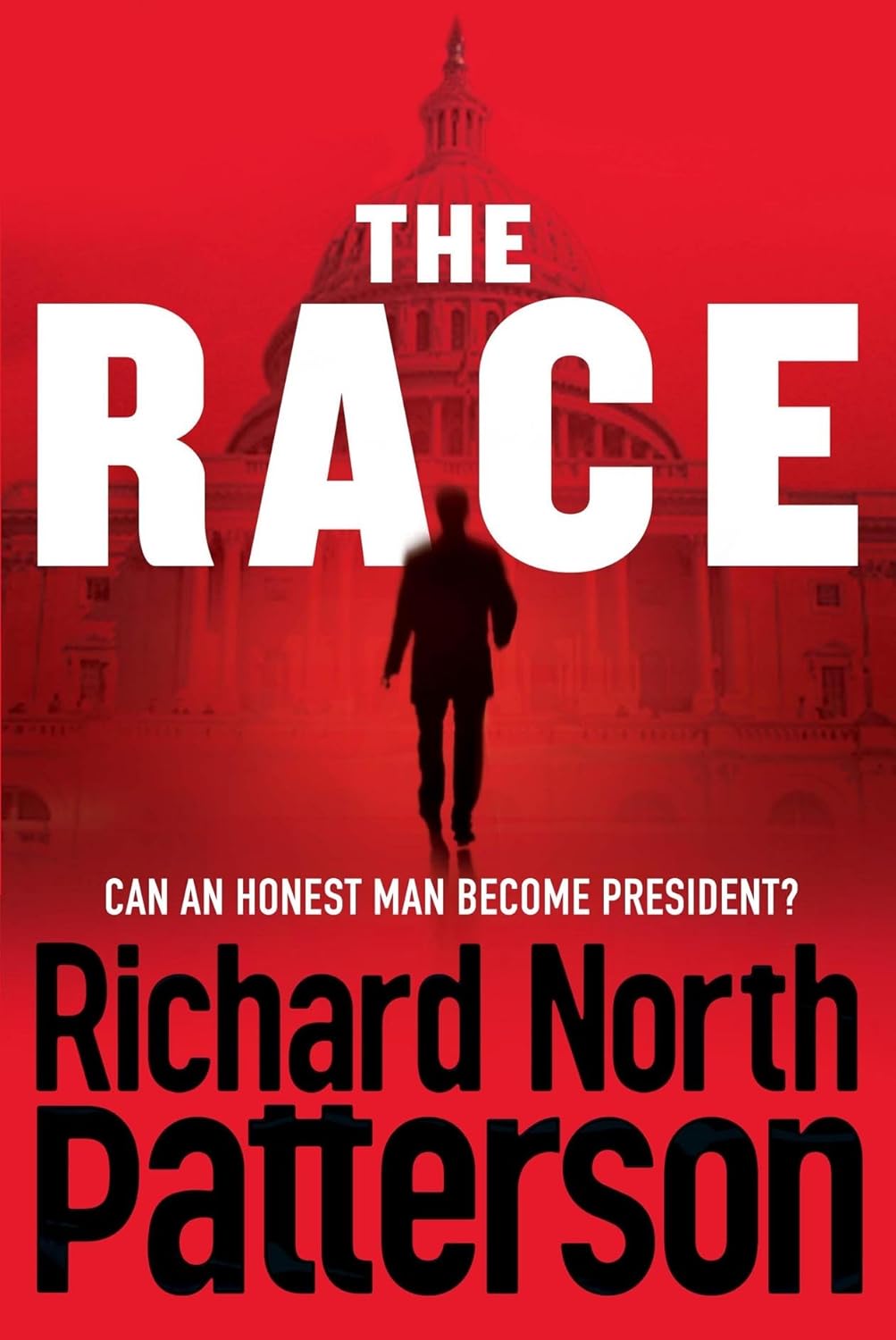
Can an honest man become president? In this timely and provocative novel, a maverick candidate takes on his political enemies and the ruthless machinery of American politics Corey Grace—a handsome and charismatic Republican senator from Ohio—is plunged by an act of terrorism into a fierce presidential primary battle with the favorite of the party establishment and a magnetic leader of the Christian right. A decorated Gulf War Air Force pilot known for speaking his mind, Grace’s reputation for voting his own conscience rather than the party line—together with his growing romance with Lexie Hart, an African-American movie star—has earned him a reputation as a maverick and an iconoclast. But Grace is still haunted by a tragic mistake buried deep in his past, and now his integrity will be put to the test in this most brutal of political contests, in which nothing in his past or present life is off-limits.Depicting contemporary power politics at its most ruthless, The Race takes on the most incendiary issues in American culture: racism, terrorism, religious fundamentalism, gay rights, and the rise of media monopolies with their own agenda and lust for power. As the pressure of the campaign intensifies, Grace encounters betrayal, excruciating moral choices, and secrets that can destroy lives. Ultimately, the race leads to a deadlocked party convention where Grace must resolve the conflict between his romance with Lexie and his presidential ambitions—and decide just who and what he is willing to sacrifice.
PrologueIn the timeless dark of his captivity, before the president made him a hero for the careless act that had cost a friend his life, Captain Corey Grace distracted himself from guilt and the pain of torture by recalling why he had wished to fly: to escape from darkness to light.His earliest memories were of the metaphoric prison of his parents’ joyless house: the way his father’s mute and drunken rage turned inward on itself; his mother’s tight-lipped repression of her own misery, as clenched as her coiled hair. Even the Ohio town they lived in, Lake City, felt cramped—not just the near-identical shotgun houses and postage-stamp lawns, but the monochromatic lives of those who never seemed to leave, the gossip one could never erase, the pointless bigotry against minorities no one had ever met. Only in captivity, when shame and belated charity eroded his contempt for his family and his past, did Corey see this pitiless lens as yet another reflection of his vanity.You’re special, they had always told him: teachers, coaches, ministers—even, in their crabbed ways, Corey’s own mother and father. From his early youth, good looks had been among his many gifts: the ready smile and dark brown eyes—perceptive, alert, and faintly amused—strong but regular features, arrayed in pleasing proportion to one another. He excelled in school; became captain of three sports teams; grew articulate and quick-witted in a way he could not trace to either parent; learned to conceal his alienation with an easy charm that made girls want him and other boys want to be like him. His parents were strangers—not just to Corey, but to each other.“I wonder who you’ll marry,” his mother had mused aloud on the night of his senior prom.Needlessly fussing over his tuxedo tie—as open a gesture of maternal fondness as she could muster—Nettie Grace looked up into his face. With an instinctive fear that, somehow, this life would ensnare him, Corey realized that his mother still wished to imagine him marrying someone from Lake City—maybe Kathy Wilkes, the bubbly cheerleader who was his prom date. Perhaps his mother spoke from sentiment, Corey thought; perhaps it was only fear that he would leave their life behind. Even his parents’ pride in him seemed sullied by their own resentments.Gazing into his mother’s eyes, he answered softly, “No one from here.”Nettie Grace let go of his bow tie.Slowly, Corey looked around the tiny living room, as if at a place he would never see again. His father stared at the television, a beer bottle clutched in hands knotted from his work as a plumber. In the corner, Corey’s five-year-old brother, Clay—whose very existence conjured images Corey could scarcely entertain—gazed up at Corey with a child’s admiration. Looking at this slight boy’s tousled brown hair and innocent blue eyes, Corey felt the empathy he wished he could summon for his parents. He already sensed that Clay—who, to his father’s evident satisfaction, did not seem all that special—would never escape their family.Impulsively, Corey scooped Clay up in his arms, tossing him in the air before bringing the boy’s face close to his. Clay wrapped his arms around Corey’s neck.“I love you, Corey,” he heard his little brother declare.For a moment, Corey held Clay tight; then he lifted him aloft again, wondering why his own smile did not come quite so easily. “Yeah,” he told his brother. “I love you, too. Even though you’re short.”Putting Clay down, Corey kissed him on the forehead, and left without another word to anyone.He was leaving them all behind—his mother and father; the friends who thought they knew him; the prom date who would offer to sleep with him in hope that this moment, the apex of her youthful imaginings, was a beginning and not the end; even his kid brother. And he had known this ever since Coach Jackson had named him starting quarterback. “You’re slow,” the coach had told him laconically. “And your arm’s no better than average. But you’re smart, and you don’t rattle. Most of all, you’re not just a leader—you’re a born leader.”This, Corey realized, was a new thought. Curious, he asked, “What’s the difference?”“You never look back to see who’s following you.” The coach cocked his head, as though studying Corey from a different angle. “Ever think about one of the academies? West Point, maybe.”Mulling this, Corey walked home on a brisk fall day. Then he looked up and saw a jet plane soaring into endless space and light, its only mark a trail of vapor. No, Corey thought, not West Point.His appointment to the Air Force Academy came as easily as his moment of departure. He left his parents and brother at the airport after constricted hugs and awkward silences, troubled only by how small and solitary Clay suddenly appeared to him.It was the first time Corey Grace had ever flown. The Academy, too, came easily, as did flight school and promotion. By the time of the Gulf War, Captain Corey Grace was stationed in Saudi Arabia, restlessly awaiting the ultimate test of his abilities: to engage Iraqi pilots at supersonic speeds with such skill that he would kill without being killed.To Corey, his F-15 was an extension of his gifts, a perfectly crafted machine with the technology in its sinews ready to do his every bidding. The only other human variable was his navigator.Joe Fitts was a black man from Birmingham, Alabama. When Corey first met him he almost laughed in dismay—Joe’s toothy smile and jug ears made him look, in Corey’s reluctant but uncharitable estimate, like a guileless and even comic figure, and his loose-limbed gait suggested that he was held together by rubber bands. But, for Corey, their first flight transformed his navigator’s appearance.Joe’s mind was as keen as his eyes: he seemed to know everything there was to know about his job—and Corey’s. A few more flights together confirmed Corey’s sense of a man whose judgment was as close to perfect as mortals could achieve; a few sessions at the bar built for thirsty officers suggested that Joe was a complicated but altogether stellar human being. And that Joe was the first black man Corey had known well confronted him with a basic truth: that whatever Corey thought of his youth in Lake City, he had been, in one very basic sense, privileged.Joe’s father was a janitor, his mother a seamstress, and their lives were molded by a time and place where the insane logic of bigotry skipped no details, right down to separate drinking fountains to keep blacks from sullying whites. Joe’s parents were first allowed to vote in 1965, the year after he was born, filled with foreboding that this reckless act might leave their child an orphan. But though they were even more lightly educated than Corey’s parents, Joe’s pride in his father and mother was as deep as his love—they had wrung from the harsh strictures of their lives the fierce determination to give Joe Fitts chances they had only dreamed of. The sole fissure between Joe and his devoutly Baptist parents was one that he concealed from them: except when he was home, Joe never went to church.“So you’re an atheist?” Corey asked one evening.Sitting beside Corey at the bar, Joe sipped his Scotch, regarding the question with narrow eyes. “Atheism’s too much trouble,” he answered. “Why put that level of energy into something you can’t know? Anyone who tells you they’re sure that there is a God—or isn’t one—is smoking dope.“Anyhow, it’s the wrong question. Maybe there is a God, and he’s a terrific guy—or girl, or hermaphrodite, or whatever the fuck people want to believe. I’ve got no objections to that. What pisses me off is when people think believing in a certain God gives them a license to crap on other people, or even kill ’em—Christian or Muslim, it makes no difference.” He turned to Corey. “Ever look at those old pictures of lynchings—upright white folks with their good day’s work hanging from some tree?”“Sure.”“Notice anything peculiar about them?”“Yeah. The black guy was dead.” Corey paused, then ventured, “No women?”“Look again—in high school I made a study of them. What you’ll notice is that a lot of those mobs were dressed in their Sunday best. They were fresh from church, you see.” Joe’s half smile conveyed both wonder and dismay. “I’ve met some true Christians, and I’ve also met some nasty fuckers whose God is surely created in their image. Overall, I’d say the correlation between godliness and goodness is kind of random. Sort of makes you wonder what history would look like if more folks had believed a little less.”But such moody ruminations did not detract from Joe’s pleasure in the core of his life—a deep pride in a job well done, and an abiding love for his wife and four-year-old son. “You know why I don’t want to die?” Joe admitted over drinks. “Not ’cause I’m afraid that it’s the end—that all I’ll be is roadkill. It’s because of all I’d miss, and all they’d miss about me. It’s bad enough just being stuck with you in this fucking bar.”... --This text refers to an out of print or unavailable edition of this title.
Sen. Corey Grace is the most charismatic and compassionate conservative Republican to ever run for president. He believes in women's choice, gay rights, gun control and stem cell research. Ordinarily, these would be suicidal platform points, but the other two candidates—a bombastic but honorable hard-line evangelist and a loutish Senate majority leader who is backed by a Machiavellian media giant—stand a good chance of splitting the far right vote. Patterson is best-known for his thrillers, but The Race is long on lore and shy on suspense. It's also filled with all-too-familiar political events and characters that are almost parodies of people living or dead. Grace has several well-written speeches that Michael Boatman delivers with the wise and wry voice of reason. Boatman also captures the dramatic baritone of the evangelist; the smarmy and nasal senator; and the evil media baron who sounds a bit Australian. Boatman does a fair job of imitating the voices of real-life characters but saves his best mimicry for a rancorous radio pundit whom Patterson has given a fictional name. (Nov.) Copyright © Reed Business Information, a division of Reed Elsevier Inc. All rights reserved. --This text refers to an out of print or unavailable edition of this title.
“Exile is an astonishing book, a hugely entertaining human drama that also offers remarkable insight into the lethal conflict between Israelis and Palestinians. Richard North Patterson has outdone himself
“Richard North Patterson is a terrific novelist.”
"An electrifying page-turner."―Seattle Post-IntelligencerHe's a decorated Gulf War pilot. A fashion plate. A ladies' man. An independent thinker who speaks his mind and never takes no for an answer. The only thing Americans can expect from Corey Grace is the unexpected..."PATTERSON HAS REDEFINED HIMSELF AS A WRITER WILLING TO TAKE RISKS."―USA TODAYLove him or hate him, the country can't wait to see how this charismatic white senator from Ohio―who now has fallen in love with black movie star Lexie Hart―will perform in the most brutal of political contests. Will Grace endure in spite of his controversial lifestyle, and a tragic mistake buried deep in his past? Or will he perish under pressure―from players on both sides of the party line? Nothing and no one in Grace's life is off-limits once the race begins. Now the only thing this candidate has to lose is…everything."Absorbing and suspenseful."―Publishers Weekly --This text refers to an out of print or unavailable edition of this title.
Patterson's latest absorbing thriller centers on a timely topic, a heated presidential primary. Corey Grace is a war hero turned moderate Republican senator who is considering a run for president. Honest and somewhat unpredictable, he is reluctant to get into a race he knows will be drawn out and ugly. Complicating matters is his burgeoning relationship with Lexie Hart, an African American actress who also happens to be a liberal and a former heroin addict. Once he enters the race, Corey faces two fierce opponents: Rob Marrotta, a senator groomed from infancy for the presidency who is willing to do anything to win the nomination, and Bob Christy, an earnest but unrelenting evangelical. The contest comes down to two hot-button topics: stem-cell research and gay rights, and Corey's views do not match those of his opponents or the most conservative voters in his party. Marrotta's unscrupulous campaign manager makes it his mission to smear both Corey and Bob Christy, bringing the men together in an unexpected way. Initially readers will recognize similarities between actual political figures and Patterson's characters, but once the story starts cooking, the characters step beyond their molds. For anyone fascinated by how American politics works, this is a gripping read. Huntley, Kristine --This text refers to an out of print or unavailable edition of this title.
Patterson captures the good, the bad, and the ugly of the American political process. Senator Corey Grace, decorated hero from the first Gulf War, campaigns for the Republican presidential nomination in a vivid look at contemporary politics. Michael BoatmanÕs seamless delivery is crisp and clear. His straightforward approach allows listeners to feel the full force of ruthless politics with painful clarity. The beauty of BoatmanÕs narration may well be his resistance to overplaying the storyÕs drama as Grace takes on the most incendiary issues of our time--racism, terrorism, religious fundamentalism, and gay rights. Patterson and Boatman prove to be a pair of gifted storytellers. T.J.M. Winner of AudioFile Earphones Award © AudioFile 2008, Portland, Maine-- Copyright © AudioFile, Portland, Maine --This text refers to an out of print or unavailable edition of this title.
Find it on
AmazonNo videos available yet.
No news articles linked to this title yet.
No tags available.

Overall
Overall rating of the media
Atmosphere
How immersive and tense is the atmosphere
Gore
Level and quality of gore/violence
Story
Quality of the storyline and plot
Writing
Quality of the written content
Character Development
Depth and growth of characters
Pacing
Flow and timing of the narrative


![The Race: An Isaac Bell Adventure, Book 4 [Unabridged] poster](https://cdn.scary.co/posters/00ba19a9-3248-40a7-8676-239e81b007d3.jpg?class=poster)