BOOK
0
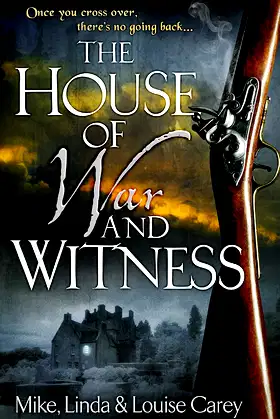
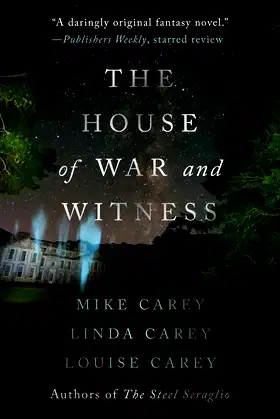
1740. With the whole of Europe balanced on the brink of war, an Austrian regiment is sent to the farthest frontier of the empire to hold the border against the might of Prussia. Their garrison, the ancient house called Pokoj. But Pokoj is already inhabited... by a company of ghosts from every age of the house's history. Only Drozde, the quartermaster's mistress, can see them, and terrifyingly they welcome her as a friend. As these ageless phantoms tell their stories, Drozde gets chilling glimpses not just of Pokoj's past but of a looming menace in its future. Meanwhile, the humourless lieutenant Klaes pursues another mystery. Why are the people of the neighbouring village so surly and withdrawn, so reluctant to welcome the soldiers who are there to protect them? What are they hiding? And what happened to the local militia unit that was stationed at Pokoj before the regiment arrived?
In 1740, a company of Austrian soldiers arrives at Narutsin, a village on the Prussian border. Lodged in Pokoj, a ramshackle ruin of a house, they discover that the previous garrison has vanished and the villagers are strangely unwelcoming to their protectors. While Lieutenant Klaes attempts to ferret out the facts behind the locals' hostility, Drozde, the quartermaster's mistress, discovers that Pokoj teems with ghosts, "unhoused creatures, delivered out of time in a second birth that was more painful than the first." Untethered to linear time, these talkative wraiths are maddeningly obscure in their intimations of a horrific incident on the horizon that threatens the lives of everyone in the town. The Careys (The Steel Seraglio) have constructed a fantastical ghost story and a suspenseful military mystery. The novel's true strength lies in its characters. Klaes is more hapless than heroic, but his humanity shines through, particularly when he's faced with his superior's murderous rage. Drozde, the true beating heart of the novel, is a fierce survivor, resourceful and independent in a world that values neither quality in a woman. As the pair strives to solve a puzzle straddling the real and the supernatural, the Careys deliver a daringly original fantasy novel. Agent: Meg Davis, Ki Agency. (Feb.)\n
“The Careys nest smaller tales within the larger story and often jump around in time; it’s a good approach, backed by fast pacing and great characters . . . [The Steel Seraglio is] a thrilling tale.”
“The Steel Seraglio brings its alternate world of struggle, politics and magic very much to life, transcending the more labored construct of symbol and metaphor in a fairy tale or fable retold only to make some kind of point.”
“With remarkable elegance, the Careys have enriched meta-fictional allegory into furious pop entertainment―full of sex, passion, violence, and magic. The Steel Seraglio is razor-sharp, cutting straight through the bullshit of bigotry to tell a fun, resonant story.”
“The Steel Seraglio is not a work of feminist or utopian theory. Nor is it a historical fantasy, a romance, a thriller, a poem, an allegory, or an epic. Rather, somehow, it is all of these things, mixed with a handful of gnomic utterances, a generous splash of the comic, and permeated by a deep understanding of what it means to weave a fairytale through with vision, to tell stories as a way of making meaning and making change, and to let those stories hang and fall. . . .”
“The Steel Seraglio is a masterful, engaging and utterly fascinating story by three wonderful writers. One can only hope they will collaborate again, as this project has proven how well they work together. The reader is really the winner here.”
Find it on
AmazonNo videos available yet.
No news articles linked to this title yet.

Overall
Overall rating of the media
Atmosphere
How immersive and tense is the atmosphere
Gore
Level and quality of gore/violence
Story
Quality of the storyline and plot
Writing
Quality of the written content
Character Development
Depth and growth of characters
Pacing
Flow and timing of the narrative