

BOOK
0
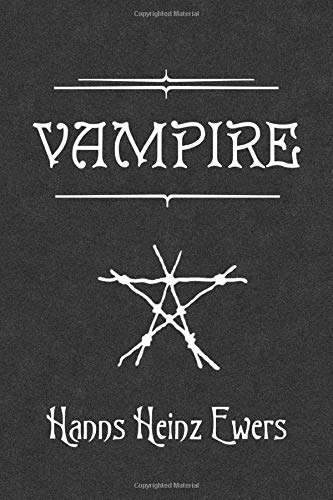
As Frank Braun travels America in support of the German cause in the Great War, he undergoes a gradual transformation into a vampire . . . In this masterpiece of dark fantasy, Ewer explores themes of war, patriotism, exile, madness, and lust. Hanns Heinz Ewers was born in Dusseldorf, Germany, November 3, 1871. His varied and stormy literary career began in 1901 with the publication of a volume of rhymed satires entitled A Book of Fables, written in collaboration with Theodor Etzel. This attracted considerable attention and led to his association with Ernst von Wolzogen in the formation of a literary vaudeville theatre. In 1901 he founded his own vaudeville organization and, with his troupe of artists, toured Germany, Switzerland, Austria, and Hungary. This enterprise, for a time successful, eventually was abandoned because of its prohibitive expense and the interference of the censor. Later he travelled widely and at the outbreak of the World War was in South America. Unable to return to Germany, he came to the United States, and upon America's entry into the war, was interned. Of his books the following have appeared in English translations: Edgar Allan Poe, an essay (1926); The Sorcerer's Apprentice (1927); The Ant People (Die Ameisen) (1927); Alraune (1929); Rider of the Night (1932). Aside from his fiction his writings include numerous volumes of plays, poems, critical essays, fairy tales, and books of travel.This edition is a reproduction of the first American edition published by The John Day Company, New York, 1934.
Find it on
AmazonNo videos available yet.
No news articles linked to this title yet.

Overall
Overall rating of the media
Atmosphere
How immersive and tense is the atmosphere
Gore
Level and quality of gore/violence
Story
Quality of the storyline and plot
Writing
Quality of the written content
Character Development
Depth and growth of characters
Pacing
Flow and timing of the narrative