
BOOK
0
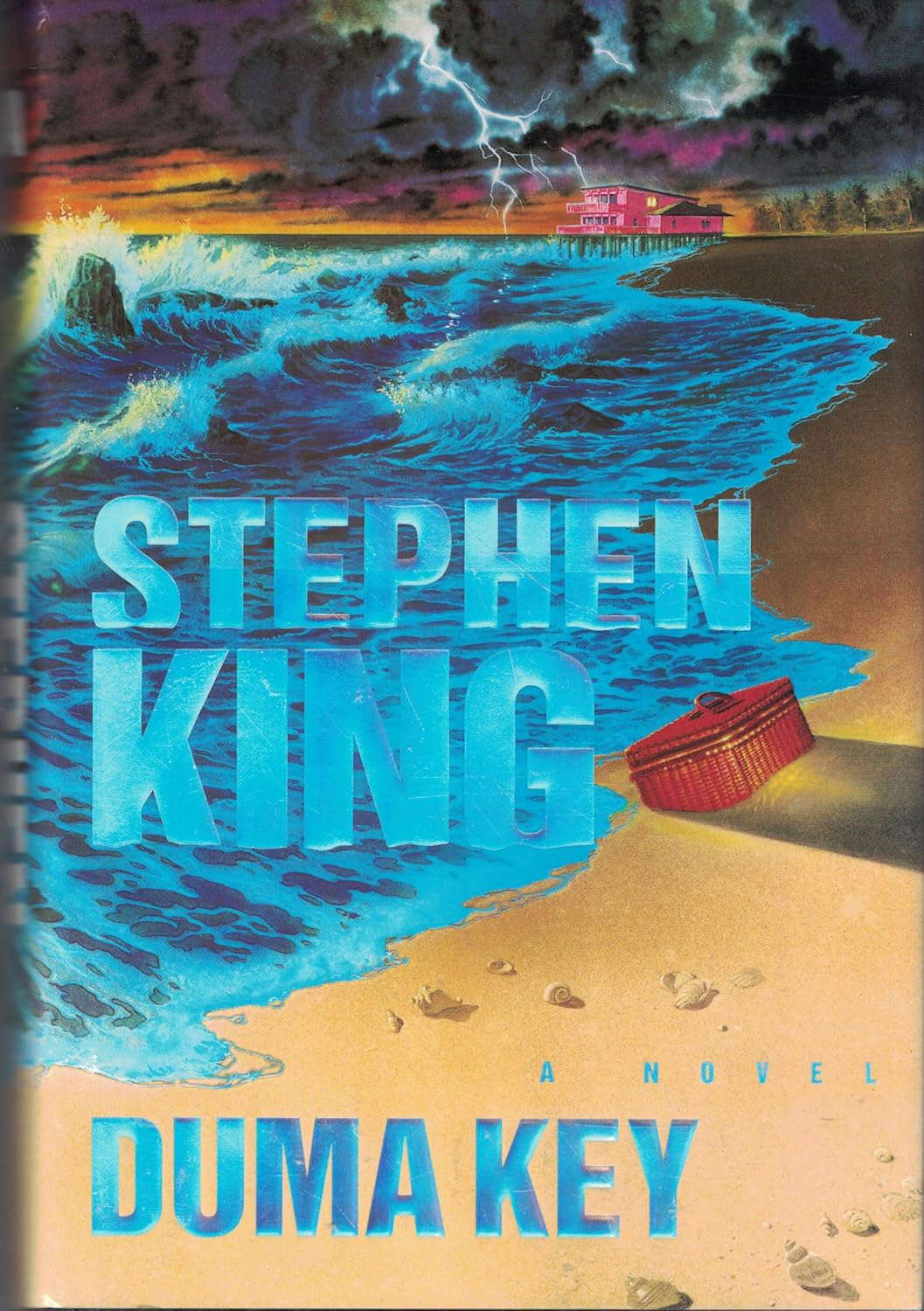
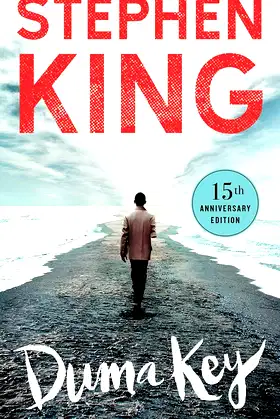
When Edgar Freemantle moves to the remote island of Duma Key to escape his past, he doesn't expect to find much there.But Duma has been waiting for him, and something in the view from his window urges him to discover a talent he never knew he had.Edgar Freemantle begins to paint. And as he paints, the island's secrets begin to stir. Secrets of children lost in the undertow, of a ghost ship riding the distant horizon - and a family's buried past reaching long hands into the present.
Amazon Significant Seven, January 2008: It would be impossible to convey the wonder and the horror of Stephen King's latest novel in just a few words. Suffice it to say that Duma Key, the story of Edgar Freemantle and his recovery from the terrible nightmare-inducing accident that stole his arm and ended his marriage, is Stephen King's most brilliant novel to date (outside of the Dark Tower novels, in which case each is arguably his best work). Duma Key is as rich and rewarding as Rita Hayworth and the Shawshank Redemption (yes, that Shawshank Redemption), and as truly scary as anything King has written (and that's saying a lot). Readers who have "always wanted to try Stephen King" but never known where to start should try a few pages of Duma Key--the frankness with which Edgar reveals his desperate, sputtering rages and thoughts of suicide is King at the top of his game. And that's just the first thirty pages... --Daphne DurhamDuma Key: Where It All Began A Note from Chuck Verrill, the Longtime Editor of Stephen King In the spring of 2006 Stephen King told me he was working on a Florida story that was beginning to grow on him. "I'm thinking of calling it Duma Key," he offered. I liked the sound of that--the title was like a drumbeat of dread. "You know how Lisey's Story is a story about marriage?" he said. "Sure," I answered. The novel hadn't yet been published, but I knew its story well: Lisey and Scott Landon--what a marriage that was. Then he dropped the other shoe: "I think Duma Key might be my story of divorce."Pretty soon I received a slim package from a familiar address in Maine. Inside was a short story titled "Memory"--a story of divorce, all right, but set in Minnesota. By the end of the summer, when Tin House published "Memory," Stephen had completed a draft of Duma Key, and it became clear to me how "Memory" and its narrator, Edgar Freemantle, had moved from Minnesota to Florida, and how a story of divorce had turned into something more complex, more strange, and much more terrifying.If you read the following two texts side by side--"Memory" as it was published by Tin House and the opening chapter of Duma Key in final form--you'll see a writer at work, and how stories can both contract and expand. Whether Duma Key is an expansion of "Memory" or "Memory" a contraction of Duma Key, I can't really say. Can you?--Chuck Verrill"Memory"Memories are contrary things; if you quit chasing them and turn your back, they often return on their own. That's what Kamen says. I tell him I never chased the memory of my accident. Some things, I say, are better forgotten. Maybe, but that doesn’t matter, either. That's what Kamen says.My name is Edgar Freemantle. I used to be a big deal in building and construction. This was in Minnesota, in my other life. I was a genuine American-boy success in that life, worked my way up like a motherf---er, and for me, everything worked out. When Minneapolis–St. Paul boomed, The Freemantle Company boomed. When things tightened up, I never tried to force things. But I played my hunches, and most of them played out well. By the time I was fifty, Pam and I were worth about forty million dollars. And what we had together still worked. I looked at other women from time to time but never strayed. At the end of our particular Golden Age, one of our girls was at Brown and the other was teaching in a foreign exchange program. Just before things went wrong, my wife and I were planning to go and visit her.I had an accident at a job site. That's what happened. I was in my pickup truck. The right side of my skull was crushed. My ribs were broken. My right hip was shattered. And although I retained sixty percent of the sight in my right eye (more, on a good day), I lost almost all of my right arm.I was supposed to lose my life, but I didn’t. Then I was supposed to become one of the Vegetable Simpsons, a Coma Homer, but that didn't happen, either. I was one confused American when I came around, but the worst of that passed. By the time it did, my wife had passed, too. She's remarried to a fellow who owns bowling alleys. My older daughter likes him. My younger daughter thinks he’s a yank-off. My wife says she’ll come around.Maybe sí, maybe no. That's what Kamen says.When I say I was confused, I mean that at first I didn’t know who people were, or what had happened, or why I was in such awful pain. I can't remember the quality and pitch of that pain now. I know it was excruciating, but it's all pretty academic. Like a picture of a mountain in National Geographic magazine. It wasn’t academic at the time. At the time it was more like climbing a mountain.Continue Reading "Memory"Duma KeyHow to Draw a PictureStart with a blank surface. It doesn't have to be paper or canvas, but I feel it should be white. We call it white because we need a word, but its true name is nothing. Black is the absence of light, but white is the absence of memory, the color of can't remember.How do we remember to remember? That's a question I've asked myself often since my time on Duma Key, often in the small hours of the morning, looking up into the absence of light, remembering absent friends. Sometimes in those little hours I think about the horizon. You have to establish the horizon. You have to mark the white. A simple enough act, you might say, but any act that re-makes the world is heroic. Or so I’ve come to believe.Imagine a little girl, hardly more than a baby. She fell from a carriage almost ninety years ago, struck her head on a stone, and forgot everything. Not just her name; everything! And then one day she recalled just enough to pick up a pencil and make that first hesitant mark across the white. A horizon-line, sure. But also a slot for blackness to pour through.Still, imagine that small hand lifting the pencil... hesitating... and then marking the white. Imagine the courage of that first effort to re-establish the world by picturing it. I will always love that little girl, in spite of all she has cost me. I must. I have no choice. Pictures are magic, as you know.My Other Life My name is Edgar Freemantle. I used to be a big deal in the building and contracting business. This was in Minnesota, in my other life. I learned that my-other-life thing from Wireman. I want to tell you about Wireman, but first let's get through the Minnesota part.Gotta say it: I was a genuine American-boy success there. Worked my way up in the company where I started, and when I couldn’t work my way any higher there, I went out and started my own. The boss of the company I left laughed at me, said I'd be broke in a year. I think that's what most bosses say when some hot young pocket-rocket goes off on his own.For me, everything worked out. When Minneapolis–St. Paul boomed, The Freemantle Company boomed. When things tightened up, I never tried to play big. But I did play my hunches, and most played out well. By the time I was fifty, Pam and I were worth forty million dollars. And we were still tight. We had two girls, and at the end of our particular Golden Age, Ilse was at Brown and Melinda was teaching in France, as part of a foreign exchange program. At the time things went wrong, my wife and I were planning to go and visit her.Continue Reading Duma Key
In bestseller King's well-crafted tale of possession and redemption, Edgar Freemantle, a successful Minnesota contractor, barely survives after the Dodge Ram he's driving collides with a 12-story crane on a job site. While Freemantle suffers the loss of an arm and a fractured skull, among other serious injuries, he makes impressive gains in rehabilitation. Personality changes that include uncontrollable rages, however, hasten the end of his 20-year-plus marriage. On his psychiatrist's advice, Freemantle decides to start anew on a remote island in the Florida Keys. To his astonishment, he becomes consumed with making art—first pencil sketches, then paintings—that soon earns him a devoted following. Freemantle's artwork has the power both to destroy life and to cure ailments, but soon the Lovecraftian menace that haunts Duma Key begins to assert itself and torment those dear to him. The transition from the initial psychological suspense to the supernatural may disappoint some, but even those few who haven't read King (Lisey's Story) should appreciate his ability to create fully realized characters and conjure horrors that are purely manmade. (Jan. 22) Copyright © Reed Business Information, a division of Reed Elsevier Inc. All rights reserved.
Its Stephen King, so we can dispense with the introductions. With Duma Key, the horror master returns to his bread and butter after a moderately successful departure in the character study Liseys Story (HHH Jan/Feb 2007). The latest effort is clearly autobiographicalmost readers will remember Kings near-death experience when struck by a vehicle on a Maine highway in 1999and the lingering physical and psychological effects of that accident figure prominently here. The book, which comes to us in Freemantles voice and runs its course in languid passages that only a writer of rare talent (and with nothing left to prove) might get away with, is also a meditation on the power of art and its discontents. The supernatural elements in Duma Key find King working at full throttle, with just a few pitchy parts.Copyright © 2004 Phillips & Nelson Media, Inc.
Find it on
AmazonNo videos available yet.
No news articles linked to this title yet.

Overall
Overall rating of the media
Atmosphere
How immersive and tense is the atmosphere
Gore
Level and quality of gore/violence
Story
Quality of the storyline and plot
Writing
Quality of the written content
Character Development
Depth and growth of characters
Pacing
Flow and timing of the narrative