

BOOK
0
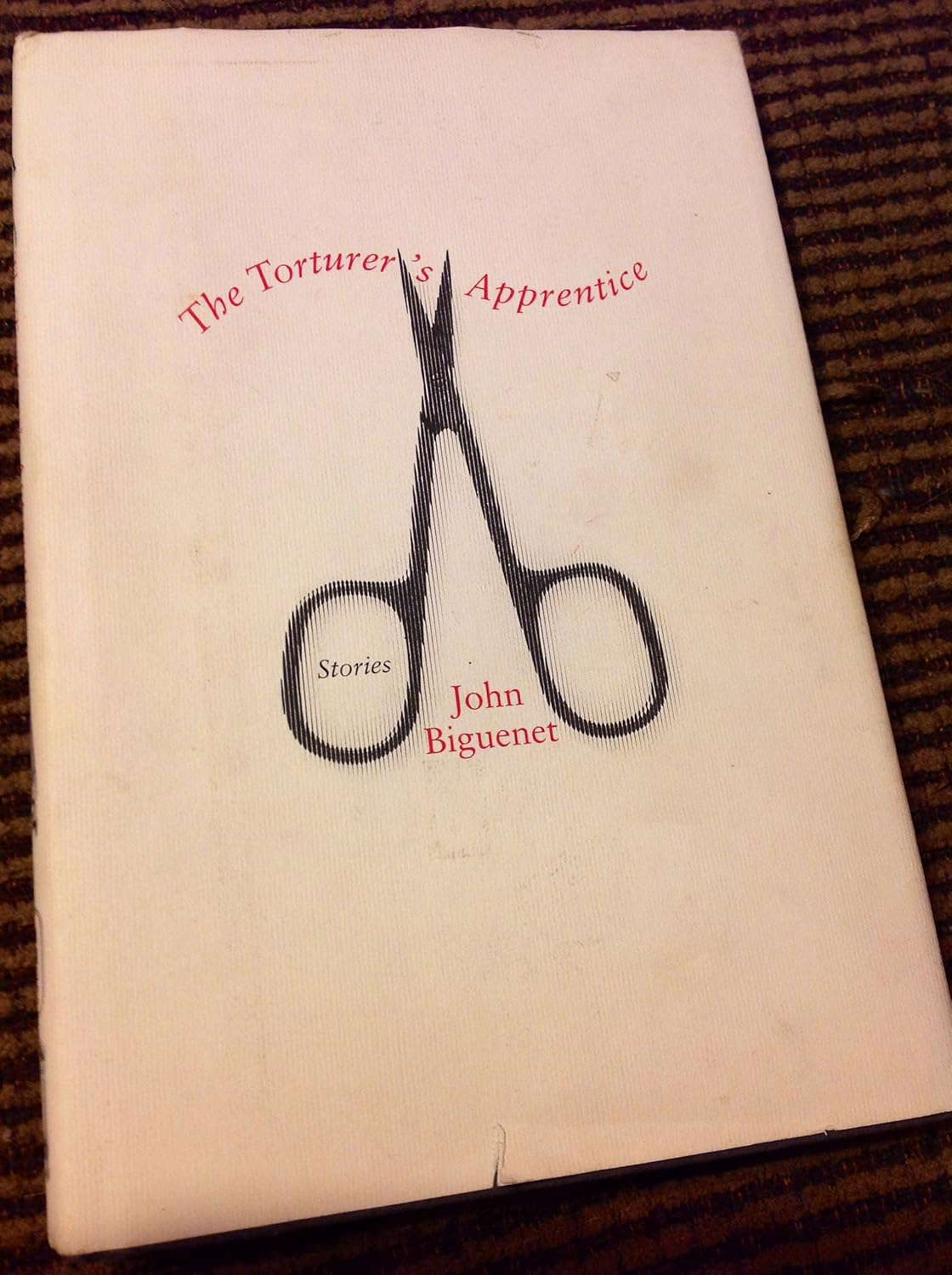
This brilliant debut collection of stories by O. Henry Award winner John Biguenet is as notable for the rigor of its intellect as for the sweep of its imagination. Whether recounting the predicament of an atheistic stigmatic in "The Vulgar Soul" or a medieval torturer who must employ his terrible skills upon his own apprentice in the title tale, these stories decline to settle for ready sentiments or easy assurances.Rather than add to the massive canon of the victimized, for example, "My Slave" takes the perspective of the victimizer. In "The Open Curtain," a man achieves intimacy with his family only when he recognizes -- watching them dine as he sits in his car at the curb -- that he lives in a household of strangers. Menaced by a gang of skinheads in a Jewish cemetery, an American tourist in Germany placates the Neo-Nazis with a formula he continues to repeat even after he is safely back home in "I Am Not a Jew." And as for love, it makes demands in such stories as "Do Me" that shake our very notions of what it means to love.If these stories engage the world in sometimes shocking ways, they are virtuoso engagements, eloquent in their prose, surprising in their plotting, sly in their humor. Biguenet shifts among voices and narrative strategies and imposes neither a single style nor a repeated structure as he depicts the ecological catastrophe of "A Plague of Toads," the problem posed by a ghost in the nursery in "Fatherhood," and the ghastly discovery a grieving widower defends as "another kind of memory" in "Rose."Such mastery of craft may come as a surprise in a first-time author, but even more impressive is the object of his art. For whether it seeks to prick or to tickle, each story in The Torturer's Apprentice addresses its subject with an authority unusual in contemporary literature as it entices the reader beyond the boundaries of the expected and the accepted.
Like a trapeze artist who disdains the use of a net, Biguenet takes considerable risks in this impressive debut collection, which shows the influence of both American realism and European intellectual fiction. Building his stories around hard-to-like people a medieval torturer, a beautiful masochist, a man who decides to purchase a slave Biguenet examines the complex moral conundrums they face. In "The Vulgar Soul," a man named Tom Hogue begins to bleed for no apparent reason. He gradually realizes that his wounds are remarkably like stigmata, and he becomes an object of inspiration for religious seekers, though he himself remains unmoved by his condition. In "My Slave," a prospective slaveowner describes with chilling dispassion his desire to own another person. He soon finds that he understands little of the "complex mechanisms of discipline and punishment" required of slaveholders, and even less of their effect on his own psyche. The title story sketches the life of an itinerant torturer, paid to extract confessions in the small towns of medieval Europe. The torturer's life is surprisingly banal, involving the hassles of guild membership and the difficulty of transporting heavy torture devices over poor roads, but his existence takes an unforeseen turn when he engages a young, gentle apprentice. Biguenet is equally surefooted in more domestic territory. "Lunch with My Daughter" is all subtext and guarded emotions, as a man struggles with revealing his true identity to his daughter over lunch. In "The Open Curtain," a suburban salesman, burdened by routine, finds that he can take surprising pleasure in his own family. As skillful as they are ambitious, these uncompromising stories herald the arrival on the literary scene of a provocative new talent. (Feb.) Copyright 2001 Reed Business Information, Inc.
Biguenet's stories have appeared in Esquire, in literary magazines, and in the 1997, 1998, and 1999 editions of The Best American Short Stories, but this is his first collection. The classic style of the stunning title story recalls that of Par Lagerkvist's The Dwarf (1958). Guillem, the torturer, searches for an apprentice to learn his trade as well as to keep him company, a union ending in tragedy. In "A Work of Art," a young man obsessed with possessing a Degas sculpture sells everything he owns to buy it, only to find that the sculpture possesses him. In "The Vulgar Soul," an unbelieving "bleeder" is skeptical when he is diagnosed with the stigmata but achieves a skewered faith because of the reactions of others. "I Am Not a Jew," a cautionary tale, explores a man's unwilling self-examination after an encounter with Nazi skinheads in a Jewish cemetery. "Lunch with My Daughter" highlights a loving father's lunch with the 16-year-old daughter who knows him only as a family friend and confidant. Each story in this collection is narrated in elegant, unencumbered prose, concluding with a twist of fate or an ironic ending. An outstanding collection; for all public libraries. Mary Szczesiul, Roseville P.L., MI Copyright 2001 Reed Business Information, Inc.
This brilliant debut collection of stories by O. Henry Award winner John Biguenet is as notable for the rigor of its intellect as for the sweep of its imagination. Whether recounting the predicament of an atheistic stigmatic in "The Vulgar Soul" or a medieval torturer who must employ his terrible skills upon his own apprentice in the title tale, these stories decline to settle for ready sentiments or easy assurances.Rather than add to the massive canon of the victimized, for example, "My Slave" takes the perspective of the victimizer. In "The Open Curtain," a man achieves intimacy with his family only when he recognizes -- watching them dine as he sits in his car at the curb -- that he lives in a household of strangers. Menaced by a gang of skinheads in a Jewish cemetery, an American tourist in Germany placates the Neo-Nazis with a formula he continues to repeat even after he is safely back home in "I Am Not a Jew." And as for love, it makes demands in such stories as "Do Me" that shake our very notions of what it means to love.If these stories engage the world in sometimes shocking ways, they are virtuoso engagements, eloquent in their prose, surprising in their plotting, sly in their humor. Biguenet shifts among voices and narrative strategies and imposes neither a single style nor a repeated structure as he depicts the ecological catastrophe of "A Plague of Toads," the problem posed by a ghost in the nursery in "Fatherhood," and the ghastly discovery a grieving widower defends as "another kind of memory" in "Rose."Such mastery of craft may come as a surprise in a first-time author, but even more impressive is the object of his art. For whether it seeks to prick or to tickle, each story in The Torturer's Apprentice addresses its subject with an authority unusual in contemporary literature as it entices the reader beyond the boundaries of the expected and the accepted.
Find it on
AmazonNo videos available yet.
No news articles linked to this title yet.

Overall
Overall rating of the media
Atmosphere
How immersive and tense is the atmosphere
Gore
Level and quality of gore/violence
Story
Quality of the storyline and plot
Writing
Quality of the written content
Character Development
Depth and growth of characters
Pacing
Flow and timing of the narrative