BOOK
0
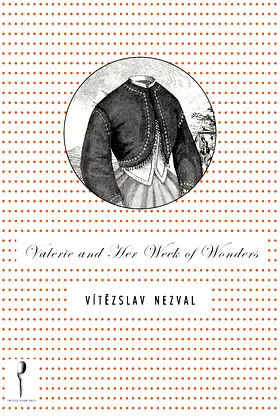
Written in 1935 at the height of Czech Surrealism but not published until 1945, Valerie and Her Week of Wonders is a bizarre erotic fantasy of a young girl's maturation into womanhood on the night of her first menstruation. Referencing Matthew Lewis's The Monk, Marquis de Sade's Justine, K. H. Macha's May, F. W. Murnau's film Nosferatu, Nezval employs the language of the pulp serial novel to fashion a lyrical, menacing dream of sexual awakening involving a vampire with an insatiable appetite for chicken blood, changelings, lecherous priests, a malicious grandmother desiring her lost youth. In his Foreword Nezval states: "I wrote this novel out of a love of the mystique in those ancient tales, superstitions and romances, printed in Gothic script, which used to flit before my eyes and declined to convey to me their content." Part fairy tale, part Gothic horror, Valerie and Her Week of Wonders is a meditation on youth and age, sexuality and death, an androgynous merging of brother with sister, an exploration of the grotesque with the shifting registers of language, mood, and genre that were a hallmark of the Czech avant-garde. The 1970 film version is considered one of the outstanding achievements of Czech new-wave cinema. This edition includes Kamil Lhota¡k's original illustrations.
Find it on
AmazonNo videos available yet.
No news articles linked to this title yet.

Overall
Overall rating of the media
Atmosphere
How immersive and tense is the atmosphere
Gore
Level and quality of gore/violence
Story
Quality of the storyline and plot
Writing
Quality of the written content
Character Development
Depth and growth of characters
Pacing
Flow and timing of the narrative