

BOOK
0
Andrew Klavan reinvents the classic ghost story with this literary X-Files, a breathtaking blend of Hollywood-style excitement and literary tour de force.Richard Storm is a Hollywood producer who has reached the top of his profession making horror movies based on classic English ghost stories. Now, with his life beginning to unravel, he flees to England on a desperate quest: to find evidence that the great old stories bear an element of truth, that the human spirit lives on after death, that in this all-too-material world there still may be reason to have faith.But his search uncovers more than he bargained for: Sophia Endering, a mysterious damsel in distress who may just be the last love of Storm's life; Harper Albright, an eccentric pipe-smoking old woman whose researches into the paranormal mask an obsessive hunt for a malevolent killer; and the man known as Saint Iago, a seemingly immortal villain who makes a night with a vampire look like a walk in the park.Richard Storm's nightmares are about to step down off the screen into real life. And Storm is about to begin a journey through his deepest passions and his darkest fears, to a romance that could last forever, and a secret a thousand years old-down a trail formed by the classic ghost stories themselves-into the very heart of the uncanny.
"Trolls, he thought. That's what it was. Religious people believed God ran the world. Atheists figured it was indifferent nature. But it was trolls. Sadistic little homunculi in leather jackets with lots of zippers. Hiding behind the scrim of being. Working the machinery to maximize human suffering for their own amusement." A wealthy Hollywood cowboy-cum-movie-producer travels to England in the hope of seeing a ghost, or a voice from beyond: "Something uncanny, you know. Anything. One lousy uncanny thing." He hangs out with a marvelous old woman--a professional skeptic armed with a sword cane and an ever-puffing pipe with a skull-shaped bowl--and the other staff of a semi-tabloid rag called Bizarre! He meets the woman of his dreams, who is billed as being utterly inaccessible and frigid to boot. Then before you can say "conspiracy theory," Andrew Klavan has whipped all of them into a humorous confection with elements of German romantic art, English Gothic architecture, 19th-century ghost stories, Norse mythology, South American cult leaders, Nazi witchcraft, and the Holy Grail. Even the ghost of M.R. James has a key role in the plot. It's not a deep novel--you get the sense that Klavan doesn't take one iota of it seriously--but it's good supernatural fun. --Fiona Webster
Few people can resist a ghost story, and this one by two-time Edgar Award winner Klavan (True Crime, LJ 4/15/95) is bewitching. Set in England, with the requisite crumbling abbey haunted by a nun, it concerns a man's demonic quest for eternal life. Klavan updates the old-fashioned ghost story to include a Hollywood producer protagonist, the Nazi theft of some of Europe's best art, and a religious cult. The plot moves forward smoothly, the characters are plausible, and the literary quotes are enriching. Most noteworthy, though, is the structure: The story line is interrupted several times by ancient ghost stories. Intriguing in their own right, they also hold important clues to the current mystery's solution. Recommended for most collections.-?Dorothy S. Golden, Georgia Southern Univ., StatesboroCopyright 1997 Reed Business Information, Inc.
In an effort to mix literary stylishness with gothic convention, Klavan (True Crime, 1995, etc.) stuffs an American film director into a badly padded English ghost story. When told that he has a brain tumor, Richard Storm, 40, who has directed more than 20 successful Hollywood horror films, abandons his work, moves to London, and joins the two-man staff of Bizarre!, a magazine about the paranormal that he respects and that may actually lead him to a few hard facts in proof of an afterlife. The staff: middle-aged Harper Albright, who smokes a death's-head meerschaum pipe and carries a sword cane, and her seemingly gay son Bernard, a computer whiz. Then Storm finds himself falling for Sophia Endering, a young woman almost half his age, who helps her wealthy father, Sir Michael, run an art gallery. Sophia is confronted by a Resurrectionist, who tells her that he will be murdered that night and that whoever buys a panel from the famous Rhinehart triptych of the Holy Family (soon going up for auction at Sotheby's) will be his killer. The triptych, an art treasure looted by German occultists who were helping to guide Hitler, has just surfaced. When Sir Michael sends Sophia to Sotheby's with instructions to buy the panel at any price, Sophia thinks her father a murderer, goes batty, and tries to hang herself. Storm arrives at just that moment, though, to save her. The two fall in love but soon find themselves fending off Saint Iago, a devil incarnate and the father of Bernard, who once murdered his entire band of followers (and who must sacrifice his own children to maintain eternal youth). What's he after? A formula for longevity that's encoded in the Rhinehart triptych. A cocktail of the feisty and the fusty, flavored with bitters by Bernard but with too much sweet vermouth and too watery by half. -- Copyright ©1997, Kirkus Associates, LP. All rights reserved.
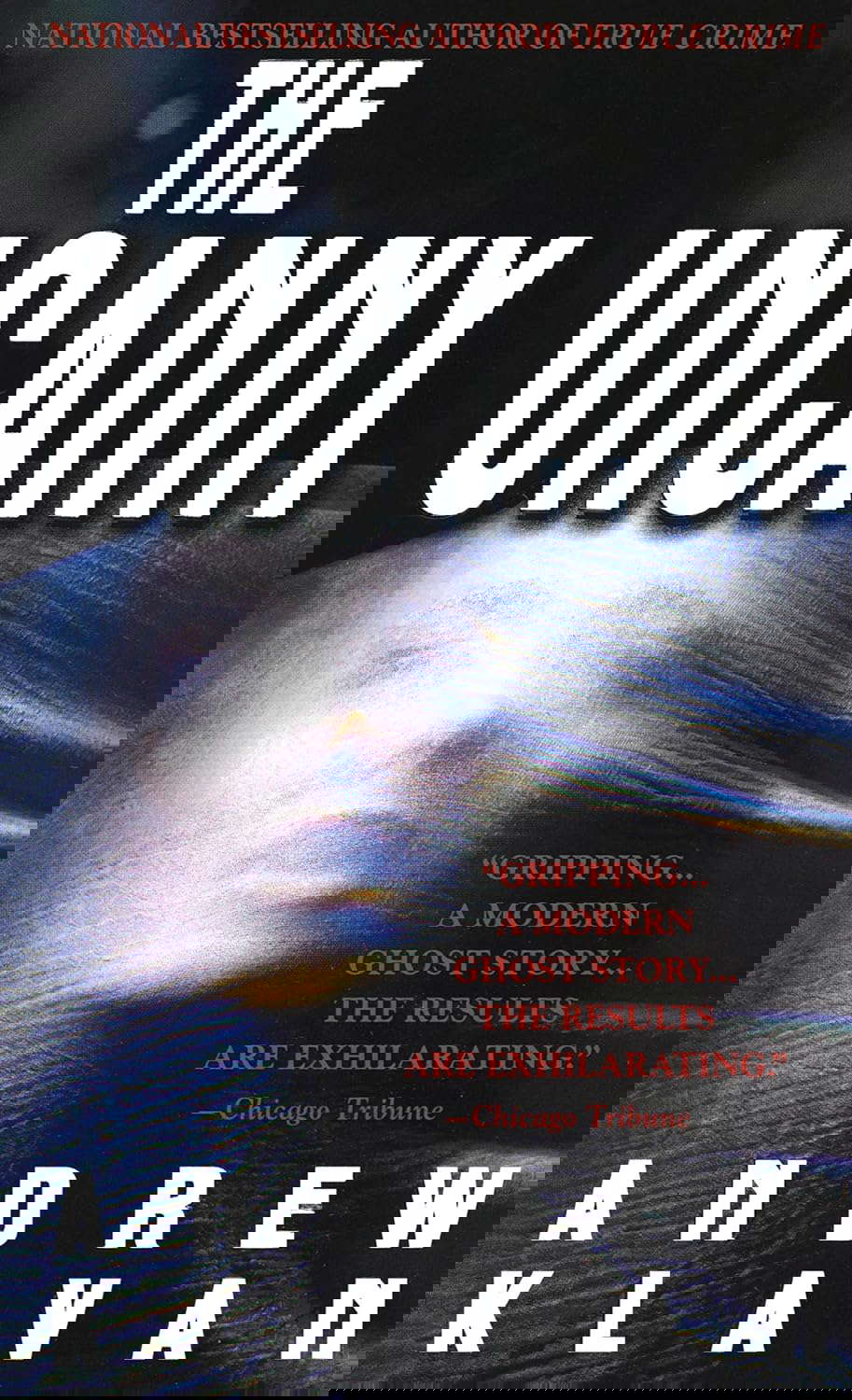
He's searching for the miraculous. She's fighting to stay alive. Together, they might just have a chance. . . . "Gripping...a modern ghost story...the results are exhilarating."--Chicago Tribune"Glamorous, eccentric and engrossing. . . .a sort of upscale X-Files."--St. Petersburg Times (Fla.)"Entertaining."--The Orlando Sentinel"Klavan pulls out all the stops . . . .The suspense is high, the fun factor higher." --Publishers Weekly"Shrewd...Lively...Fun."--The Seattle Times
Richard Storm is passionate, hot-blooded, and running out of time. Sophia Endering is cool, beautiful, and haunted by a centuries-old mystery. Now the Hollywood filmmaker and the troubled young woman have come together in a race against the unbelievable, the unthinkable, and. . . The Uncanny.Richard Storm reached the top of his profession producing horror films based on classic English ghost stories. Now, with his life beginning to unravel, Richard is searching for something to believe in. Fleeing Hollywood for London, he embarks on a desperate quest: to find evidence that the great old stories bear some truth, that the human spirit lives on after death. What he finds is Sophia, a woman caught in a nightmare more chilling than any of his film horrors. Propelled by a furious love, haunted by a terror he can barely confess to himself, Storm pursues Sophia through the labyrinth of her family's madness and their involvement in Nazi art thefts, down a trail formed by the classic ghost stories themselves--into the very heart of the uncanny. . . .
Richard Storm is passionate, hot-blooded, and running out of time. Sophia Endering is cool, beautiful, and haunted by a centuries-old mystery. Now the Hollywood filmmaker and the troubled young woman have come together in a race against the unbelievable, the unthinkable, and. . . "The Uncanny. Richard Storm reached the top of his profession producing horror films based on classic English ghost stories. Now, with his life beginning to unravel, Richard is searching for something to believe in. Fleeing Hollywood for London, he embarks on a desperate quest: to find evidence that the great old stories bear some truth, that the human spirit lives on after death. What he finds is Sophia, a woman caught in a nightmare more chilling than any of his film horrors. Propelled by a furious love, haunted by a terror he can barely confess to himself, Storm pursues Sophia through the labyrinth of her family's madness and their involvement in Nazi art thefts, down a trail formed by the classic ghost stories themselves--into the very heart of the uncanny. . . .
A glass shattered across the room and Storm, lifting his tragical eyes, saw, though too late, a woman worth dying for.The book of ghost stories was still open in his hands. His lips were still parted on the final phrase--crumbled to dust even as we gazed upon it. But the phrase, the whole story, had been blown right out of his mind. By the woman, by her beauty. Just the sight of her had brought him from his chair to his feet.Which was pretty ridiculous when he came to think of it. What was he going to do next? Leap into the air like a cartoon character--his tongue out--his eyes hanging from their sockets on springs--the Valentine shape of his heart boinging through his shirtfront? He was a modern guy, after all, an American guy, a Hollywood guy. A real person with nose hairs and psychiatric problems and an anus. This was life, not the movies. It wasn't possible--was it?--that he had just fallen in love at first sight?Maybe not, but he went on gawping at her. She was standing in the drawing-room archway, one of the guests who had drifted in when Storm had begun to read aloud. In the sitting room behind her, the great Scotch pine with its colored Christmas lights seemed to him to frame her, to set her in relief. A girl of, say, twenty and some. Not the sort of anorexic starlet he was used to, not one of his usual airheads inflated with silicon and ambition. Hers was a real figure in low-cut black velvet. A waist and hips of substance, womanly in the extreme. A bosom from the days when bosoms were bosoms. A swanlike neck, damask cheeks, skin of ivory, hair of jet. Brown eyes, the palest brown eyes imaginable, bright and snappy and quick. Woof, he thought; Jesus.The others around her--all of Bolt's London sophisticates--had begun to laugh now and applaud her. She was still frozen with the hand that had held the glass extended, with her startled gaze on the fragments where they lay. Fragments and glistening slivers on the tan carpet. A spreading, colorless stain. The glass had just slipped from her fingers apparently, must've hit the edge of the butler's tray on the way down."Oh," she said finally, "how stupid of me."Storm reeled inwardly, mentally clutched his chest. What an accent, too, he thought. That real English stuff. Like Julie Andrews in Mary Poppins. He could still remember some of his boyhood fantasies about Mary Poppins. The things she would croon to him with that accent. Oh, Richard. Oh, young master!I'm sorry, he was about to say aloud, sorry if I frightened you. It was just a stupid old ghost story. But he was already coming to his senses. And Bolt, anyway, was out of his armchair, was going to her, and Bolt was the host."Oh, Frederick, let me clean it up, I'm an idiot," she said to him."No, no." He took her arm. "I've already dispatched my minions." The two women who had knelt to retrieve the shards glared up at him: a man plummeting into middle age like a bomb, shaped like a bomb, squat-bottomed, potbellied in his green suit and waistcoat. A serpentine, cynical face deeply scored by Bell's and Rothmans. Shaggy gray hair dropping dandruff. Cigarette dropping ash. "And anyway, I rent the place," he said. And he led her gently from the room.Storm watched--bleakly--as the two of them turned out of sight down the front hall. He could hear their voices receding."I am sorry, Frederick, I shouldn't have come, I'm just knackered. I was in Ohio yesterday, and Berlin last week . . .""Don't be ridiculous. I live for your visits. I'll save the pieces as a relic. I'll build a shrine on the spot . . ."Someone clapped Storm on the shoulder. Someone else said, "Well read. Spooky stuff. You put the wind up her anyway." "Who is she?" Storm murmured, staring at the place where she had stood.And someone answered: "Oh, that--that's Sophia Endering. Her father owns the Endering Gallery in New Bond Street. Not half bad, eh?"Storm nodded. Remained on his feet a few moments more, his gaze now wandering aimlessly over the room. A cozy alcove, chairs clustered together, run-of-the-mill pseudo-Victorian prints hung above low shelves of frazzled paperbacks. A wide archway into the long sitting room where the Christmas tree sparkled and the gas fire burbled and recessed lights beamed on bottles of white wine. And where the group that had gathered to hear him read was now dispersing. And the party conversation was resuming.Above the rising chatter, he heard the front door shut. He could feel it: she was gone. He sank slowly back into his chair.Sophia Endering, he thought. He sat there with the book held slack on his thigh, his thumb holding the place for no good reason. Sophia Endering.But what difference did it make? It didn't matter now. He was not in love with her. He could not be in love with her. He could not be in love with anyone.He sat there, silent, slumped, withdrawn again into his unhappy depths.* * *But why? thought Harper Albright. Why should he be so sad?From her perch among the embroidered cushions of the window seat to Storm's far left, she had seen everything. She had seen Storm rise to his feet with his first look at Sophia. She had seen the ache of passion animate his features, had watched as it drained away again, as his eyes became hollow again, and his expression once more grew distant with despair. It made her think of certain mud crabs who can "throw" their claws, actually detach their claws to break the grip of an enemy. It seemed to her that Storm--she supposed she had to call him by that ridiculous name if only out of respect for the American miracle of self-invention--it seemed to her that Storm had similarly "thrown" his heart, detached his heart to break the grip of life.And she pondered on this, sitting there, her withered hands clasped over the carved wooden dragon's head that topped her walking stick. She was a grim, peculiar-looking person, this Harper. Not an old woman particularly, sixty perhaps, but dilapidated nonetheless. With lifeless gray hair bobbed on a furrowed brow. Slack, sagging cheeks under deep, gray pouches. And spectacles thick as goggles, through which she blinked intently. A pipe with a meerschaum skull for a bowl was clamped between her yellowing teeth, yellowish smoke trailing out of it. She rested her round chin on the back of her hands. And she wondered:Why shouldn't Richard Storm love Sophia Endering? He was older than she was, certainly--forty at least. But he was youthful and handsome. Rangy, muscular. With a full head of short, sandy hair, and features as rugged as the great western land from which he came. More rugged, probably, seeing as he came from Los Angeles. And Harper knew him to be unmarried; that is, divorced. Humorous and easygoing, and gentle in a lady's presence. She herself was aware of having developed some sentimental feelings for him since he had come to her. Possibly. Some. So why should he disengage himself? From Sophia. From everyone, really. Harper Albright turned the question over and over.He was, she thought, for all his American amiability, a man of mystery to some extent, of hidden depths at least. A producer, a highly successful producer of Hollywood films, some good ones, some she'd seen, many that were in her line, having to do with horror and the supernatural, ghosts, werewolves, the occasional latex demon or two. And yet, a month ago, he had apparently left this lucrative career behind. He had turned up all unknown in London. He had arrived at her door without introduction and volunteered to serve as an unpaid intern on her little magazine, Bizarre! He was tired of making movies about the paranormal, he told her. He wanted to work with her, to get at "the real thing." And that was pretty much all he told her. But uncomplaining--and, again, unpaid--he took to bounding after her like some great red setter, joining her journalistic investigations into claims of haunting, witchcraft, vampirism, alien abductions, and the like. And the question of what he was really after--and why it was he remained, in some way, set apart--had begun to worry at her.Her reverie was interrupted, however, as Bolt reentered through the archway."Well," he growled nastily at Storm. "It was well read anyway, I'll give you that."This was what had started the incident. The ghost story. About half an hour before. Bolt had been holding forth, pronouncing upon ghost stories in general: Christmas and December gatherings and ghost stories and so on. Storm had said that he had always loved the English variety. Loved them, he'd said--that's what had done it--all that Yankee enthusiasm. It wasn't that Bolt disliked Storm in particular, or Americans in general. But there was some vivacious something about both of them that was an insult to his cherished pessimism. Suddenly, anyway, after that, Bolt had felt that he had to play the expert. He'd shifted up a notch from pronouncing to pontificating. And when Storm had said that he thought the Oxford collection was sensational--Absolutely sensational! he'd said--it had just been too much for poor Bolt."Well, I suppose," the journalist had said. "If you don't mind the fact that they left out "Thurnley Abbey.' I mean, I don't expect it to be complete, but, after all, it is The Oxford Book of English Ghost Stories, which I think entails certain responsibilities. I mean, they left out "Thurnley Abbey'!""Yeah, "Thurnley Abbey,' that was a good one," said Storm. "I think they put that in the Victorian collection.""Pff!" said Frederick Bolt.And Storm, mildly, changed the subject. "Hey, have you ever read "Black Annie,' by Robert Hughes?"It was a soft answer, Harper Albright thought, meant to turn away wrath. But it had only made things worse. Because it rapidly became clear that Bolt hadn't read "Black Annie," that he'd never even heard of it. Which meant it couldn't possibly be worth considering. And he said so."Oh no, no, you're wrong!" cried Storm. Rising from his chair, he went to the shelves. Strolled over, too familiarly, as if it were his flat instead of Bolt's. He plucked out The Fourteenth Fontana Book of Great Ghost Stories. "It's in here. You oughta read it, it really is good."He held the book out to Bolt. Bolt scowled at it. "Fourteenth! They must've been pretty thin on the ground by then." But Storm continued to proffer it. And Bolt's lips curled wickedly. "Why don't you read it?" he sneered. "Go on--Christmas by the fireside--a gathering--a ghost story--give us a reading, Storm.""Oh, for pity's sake," Harper Albright had muttered. Bolt could be intolerable.Later, though, she wondered whether he hadn't perhaps fallen into the American's trap. Storm took the book back to his chair and began to read "Black Annie" aloud--and Harper was immediately reminded that his father had been an actor; he had told her that. He proceeded to deliver a witty and yet genuinely spooky rendition of the piece. And by the time Quentin and Neville were making their candlelit way down the ominous, sombre and melancholy corridors of Ravenswood Grange, most of Bolt's party guests were here in the drawing room and most of them were spellbound. At the last sentence, there were one or two people who actually gasped.And the lovely Sophia Endering had dropped her glass."It was well read, certainly," Bolt conceded now again. "And not without interest. Without originality, or irony or invention--or literate prose. But no one could say it was without interest."Storm only spread his hands and spoke with such sincerity that Harper Albright thought it would kill Bolt on the spot. "Ah, well, you know. I first read it when I was maybe ten years old. And it just hit me, like: Pow! The English Ghost Story. It got me started in a way. The first film I ever made, twenty years ago, I was, I don't know, twenty-two. Spectre, it was called. I'd never even been to England. I wrote it, directed it, shot the whole thing in California. But I set it here, you know, in this total "Black Annie' world I made up from the story. It just--I don't know--it always stuck with me in this . . ."His voice trailed off. He shook his head. Well, he was American, Harper reminded herself, and had evolved beyond the need for complete sentences. But what he said--what he was trying to say--did set her thinking again. Chomping on her skull pipe, leaning on her dragon-headed cane, blinking through her goggly spectacles. He certainly did love the English Ghost Story, did young Storm, she thought.And perhaps, she thought, that would ultimately explain everything.* * *Outside, meanwhile, in the bleak city of midwinter, Sophia Endering hurried up the slope of the narrow mews, her heels rapping the cobblestones. The bosom that Storm had so admired was thrumming with agitation. That story, Sophia thought. That idiotic American and that idiotic story.She held her handbag pinned to her overcoat with one elbow. Her other arm was swinging freely, march-style. Her face was set resolutely forward. She felt the wind brush her cheeks; flecks of a faint, cool rain.Tick-tick. Tick-tick.It was an absurd coincidence, of course. That story, that repeated noise, that race down the corridor of the haunted house. Tick-tick. The way it echoed her memories almost perfectly. Her earliest memories. Her worst memories . . .At the top of the mews, at the brink of the junction, she pulled up, had to breathe in the night chill to calm herself. Above her, a burly sea of clouds, backlit by the full moon, billowed swiftly overhead. It rolled over the impending tree wall, into the cryptic reaches of Holland Park.Tick-tick. Tick-tick.Irritated--more upset than she admitted--Sophia scanned the road for a cab. It was unusually quiet here. No cars at all. No people, no sound of footsteps, no sound but her own breathing. It must be late, she thought, after midnight. She checked her watch: in fact, it was after one. She could feel the deserted mews behind her. To her right, there was the unbroken hush, unnerving. She glanced to her left, down the street, down the hill, to the corner. A dreadlocked Jamaican kissed a poxy blonde in the glare of a streetlamp. Some cars rushed by. A group of boys swaggered past, jostling each other. Their laughter reached her and then they were gone and it faded away. She would go down there, to the avenue, she thought. Hail a taxi. She would be sure to find one. She was a woman cabs stopped for.Tick-tick.Sophia went rigid. It had almost sounded real that time. Had it been real? A ticking noise on the cobbles behind her? She braced herself. Looked over her shoulder. Brought her body half around and faced the mews.The passage sloped away from her between old brick walls hung with dead ivy. No. It was empty. Most of the small houses were dark. Even the lighted windows here and there were heavily curta
One has to have a soft spot for a thriller that manages to include human sacrifice, satanism and the songbook of Cole Porter! It's the amusing characters, however, who ultimately allow this story to rise a little above standard horror fare. Michael Page's energetic but dignified narration further elevates things, again demonstrating how audiobooks often enhance their source material. With his British accent, Page is right at home with the numerous London-based characters, but he also has no trouble voicing American horror-film director Richard Storm, whose life's aim is to see a real ghost. Page should have had the courage, though, to actually sing the lyrics to "You Do Something To Me" when Storm serenades his sweetheart. J.P.M. © AudioFile 2000, Portland, Maine-- Copyright © AudioFile, Portland, Maine
Find it on
AmazonNo videos available yet.
No news articles linked to this title yet.

Overall
Overall rating of the media
Atmosphere
How immersive and tense is the atmosphere
Gore
Level and quality of gore/violence
Story
Quality of the storyline and plot
Writing
Quality of the written content
Character Development
Depth and growth of characters
Pacing
Flow and timing of the narrative