BOOK
0
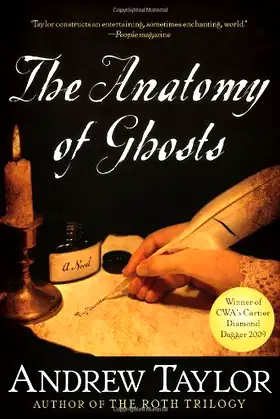
1786, Jerusalem College, Cambridge The ghost of Sylvia Whichcote is rumored to be haunting Jerusalem ever since student Frank Oldershaw claimed to have seen the dead woman prowling the grounds and was locked up because of his violent reaction to these disturbed visions. Desperate to salvage her son's reputation, Lady Anne Oldershaw employs John Holdsworth, author of The Anatomy of Ghosts -- a stinging account of why ghosts are mere delusion--to investigate. But his arrival in Cambridge disrupts an uneasy status quo as he glimpses a world of privilege and abuse, where the sinister Holy Ghost Club governs life at Jerusalem more effectively than the Master, Dr. Carbury, ever could. And when Holdsworth finds himself haunted--not only by the ghost of his dead wife, Maria, but also by Elinor, the very-much-alive Master's wife--his fate is sealed. He must find Sylvia's murderer, or else the hauntings will continue. And not one of this troubled group will leave the claustrophobic confines of Jerusalem unchanged. CWA Cartier Diamond Dagger winner Andrew Taylor returns with an outstanding historical novel that will simultaneously keep the reader riveted, and enchant with its effortless elegance.
Starred Review. Set in England in 1786, this masterful thriller from British author Taylor (Bleeding Heart Square) opens on a tragic note. In the months since London bookseller John Holdsworth's little son, Georgie, slipped into the Thames and hit his head against a coal barge with fatal results, Holdsworth's grief-stricken wife, Maria, has repeatedly visited the site of the boy's death. Until her own untimely death, Maria spends most of her days with a woman who relays messages from Georgie from the beyond. At loose ends, Holdsworth, who's written a treatise debunking ghost sightings, accepts an assignment from Lady Anne Oldershaw in Cambridge to prove to her son, a Jerusalem College student who claims to have seen a ghost, that he's suffering from a delusion. Fans of Michael Cox and Charles Palliser will relish this sophisticated period puzzle, which takes an intriguing look at the age-old question of the reality of ghosts. (Jan.) (c) Copyright PWxyz, LLC. All rights reserved.
What is it about historical mysteries that compels many writers to abandon the crisp conciseness of a well-honed plot in favor of sprawling narratives vined over with excess verbiage? There’s a really good premise here, but many readers will tire of hunting for its development in this almost-500-page book. Taylor sets his blend of ghost story and mystery at Cambridge University in 1786, focusing on one secret club whose overly privileged members embark on debauches that include having a female procuress find young women who are lured to a chamber, tied to a bed, and then raped by the collegians. One woman dies before she can be debauched. One of the club members claims to have seen her ghost; it so unsettles him that he is committed to a mental institution. His mother entreats London bookseller and librarian John Holdsworth, who has written an exposé of ghosts, to investigate. The engaging premise and the evocative setting are weighed down by the overstuffed plot, but fans of Rebecca Stott’s leaner ghost-mystery Ghostwalk (2007) will want to give this one a try. --Connie Fletcher
Find it on
AmazonNo videos available yet.
No news articles linked to this title yet.

Overall
Overall rating of the media
Atmosphere
How immersive and tense is the atmosphere
Gore
Level and quality of gore/violence
Story
Quality of the storyline and plot
Writing
Quality of the written content
Character Development
Depth and growth of characters
Pacing
Flow and timing of the narrative