
BOOK
0
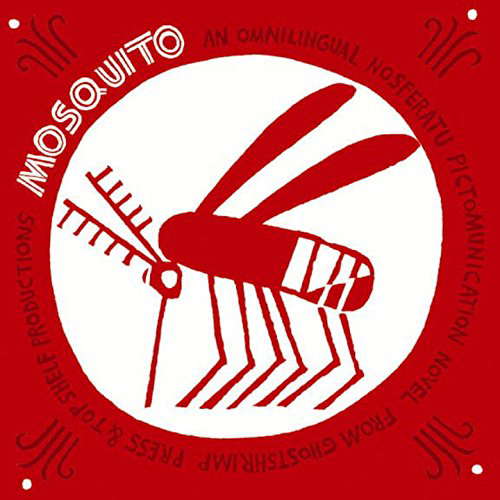
An elegant and strikingly stylistic, wordless vampire story, done completely in red ink. Intriguing and clever, it follows the adventure of a man who receives a curious letter containing polariods of vampire victims and a map to the small town where it lives.
Among the graphic novel's most prestigious antecedents are certain 1920s and 1930s collage and woodcut sequences that narrate without words. The work of painters and printmakers, they haven't been imitated much, especially by comics creators. James betrays his inspiration in the mock high-flown characterization of Mosquito on its cover: "An Omnilingual Nosferatu Pictomunication Novel." High modernism, here we come. Each of Mosquito's square pages holds one-, two-, or four-square panels. The subject matter is rendered as two-tone (cream and dusty red) assemblages of simple, geometric forms, reminiscent of Gerald MacDermott's style in Anansi the Spider (1972), though spikier. Only one word, sangre (blood), ever appears, always within an open mouth. The main story concerns a man's quest to find and destroy a vampire and is framed by a few panels of seeming autobiography of the artist-narrator, shown to be an enthusiast of the grotesque from early childhood, when Dr. Seuss was read to him. Occasionally baffling because of an odd angle of vision or abrupt change of perspective, Mosquito is nevertheless entrancing. Ray OlsonCopyright © American Library Association. All rights reserved
Find it on
AmazonNo videos available yet.
No news articles linked to this title yet.

Overall
Overall rating of the media
Atmosphere
How immersive and tense is the atmosphere
Gore
Level and quality of gore/violence
Story
Quality of the storyline and plot
Writing
Quality of the written content
Character Development
Depth and growth of characters
Pacing
Flow and timing of the narrative