

BOOK
0
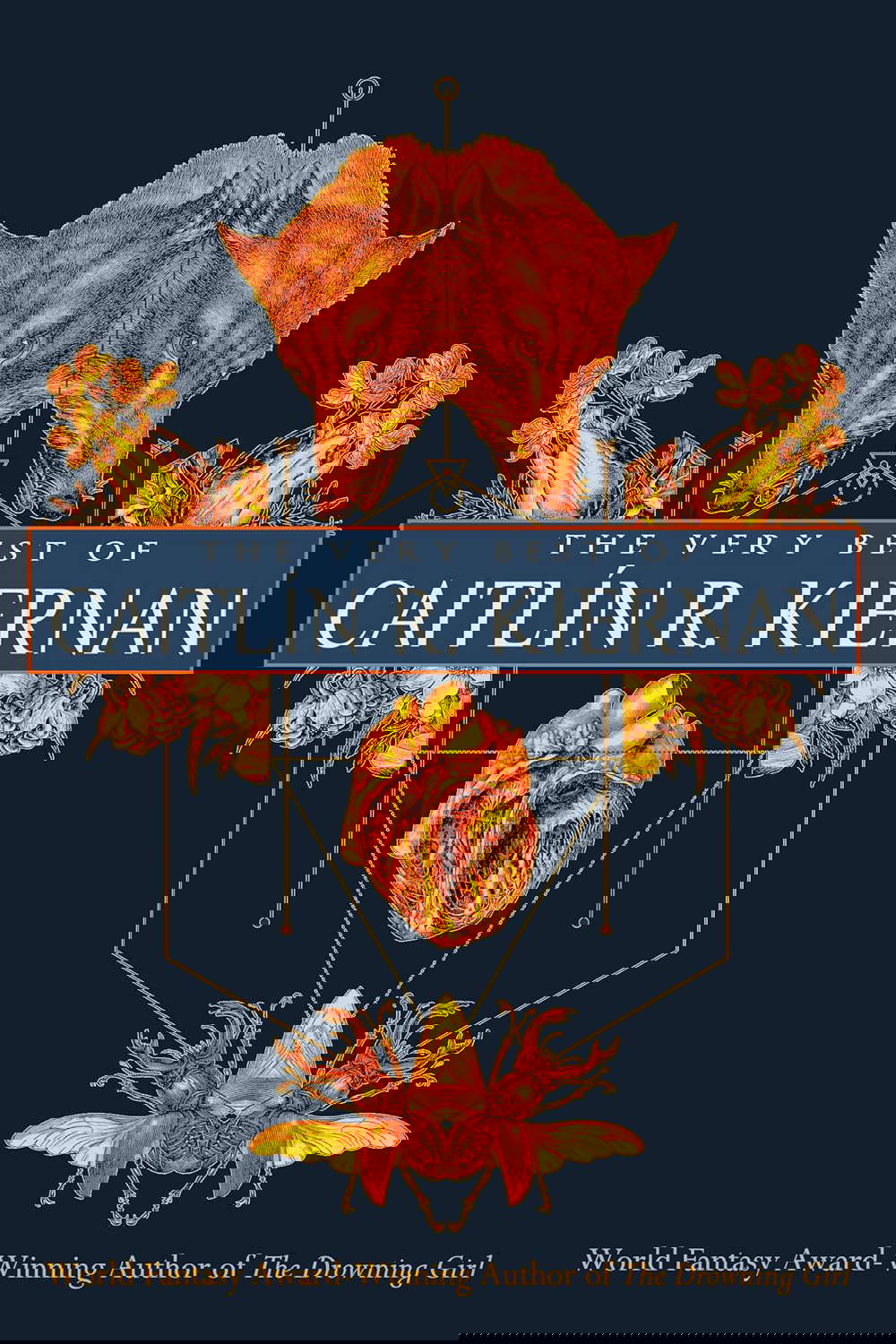
"Pure genius."―New York Times“Lyrically compelling tales that are nearly impossible to stop reading...fans of weird writers like Carmen Maria Machado, Jeff VanderMeer, and China Mieville will be glad to find this volume and thereby discover a writer who inspired them all.”―BooklistCaitlín R. Kiernan is one of dark fantasy and horror’s most acclaimed and influential short fiction writers. Her powerful, unexpected stories shatter morality, gender, and sexuality: a reporter is goaded by her toxic girlfriend into visiting sadistic art exhibits; a countess in a decaying movie theater is sated by her servants; a collector offers his greatest achievement to ensnare a musician who grieves for her missing sister.In this retrospective collection of her finest work―previously only available in limited editions―Kiernan cuts straight to the heart of the emotional truths we cannot ignore.
“Pure genius . . . an underappreciated master whose vision expresses itself through vast geographic expanses, gender fluidity, geological upheaval, lingering forces of evil, the horror and beauty of the natural world and the mythic architecture of the human mind. Kiernan is transformative. Read her and be changed.”
“The Ammonite Violin.” With lush prose, Kiernan finds strange beauty in terrible tableaus, never failing to unsettle and inspire awe in equal measure. This versatile retrospective offers something for nearly every fan of the strange and macabre, and cements Kiernan’s legacy as the reigning queen of dark fantasy."
“[STARRED] Drenched in an ocean setting and an atmosphere of corruption and decay, Kiernan's short fiction, published previously in volumes by several small presses, is collected here for the first time. ‘In Andromeda Among the Stones,’ Meredith Dandridge has to close the gate her father opened, letting the horrors of World War I into the world. In ‘Houses Under the Sea,’ a cult leader ushers her followers into the ocean (readers of Kiernan's The Drowning Girl will be familiar with the group), while "The Prayer of Ninety Cats" features a film critic who reviews a disturbing film covering the life of Erzsebet Báthory. In "A Fairy Tale of Wood Street," the narrator's girlfriend stops hiding the cow's tail that she had all along, and an artist enters the land of faeries in "La Peau Verte." The anthology's lack of explanatory prefaces or afterwords is noticeable, but the stories speak for themselves. VERDICT: Bodies, relationships, and the world are all changeable, shifting, and unstable in this collection by a master of dark fiction. Though influenced by Lovecraftian mythos, the work stands on its own and will be essential for Kiernan devotees.”
“Like [Stephen] King, Kiernan’s short fiction covers a broad range of subjects and genres, from science fiction to fantasy to the cosmic horror that she’s become so well known for with her novella Agents of Dreamland. Her stories are strange, beautiful, and full of emotion.”
“Wonderful, strange, horrid, lovely.”
“Caitlín Kiernan is a minister of dark magic, and any collection of her work is a must-read.”
“Caitlín Kiernan is one of the true visionaries and finest stylists in our field, and very possibly the most lyrical. Her tales enrich the imagination, and represent the literature of the dark at its most gorgeous and disturbing. This book is a treasure house of wonders and terrors, and an essential purchase for anyone who cares about the great tradition of weird fiction.”
“A collection rather than an anthology, The Very Best of Caitlín R Kiernan (Tachyon) hews to one style, uttering its fabulations in one piercingly delicious voice. My personal favorite, ‘The Maltese Unicorn,’ dishes up a Dashiell Hammett-esque crime narrative in a setting filled with bisexual demons and enchanted dildos. Often decay appears as a near-sentient character in the fictional worlds Kiernan constructs; often wickedness and ineffability and fate acquire a palpable, practically tactile presence in prose both teasing and pleasing. The author flirts with literary pretentions at times, and many of her overtures have been answered (as a glance at her long list of publication credits reveals) by hard-to-locate publications. Let us be grateful that Tachyon’s Jacob Weisman and Jill Roberts have made appreciation much easier by curating this magnificent selection of Kiernan’s eerily beautiful oeuvre.”
“Kiernan’s prose is provocative, mysterious, soothing, decadent, flowery without being flowery. It’s seeing a master at her best. It’s inspiring, mystifying, indescribable. I could try to describe how much I enjoy her prose, but it would only come out wrong. It would be like a child trying to describe the vastness and mystery of the cosmos”
“The collection is an excellent example of someone capable of consummate worldbuilding within a limited word count, resulting in the feeling of experiencing a bite-sized epic.”
“To enter the world of Caitlin R. Kiernan is to enter a world where dreams become nightmares, nightmares become reality, and transformation―horrible, beautiful, or sometimes both―is a constant . . . as the title suggests, this is a terrific collection from one of the best writers of her generation.
“Kiernan's stories will submerge you in a strange world filled with the twisted, radical reflections of Giger and Lovecraft, their aesthetic skins stretched over anger, pain, queerness, and courage.”
“Caitlín R. Kiernan is one of the most inventive, seductive, and wickedly intelligent writers working today in any genre, and this treasury puts her powers on full display. Her stories are promiscuous vampires, eager to draw their energy from folklore, space opera, crime fiction, weird tales, and the dreams of the silver screen. Whether their tone is streetwise or scholarly, archaic or futuristic, these tales share Kiernan's signature flavor of a last drink on the edge of the abyss. She is Our Lady of Elation and Melancholy. A sinister, spellbinding collection.”
“Lyrically compelling tales that are nearly impossible to stop reading . . . fans of weird writers like Carmen Maria Machado, Jeff VanderMeer, and China Mieville will be glad to find this volume and thereby discover a writer who inspired them all.”
“To begin a Caitlín R. Kiernan story is to enter a world so vividly imagined that it's almost unbearable, on a journey as terrifying as it is irresistible.”
“Leav[es] you startled by how skilled one person could be. The stories gave me chills at times, and I was in awe of these strings of words that acted more like spells than stories. It’s a collection to be read and savored.”
“It has made me a fan, and a big one at that. Kiernan is easily one of the best writers of weird fiction working today.”
"Kiernan’s style of writing is not very traditional and her use of language is dark, disturbing, and grotesque, while simultaneously drawing you in and holding your attention. The reading equivalent of: ‘I can’t look away.’ . . . I would recommend this collection to you if you enjoy the works of: Shirley Jackson, Victor Lavalle, Nick Mamatas, Angela Carter, David Lynch, H.P. Lovecraft, or Cosmic Horror."
“The stories within this collection are powerful and diverse, each one polished to perfection . . . This is a collection released by a multiple award winner at the top of her game.”
“Magnificent nightmares rise out of Kiernan’s work.”
"All I can say is, like all good rollercoasters, it left me dizzy and excited and desperate to go around again."
“These stories will fucking haunt you.”
“Caitlín R. Kiernan is producing the very best of contemporary dark and weird fiction.”
“I have been saying for years that everyone interested in short fiction should be reading Caitlín R. Kiernan. This is the perfect opportunity to be introduced to her range and virtuosity.”
“A must-read for any fan of dark fantasy and horror.”
“There’s literally nothing out there quite like Kiernan’s stories, and they’re dazzling.”
“Caitlín Kiernan is the poet and bard of the wasted and the lost.”
“Caitlín R. Kiernan is an original.”
“Caitlín R. Kiernan writes like a Gothic cathedral on fire.”
“Incisive, beautiful and as perfectly crafted as a puzzle-box, The Drowning Girl took my breath away.”
“This is a masterpiece. It deserves to be read in and out of genre for a long, long time.”
“A beautifully written, startlingly original novel.”
“With The Drowning Girl, Caitlín R. Kiernan moves firmly into the new vanguard, still being formed, of our best and most artful authors of the gothic and fantastic―those capable of writing fiction of deep moral and artistic seriousness.”
“Caitlín R. Kiernan turns the ghost story inside out and transforms it.”
“The Drowning Girl features all those elements of Caitlín R. Kiernan’s writing that readers have come to expect―a prose style of wondrous luminosity, an atmosphere of languorous melancholy, and an inexplicable mixture of aching beauty and clutching terror.”
“Kiernan pins out the traditional memoir on her worktable and metamorphoses it into something wholly different and achingly familiar, more alien, more difficult, more beautiful, and more true.”
The Very Best of Caitlín R. KiernanBy Caitlín R. KiernanTachyon PublicationsCopyright © 2019 Caitlín R. KiernanAll rights reserved.ISBN: 978-1-61696-302-6ContentsIntroduction | Richard Kadray, Andromeda Among the Stones, La Peau Verte, Houses Under the Sea, Bradbury Weather, A Child's Guide to the Hollow Hills, The Ammonite Violin (Murder Ballad No. 4), A Season of Broken Dolls, In View of Nothing, The Ape's Wife, The Steam Dancer (1896), Galápagos, Fish Bride (1970), The Mermaid of the Concrete Ocean, Hydrarguros, The Maltese Unicorn, Tidal Forces, The Prayer of Ninety Cats, One Tree Hill (The World as Cataclysm), Interstate Love Song (Murder Ballad No. 8), Fairy Tale of Wood Street, CHAPTER 1Andromeda Among the Stones"I cannot think of the deep sea without shuddering ..."— H. P. LovecraftOctober 1914"IS SHE REALLY and truly dead, Father?" the girl asked, and Machen Dandridge, already an old man at fifty-one, looked up at the low buttermilk sky again and closed the black book clutched in his hands. He'd carved the tall headstone himself, the marker for his wife's grave there by the relentless Pacific, black shale obelisk with its hasty death'shead. His daughter stepped gingerly around the raw earth and pressed her fingers against the monument."Why did you not give her to the sea?" she asked. "She always wanted to go down to the sea at the end. She often told me so.""I've given her back to the earth, instead," Machen told her and rubbed at his eyes. The cold sunlight through thin clouds was enough to make his head ache, his daughter's voice like thunder, and he shut his aching eyes for a moment. Just a little comfort in the almost blackness trapped behind his lids, parchment skin too insubstantial to bring the balm of genuine darkness, void to match the shades of his soul, and Machen whispered one of the prayers from the heavy black book and then looked at the grave again."Well, that's what she always said," the girl said again, running her fingertips across the rough-hewn stone."Things changed at the end, child. The sea wouldn't have taken her. I had to give her back to the earth.""She said it was a sacrilege, planting people in the ground like wheat, like kernels of corn.""She did?" He glanced anxiously over his left shoulder, looking back across the waves the wind was making in the high and yellow-brown grass, the narrow trail leading back down to the tall and brooding house that he'd built for his wife twenty-four years ago, back towards the cliffs and the place where the sea and sky blurred seamlessly together."Yes, she did. She said only barbarians and heathens stick their dead in the ground like turnips.""I had no choice," Machen replied, wondering if that was exactly the truth or only something he'd like to believe. "The sea wouldn't take her, and I couldn't bring myself to burn her.""Only heathens burn their dead," his daughter said disapprovingly and leaned close to the obelisk, setting her ear against the charcoal shale."Do you hear anything?" "No, Father. Of course not. She's dead. You just said so.""Yes," Machen whispered. "She is." And the wind whipping across the hillside made a hungry, waiting sound that told him it was time for them to head back to the house.This is where I stand, at the bottom gate, and I hold the key to the abyss ..."But it's better that way," the girl said, her ear still pressed tight against the obelisk. "She couldn't stand the pain any longer. It was cutting her up inside.""She told you that?""She didn't have to tell me that. I saw it in her eyes."The ebony key to the first day and the last, the key to the moment when the stars wink out, one by one, and the sea heaves its rotting belly at the empty, sagging sky."You're only a child," he said. "You shouldn't have had to see such things. Not yet.""It can't very well be helped now," she answered and stepped away from her mother's grave, one hand cupping her ear like maybe it had begun to hurt. "You know that, old man.""I do," and he almost said her name then, Meredith, his mother's name, but the wind was too close, the listening wind and the salt-and-semen stink of the breakers crashing against the cliffs. "But I can wish it were otherwise.""If wishes were horses, beggars would ride."And Machen watched silently as Meredith Dandridge knelt in the grass and placed her handful of wilting wildflowers on the freshly turned soil. If it were spring instead of autumn, he thought, there would be dandelions and poppies. If it were spring instead of autumn, the woman wrapped in a quilt and nailed up inside a pine-board casket would still be breathing. If it were spring, they would not be alone now, him and his daughter at the edge of the world. The wind teased the girl's long yellow hair, and the sun glittered dimly in her warm green eyes.The key I have accepted full in the knowledge of its weight."Remember me," Meredith whispered, either to her dead mother or something else, and he didn't ask which."We should be heading back now," he said and glanced over his shoulder again."So soon? Is that all you're going to read from the book? Is that all of it?""Yes, that's all of it, for now," though there would be more, later, when the harvest moon swelled orange-red and bloated and hung itself in the wide California night. When the women came to dance, then there would be other words to say, to keep his wife in the ground and the gate shut for at least another year.The weight that is the weight of all salvation, the weight that holds the line against the last, unending night."It's better this way," his daughter said again, standing up, brushing the dirt off her stockings, from the hem of her black dress. "There was so little left of her.""Don't talk of that here," Machen replied, more sternly than he'd intended. But Meredith didn't seem to have noticed or, if she'd noticed, not to have minded the tone of her father's voice."I will remember her the way she was before, when she was still beautiful.""That's what she would want," he said and took his daughter's hand. "That's the way I'll remember her, as well," but he knew that was a lie, as false as any lie any living man ever uttered. He knew that he would always see his wife as the writhing, twisted thing she'd become at the last, the way she was after the gates were almost thrown open, and she placed herself on the threshold.The frozen weight of the sea, the burning weight of starlight and my final breath. I hold the line. I hold the ebony key against the last day of all.And Machen Dandridge turned his back on his wife's grave and led his daughter down the dirt and gravel path, back to the house waiting for them like a curse.UNCORRECTED PROOF -- NOT FOR SALENovember 1914Meredith Dandridge lay very still in her big bed, her big room with its high ceiling and no pictures hung on the walls, and she listened to the tireless sea slamming itself against the rocks. The sea there to take the entire world apart one gritty speck at a time, the sea that was here first and would be here long after the continents had finally been weathered down to so much slime and sand. She knew this because her father had read to her from his heavy black book, the book that had no name, the book that she couldn't ever read for herself or the demons would come for her in the night. And she knew, too, because of the books he had given her, her books — Atlantis: The Antediluvian World, The World Before the Deluge, and Atlantis and Lost Lemuria. Everything above the waves on borrowed time, her father had said again and again, waiting for the day when the sea rose once more and drowned the land beneath its smothering, salty bosom, and the highest mountains and deepest valleys will become a playground for sea serpents and octopuses and schools of herring. Forests to become Poseidon's orchards, her father said, though she knew Poseidon wasn't the true name of the god-thing at the bottom of the ocean, just a name some dead man gave it thousands of years ago."Should I read you a story tonight, Merry?" her dead mother asked, sitting right there in the chair beside the bed. She smelled like fish and mud, even though they'd buried her in the dry ground at the top of the hill behind the house. Meredith didn't look at her, because she'd spent so much time already trying to remember her mother's face the way it was before and didn't want to see the ruined face the ghost was wearing like a mask. As bad as the face her brother now wore, worse than that, and Meredith shrugged and pushed the blankets back a little."If you can't sleep, it might help," her mother said with a voice like kelp stalks swaying slowly in deep water."It might," Meredith replied, staring at a place where the wallpaper had begun to peel free of one of the walls, wishing there were a candle in the room or an oil lamp so the ghost would leave her alone. "And it might not.""I could read to you from Hans Christian Andersen, or one of Grimm's tales," her mother sighed. "'The Little Mermaid' or 'The Fisherman and His Wife'?""You could tell me what it's like in Hell," the girl replied."Dear, I don't have to tell you that," her ghost mother whispered, her voice gone suddenly regretful and sad. "I know I don't have to ever tell you that.""There might be different hells," Meredith said. "This one, and the one Father sent you away to, and the one Avery is lost inside. No one ever said there could only be one, did they? Maybe it has many regions. A hell for the dead Prussian soldiers and another for the French, a hell for Christians and another for the Jews. And maybe another for all the pagans.""Your father didn't send me anywhere, child. I crossed the threshold of my own accord.""So I would be alone in this hell."The ghost clicked its sharp teeth together, and Meredith could hear the anemone tendrils between its iridescent fish eyes quickly withdrawing into the hollow places in her mother's decaying skull."I could read you a poem," her mother said hopefully. "I could sing you a song.""It isn't all fire and brimstone, is it? Not the region of hell where you are? It's blacker than night and cold as ice, isn't it, Mother?""Did he think it would save me to put me in the earth? Does the old fool think it will bring me back across, like Persephone?"Too many questions, hers and her mother's, and for a moment Meredith Dandridge didn't answer the ghost, kept her eyes on the shadowy wallpaper strips, the pinstripe wall, wishing the sun would rise and pour warm and gold as honey through the drapes."I crossed the threshold of my own accord," the ghost said again, and Meredith wondered if it thought she didn't hear the first time. Or maybe it was something her mother needed to believe and might stop believing if she stopped repeating it. "Someone had to do it.""It didn't have to be you."The wind whistled wild and shrill around the eaves of the house, invisible lips pressed to a vast, invisible instrument, and Meredith shivered and pulled the covers up to her chin again."There was no one else. It wouldn't take your brother. The one who wields the key cannot be a man. You know that, Merry. Avery knew that, too.""There are other women," Meredith said, speaking through gritted teeth, not wanting to start crying but the tears already hot in her eyes. "It could have been someone else. It didn't have to be my mother.""Some other child's mother, then?" the ghost asked. "Some other mother's daughter?""Go back to your hell," Meredith said, still looking at the wall, spitting out the words like poison. "Go back to your hole in the ground and tell your fairy tales to the worms. Tell them 'The Fisherman and His Wife.'" "You have to be strong now, Merry. You have to listen to your father, and you have to be ready. I wasn't strong enough."And finally she did turn to face her mother, what was left of her mother's face, the scuttling things nesting in her tangled hair, the silver scales and barnacles, the stinging anemone crown, and Meredith Dandridge didn't flinch or look away."One day," she said, "I'll take that damned black book of his, and I'll toss it into the stove. I'll take it, Mother, and toss it into the hearth, and then they can come out of the sea and drag us both away."Her mother cried out and came apart like a breaking wave against the shingle, water poured from the tin pail that had given it shape, her flesh gone suddenly as clear and shimmering as glass, before she drained away and leaked through the cracks between the floorboards. The girl reached out and dipped her fingers into the shallow pool left behind in the wicker seat of the chair. The water was cold and smelled unclean. And then she lay awake until dawn, listening to the ocean, to all the unthinking noises a house makes in the small hours of a night.May 1914Avery Dandridge had his father's eyes, but someone else's soul to peer out through them, and to his sister he was hope that there might be a life somewhere beyond the rambling house beside the sea. Five years her senior, he'd gone away to school in San Francisco for a while, almost a year, because their mother wished him to. But there had been an incident, and he was sent home again, transgressions only spoken of in whispers and nothing anyone ever bothered to explain to Meredith, but that was fine with her. She only cared that he was back, and she was that much less alone."Tell me about the earthquake," she said to him, one day not long after he'd returned, the two of them strolling together along the narrow beach below the cliffs, sand the color of coal dust, noisy gulls and driftwood like titan bones washed in by the tide. "Tell me all about the fire.""The earthquake? Merry, that was eight years ago. You were still just a baby, that was such a long time ago," and then he picked up a shell and turned it over in his hand, brushing away some of the dark sand stuck to it. "People don't like to talk about the earthquake anymore. I never heard them say much about it.""Oh," she said, not sure what to say next but still full of questions. "Father says it was a sign, a sign from —""Maybe you shouldn't believe everything he says, Merry. It was an earthquake." And she felt a thrill then, like a tiny jolt of electricity rising up her spine and spreading out across her scalp, that anyone, much less Avery, would question their father and suggest she do likewise."Have you stopped believing in the signs?" she asked, breathless. "Is that what you learned in school?""I didn't learn much of anything important in school," he replied and showed her the shell in his palm. Hardly as big around as a nickel, but peaked in the center like a Chinaman's hat, radial lines of chestnut brown. "It's pretty," she said as he placed it in her palm."What's it called?""It's a limpet," he replied, because Avery knew all about shells and fish and the fossils in the cliffs, things he'd learned from their father's books and not from school. "It's a shield limpet. The jackmackerel carry them into battle when they fight the eels."Meredith laughed out loud at that last part, and he laughed, too, then sat down on a rock at the edge of a wide tidepool. She stood there beside him, still inspecting the shell in her hand, turning it over and over again. The concave underside of the limpet was smoother than silk and would be white if not for the faintest iridescent hint of blue."That's not true," she said. "Everyone knows the jackmackerel and the eels are friends.""Sure they are," Avery said. "Everyone knows that." But he was staring out to sea now and didn't turn to look at her. In a moment, she slipped the shell into a pocket of her sweater and sat down on the rock next to him."Do you see something out there?" she asked, and he nodded his head, but didn't speak. The wind rushed cold and damp across the beach and painted ripples on the surface of the pool at their feet. The wind and the waves seemed louder than usual, and Meredith wondered if that meant a storm was coming."Not a storm," Avery said, and that didn't surprise her because he often knew what she was thinking before she said it. "A war's coming, Merry.""Oh yes, the jackmackerel and the eels." Merry laughed and squinted towards the horizon, trying to see whatever it was that had attracted her brother's attention. "The squid and the mussels.""Don't be silly. Everyone knows that the squid and the mussels are great friends," and that made her laugh again. But Avery didn't laugh, looked away from the sea and stared down instead at the scuffed toes of his boots dangling a few inches above the water."There's never been a war like the one that's coming," he said after a while. "All the nations of the earth at each other's throats, Merry, and when we're done with all the killing, no one will be left to stand against the sea."She took a very deep breath, the clean, salty air to clear her head, and began to pick at a barnacle on the rock."If that were true," she said, "Father would have told us. He would have shown us the signs.""He doesn't see them. He doesn't dream the way I do.""But you told him?""I tried. But he thinks it's something they put in my head at school. He thinks it's some kind of trick to make him look away."Merry stopped picking at the barnacle, because it was making her fingers sore and they'd be bleeding soon if she kept it up. She decided it was better to watch the things trapped in the tidepool, the little garden stranded there until the sea came back to claim it. Periwinkle snails and hermit crabs wearing stolen shells, crimson starfish and starfish the shape and color of sunflowers."He thinks they're using me to make him look the other way, to catch him off his guard," Avery whispered, his voice almost lost in the rising wind. "He thinks I'm being set against him." (Continues...)Excerpted from The Very Best of Caitlín R. Kiernan by Caitlín R. Kiernan. Copyright © 2019 Caitlín R. Kiernan. Excerpted by permission of Tachyon Publications. All rights reserved. No part of this excerpt may be reproduced or reprinted without permission in writing from the publisher.Excerpts are provided by Dial-A-Book Inc. solely for the personal use of visitors to this web site.
Find it on
AmazonNo videos available yet.
No news articles linked to this title yet.

Overall
Overall rating of the media
Atmosphere
How immersive and tense is the atmosphere
Gore
Level and quality of gore/violence
Story
Quality of the storyline and plot
Writing
Quality of the written content
Character Development
Depth and growth of characters
Pacing
Flow and timing of the narrative