

BOOK
0
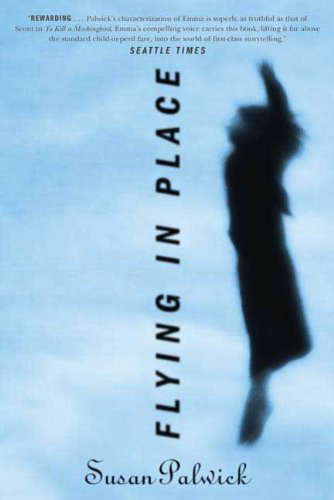
Once in a while, a first novel arrives like a bolt of lightning, commanding attention with an explosion of power, grace, and light. Flying in Place is such a book. As unflinching as The Lovely Bones, as startling as Beloved, it is a work to bear witness--with bravery and compassion--for the experience of millions of readers and their loved ones.Emma is twelve, a perfectly normal girl, in a perfectly normal home. With a perfectly normal father...who comes into her bedroom every night in the hours before dawn. Emma will do anything to escape. From the visits. From the bodies. From the breathing. Even go walking on the ceiling--which is where Emma meets Ginny, the sister who died before she was born. Ginny, who knows things. Ginny, who can fly....At the Publisher's request, this title is being sold without Digital Rights Management Software (DRM) applied.
Prominent surgeon Stewart Gray is a pillar of his small Wisconsin community, receiving holiday gifts from the local judge and dining with the mayor. But, as this chilling and finely tuned first novel illustrates, Dr. Gray is no paragon: he has been sexually abusing his 12-year-old daughter, Emma, for years. His wife, a respected English teacher, might be regarded as his accomplice, as she chooses not to know what occurs almost nightly in her daughter's bedroom. Emma narrates this contemporary horror story calmly and with fluid grace, engaging in dialogues and imaginative excursions with her dead sister, Ginny, in order to insulate herself during her father's systematic assaults. Only the Grays' boisterous next-door neighbors, the Hallorans, give her affection and support. Mrs. Halloran, the school nurse, sees Emma's bruises, notes her withdrawal and plummeting grades, and, with a few pointed questions, manages to piece the scenario together. The arrival of Emma's estranged yet knowledgeable Aunt Donna precipitates an explosive family confrontation--and further devastating revelations. Palwick avoids pat solutions, offering instead a deeply felt, deeply moving tale. Copyright 1992 Reed Business Information, Inc.
An imaginative first novel about incest from a young doctoral candidate at Yale. Twelve-year-old Emma Gray, daughter of a surgeon and a schoolteacher, lives in the shadow of her ``perfect'' younger sister, Ginny, who died at the age of ten, before Emma was born. Emma, who must also endure her surgeon father's early morning visits, finds a novel way of coping: she leaves her body behind and flies around her bedroom to escape the awful sound of his heavy breathing. Eventually, Ginny visits Emma, and the two sisters begin to fly together to a favorite retreat. In time, Ginny shares her own shameful secret: their father abused her, too. Meanwhile, the school nurse and mother of Emma's best earthly friend, Jane, has noticed that something is wrong with Emma. But the truth doesn't out until the day that Emma's aunt comes to visit and reveals her own suspicions about the father and his relationship to Ginny before she died. Told in a strong narrative voice that pulls the reader in- -despite an occasional awkward and uneven handling of plot and character (the father, for instance, is not really developed; too much is made of Emma's pretense of menstruating). Still, Palwick's debut has a wonderful fantasy tone and builds to a convincing climax. It may lack the impact of some of the more hard-edged novels about incest-- e.g., those by Kathryn Davis or Kaye Gibbons- -but it certainly stirs sympathy for the paths of survival such victims must take. -- Copyright ©1992, Kirkus Associates, LP. All rights reserved.
Flying in PlaceBy Susan PalwickTom Doherty AssociatesCopyright © 1992 Susan PalwickAll rights reserved.ISBN: 978-0-7653-1386-7CHAPTER 1Bret found the letters today. I'd forgotten to lock the door to my study, and Nancy got in. I hadn't locked the desk because I'm usually so careful about locking the door, so Nancy — large for her age, and with the determined energy of all toddlers — scaled my writing chair and dug a group of letters out of one of the cubbyholes. She was eating pieces of correspondence by the time Bret found her. "Thank God you use blue felt-tip and not red," he told me later, "or I'd have thought she was dying."I'd gotten home to find a freshly scrubbed Nancy nursing a bottle of apple juice, and Bret on the floor of the study, gingerly sorting pieces of blue-smeared paper. "Hi," he said when he saw me. "She was eating these. I haven't been reading them, really I haven't, I'm just trying to put them back together —""It's okay," I said. My drive home through autumn foliage had soothed me, and thirty feet from my study window shone the Delaware River, bright waterfalls chattering on rocks. We're too high here for the river to be tranquil, but it's usually merry. It reminds me of Nancy. "I trust you."Bret scratched his nose, getting ink on it, and said, "I know you don't want anybody in here.""It's okay," I said. "I forgot to lock the door." I'd remembered that I'd forgotten to lock the door as soon as I was irrevocably ensconced in the supermarket checkout line, and all the way home, as the car swept aside falling leaves, I'd been wondering what would happen. I'd never forgotten to lock the door before. "It's probably because I trust you."Bret looked at the pieces of paper surrounding him. Nancy actually hadn't eaten much, maybe a year's worth out of fifteen. I picked up one of the torn sheets, which recorded a fragment of my first vacation with Bret. A good year: the kid couldn't be faulted for her taste. "Do you trust me enough to tell me what they are?" Bret asked."Letters," I said, and looked away from him, out at the river. Water has always calmed me."Unmailed?""They're to my sister.""Really," Bret said, not happily. In my peripheral vision, I saw him scratch his nose again. "What about?""Myself. You, Nancy. Like a journal, really.""Oh," he said. "You write her letters even though you never knew her? Or because you never knew her? Emma?"You didn't lock the door, I told myself firmly, finally failing to be comforted by the river, and said, "I knew her. I did.""How? When?""She visited me," I said carefully, looking back at Bret, "when I was twelve. When we were both twelve."Bret shook his head and said just as carefully, "How'd she get there? I mean, she couldn't exactly have walked. Could she?"If you told Myrna you can tell Bret, I told myself. He's your husband. He knows you're not crazy. You love him. You didn't lock the door. "Actually," I said, "the first time I saw her she was doing cartwheels."Bret started to smile, and evidently thought better of it. Nancy, finished with her juice, discarded the bottle and let out a joyous shriek; Bret reached out and retrieved the bottle, beating it against his thigh in a tattoo that told me how tense he was, despite his seeming calm. "Cartwheels. Okay. Where?"I closed my eyes, remembering the predawn grayness of that April Wisconsin morning, the ranks of shadows cast on the walls by the venetian blinds, row upon row of thin horizontal bars, and how I'd risen out of my body to try to get away from them, away from the bars and the grayness and the noise. My mother said that dawn was the noisiest time of day because of the birds, but birdsong wasn't the sound I dreaded. Breathing was."Emma?" Bret asked gently. "Where was she doing cartwheels?"I swallowed. Talking hadn't been this difficult for years. "On my bedroom ceiling."* * *I recognized her right away. I probably would have recognized her even if her picture hadn't been hanging all over the house, because she'd inherited our parents' best features, the ones I'd always wanted: Mom's blue eyes and flowing auburn hair, my father's roman nose and firm chin. I'd gotten the leftovers: Mom's gap teeth and propensity to freckle at the slightest hint of sunlight, my father's frizzy brown curls and big ears. My tendency to fat must have been a recessive trait from several generations back, because neither of my parents was about to claim it."Ginny was light as a bird," my mother often said with a sigh. She kept Ginny's favorite nightgown — a frilly affair with lots of lace and ribbons — carefully preserved in a cedar chest, and often told me that Ginny was prettier in that nightgown than most little girls were in party dresses. I always wore pajamas. My mother hated pajamas.To my surprise, Ginny was wearing a pair of yellow cotton pajamas with Snoopy on them, which must have made doing cartwheels a lot easier. I'd been hovering next to the ceiling, counting the lilac blossoms on the tree outside my window, when she came tumbling through the wall my bedroom shared with hers. Her red-gold curls were mussed from her calisthenics, but the cartwheels were perfect. She didn't seem to know I was there, but she looked solid enough; to my satisfaction, she didn't even have a halo.I'd only learned how to leave my body a few weeks before, after years of feigned sleep, and I was still surprised at how easy it was: one of those skills that seems impossible at first but quickly becomes second nature, like tying your shoes. Because I wasn't in my body, I could define directions any way I wanted to. I rotated so that my feet were on the ceiling and the breathing was coming from over my head. As always, I tried not to pay attention to it, but today it was louder than usual and counting flowers hadn't been helping, so Ginny was a welcome distraction. She reached the opposite wall and I wondered if she'd go through it, into my parents' room — Mom would really love that — but instead she turned and started doing cartwheels in the other direction, coming back towards me."Hi," I said. "What are you doing here?"She stopped and stood up — which meant that her feet were planted on the ceiling like mine — and squinted at me, frowning, her head cocked to one side. "Cartwheels," she said. The breathing sounded like a hurricane now, but if Ginny heard it she didn't let on. Mom never heard anything either; that must have been another congenital tendency. I may have been fat, but at least I wasn't deaf."You can't do cartwheels," I told her. I'd never been able to do cartwheels, no matter what I was wearing. "You aren't even supposed to be here. You're dead. Go back to your own room, where you belong.""But I am supposed to be here," she said. "I wouldn't be here if I weren't supposed to be here.""That's called circular logic," I told her, "but I grade easier than Mom does so I'll let you pass this time, if you tell me why you're here."She was there to distract me from the breathing; it was easy enough to figure that out. Maybe she'd be able to teach me how to go through walls too, and then I'd finally be able to get into her room. The door had been locked for as long as I could remember. Mom didn't want anybody in there and my father acted like the room didn't exist at all, and if the key was still around somewhere I sure hadn't been able to find it. I'd have bet all my Nancy Drew books that Ginny's room was nicer than mine."I don't know why I'm here," Ginny said. She took a piece of her hair and put it in her mouth, biting at the ends the way Mom always told me not to do. Her hands were even smaller than I'd expected, the fingers like little sticks with knobs on them, something out of Hansel and Gretel. You could break those fingers without even trying. "I can't remember. I can't even remember who I am.""You're nobody," I said, disgusted. She wasn't distracting me very well; I could still hear the breathing, heavy as waves crashing on a beach. What good was being out of my body, if I couldn't get away from the breathing? "You're a ghost.""I am? But ghosts used to be people. Didn't I used to be somebody? I can't —""Remember," I said. "For somebody who made high honor roll every marking period of her life your brain's really gone soft, you know that? Does being dead do that to everybody?"Her face brightened. "Ha! See? You do know who I was!""Are you kidding? How could I not know who you are? It's not like Mom would ever let me forget it! Most kids get Seuss stories at bedtime: I've gotten Ginny stories, as long as I can remember —""Ginny," she said, and hugged herself. "That's right! I remember! I had one of those bracelets with the little beads that said Ginny. And birthday cakes that said Ginny. And books — a lot of books with brown paper covers, and I wrote Ginny on them. Thank you!"She unclasped herself and took a few dancing steps towards me like she was going to hug me, but I backed off and she stopped short, frowning. I hoped she was hurt. I wanted her to be hurt."That's right: Ginny, my perfect sister, the one who was skinnier than I am and smarter than I am and had better manners than I do. The one who had pretty thick curls instead of mouse-brown frizz. The one nobody ever laughed at in gym, because on top of getting straight A plusses she was a champion gymnast. So why did you come back, anyway? Heaven wasn't good enough for you? Didn't they worship you up there the way Mom does?""I already told you, I don't know!" There was the edge of a whine in her voice. Good. I was getting to her, then. She scowled at me and said, "Are you dead, too? Why are you here, if you aren't dead?""Stupid ghost! You can't even hear it, can you?" I waved a hand over my head, in the direction of the floor, and Ginny looked where I was pointing and then back at me, so quickly I wasn't even sure she'd seen it. "It's your fault," I told her. "Because you went and died, and parts of Mom died when you did. Isn't that nice? Doesn't that make you feel good?"She didn't say anything; just stared at me, both hands over her mouth. "Maybe that's why you had to come back," I said. "So you'd have to look at it. Maybe they think they made a mistake, letting you into heaven. Maybe they think you've got it too easy, sitting up there singing hymns all day."She took her hands away from her mouth. "You're mean," she said, her voice breaking. She was crying, shining droplets rolling down her Ivory-Snow cheeks."That's right. I've got to be mean to somebody, and it might as well be you. You aren't even real."Ginny put her arms around herself and hugged, rocking. "I am so! I'm as real as you are! I am, even if I can't remember anything!""No, you aren't, because you're dead. Anyway, I like being mean. I'm going to be mean some more, because I'm still alive and you aren't. Did you know that Mom wouldn't hold me for two weeks after I was born, because I wasn't you? She told me that once. It's not like I would have remembered it or anything, but she had to let me know. She puts flowers on your grave every month, every fourth Saturday no matter what the weather's like, even if it's twenty below zero — especially then, since you died in January. She won't go into your room, but she goes to the cemetery every month. Figure that one out. And she drags me with her so she can tell me more stories about you, so I'll be more like you —""But if you were like me you'd be dead," said Ginny, wiping her face with the back of one hand. Her tiny fingers were shaking like twigs in a winter wind. "She doesn't want that. I know she doesn't want that.""I don't. If I died she could pretend I was beautiful. You're not as beautiful as she thinks you are, you know. You're too skinny.""I know," she said simply, and even though I hated her I was ashamed. She really was as pretty as her picture; she was so thin only because she'd been so sick before she died, battling pneumonia for weeks while Mom wept by her hospital bedside and my father, the omnipotent physician, railed at his inability to save her. I knew that story by heart. Once, before it had become so many words, it had even made me sad.But it didn't matter what I told this apparition, because she wasn't real. I'd thought her up to distract me from the breathing, and if she made me feel bad I could send her away again. "Go away," I said. "Go back to wherever you came from. You're just a ghost. You're a ghost with no memory, and that's worse than nothing. What good are you, if you can't tell me anything I don't know?"She shivered all over now. "I know lots you don't know."I know something you don't know. Perfect Ginny, reduced to that game. "Prove it," I told her. "Tell me something important, something I couldn't know any other way. Tell me how to get into your room."She put a lock of hair in her mouth, chewed on it thoughtfully, blinked, and shivered again. "Aunt Donna and I have the same pajamas.""Huh? That's not what I asked you! Anyway, you can't even remember names, stupid. You mean Aunt Diane, Dad's sister in Ohio —""Aunt Donna," she repeated."I don't have an Aunt Donna!""We bought them at Macy's," she said, wiping her eyes with the back of her hand again. She looked relieved. "So I'd have something from the store even though I couldn't go to the parade. I think that's why I'm here. To tell you that." And then she turned and walked through the wall again, back into the place I'd never been allowed to go, and I was alone with the lilacs and the venetian blinds. The breathing had stopped, finally. When I craned my head up at the bed I could see my ugly fat body lying there like a rag doll someone had tossed aside. It was time for me to go back, so I could get up and eat breakfast and go to school.* * *Getting back in was harder than it had been the other times, as if my body were a piece of clothing that had shrunk in the wash. When I finally made it I felt a searing pain between my legs and the warm stickiness of blood, and I knew why the breathing had been so loud.He'd never done that before. He'd done plenty of other things, but never anything that would leave any kind of mark, and I'd never thought he'd treat me more carelessly than he'd treat one of his patients.He was a meticulous surgeon. Everyone he worked with said so, and the most important people in town looked up to him. The local judge always sent us a crate of oranges for New Year's, because my father had done his prostate surgery. The mayor had invited us over for dinner after my father removed his five-year-old grandson's appendix.Even people who disliked him respected him. My father loved to tell the story of how the chief pathologist at the hospital had postponed his gall bladder operation until my father could do it, although they'd hated each other for years. "You've earned your arrogance, Stewart. At least I won't be conscious to listen to you bragging about how elegantly you're cutting me open."My father had answered. "No, but when you come to you'll have to listen to me bragging about how elegantly I sewed you back up."By now, the anecdote was a family joke. Whenever he sliced a ham or turkey, my mother said, "At least it isn't conscious to listen to you bragging about how beautifully you're carving it." But here I was, bleeding. He never would have left a patient bleeding in bed."You mustn't ever tell anyone," he'd said the first few times he came into my bedroom at dawn, back when I was a very little girl, "because it would kill your mother if she found out that you do more for me than she does." He'd said it in that sincere, kind voice of his, and then he'd reached under my pajamas and pinched my nipples, hard, one after another.But even at their hardest, the pinches only hurt for a moment, and doctors always did that, didn't they? The careful, compassionate hands saying, "This won't hurt a bit," and then the sudden pain of the shot, until finally you learn that "This won't hurt a bit" really means, "This will only hurt a little bit, for a moment, so that you won't hurt more later on." (Continues...)Excerpted from Flying in Place by Susan Palwick. Copyright © 1992 Susan Palwick. Excerpted by permission of Tom Doherty Associates. All rights reserved. No part of this excerpt may be reproduced or reprinted without permission in writing from the publisher.Excerpts are provided by Dial-A-Book Inc. solely for the personal use of visitors to this web site.
Find it on
AmazonNo videos available yet.
No news articles linked to this title yet.

Overall
Overall rating of the media
Atmosphere
How immersive and tense is the atmosphere
Gore
Level and quality of gore/violence
Story
Quality of the storyline and plot
Writing
Quality of the written content
Character Development
Depth and growth of characters
Pacing
Flow and timing of the narrative