
BOOK
0
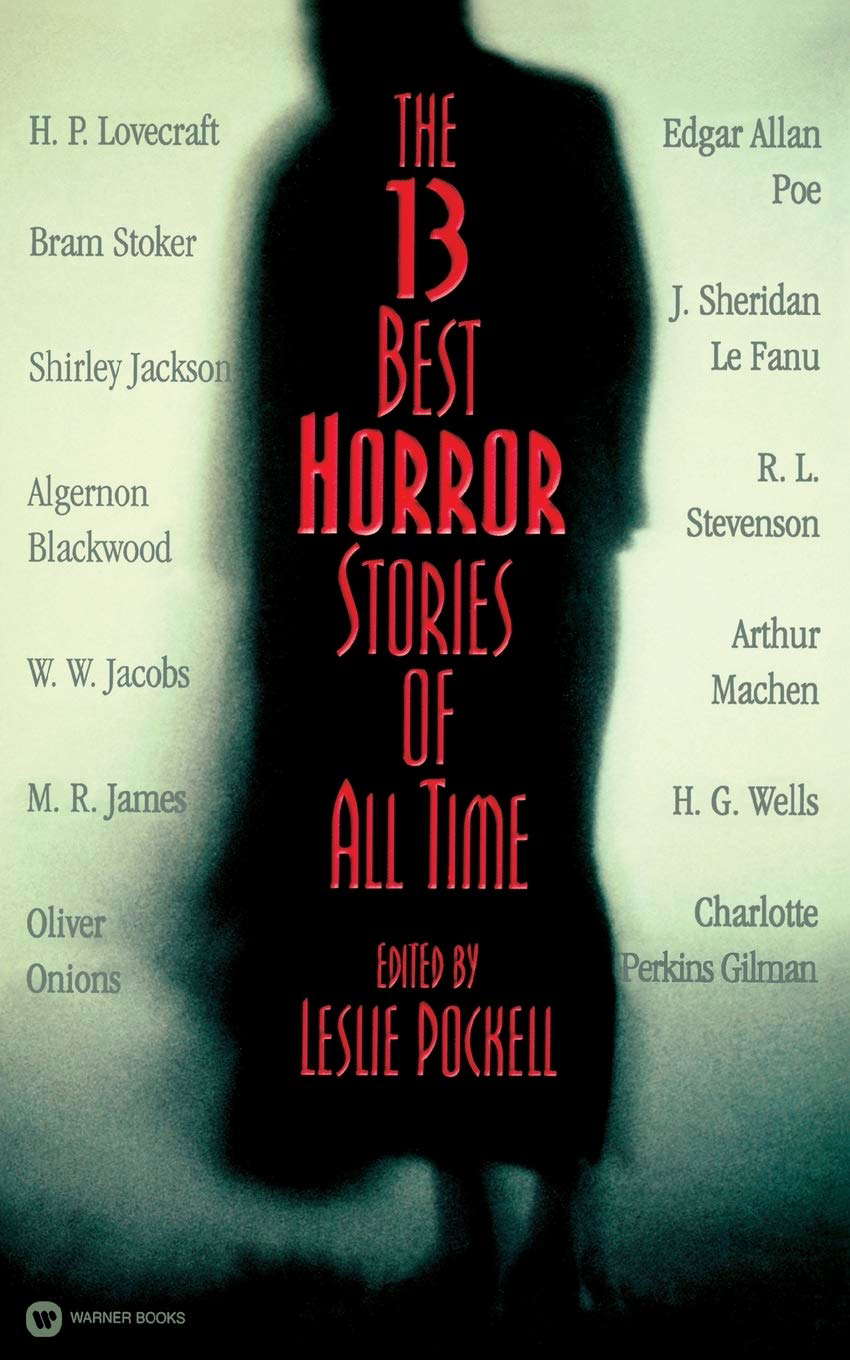
The stories that comprise this collection will surprise the reader even after numerous readings. They reflect innermost fears and head for spaces where reality is blurred by imagination, where insanity and madness are shrouded in mystery and where humanity is haunted by repressed passion and obsession.
A title like The 13 Best Horror Stories of All Time automatically beggars belief. Immediately, readers will notice the absence of modern masters like Stephen King and Peter Straub, and past masters like E.T.A. Hoffmann and Charles Beaumont. A more accurate title for this volume would be Thirteen of the Best Horror Stories Published in English Between 1843 and 1948. Its selections are sometimes uneven, but usually excellent, and are often of tremendous importance. The anthology presents some masterpieces that have appeared in innumerable other collections: Edgar Allan Poe's "The Tell-Tale Heart," Charlotte Perkins Gilman's "The Yellow Wallpaper," W.W. Jacobs's "The Monkey's Paw," H.P. Lovecraft's "The Call of Cthulhu," and Shirley Jackson's "The Lottery." However, The 13 Best Horror Stories of All Time avoids some obvious choices (instead of "Carmilla," the selection from J. Sheridan Le Fanu is "Green Tea"), and it includes a genre-stretching work (H.G. Wells's "The Country of the Blind," which may also be viewed as sci-fi or fantasy), as well as a classic novella (Arthur Machen's "The Great God Pan") that is often excluded from other anthologies because of limited space. Prefaced with a brief, intelligent introduction by editor Leslie Pockell, The 13 Best Horror Stories of All Time is a wonderful book for the budding horror fan. Readers more experienced in fantastic fiction will want to compare the table of contents with their libraries before making a purchase decision. --Cynthia Ward
The 13 Best Horror Stories of All Time, edited by Leslie Pockell, boasts an all-star roster of names from the 19th century (Edgar Allan Poe, J. Sheridan Le Fanu, Bram Stoker) to the first half of the 20th (M.R. James, H.P. Lovecraft, Shirley Jackson). For those new to horror literature wanting to sample some of the classic shorter works of the genre, this is an excellent starting point. Copyright 2002 Cahners Business Information, Inc.
Whether these are the best baker's dozen of their kind (since none are translations--of Hoffman, Gautier, and Gogol, for starters--how could they be?) is beside the point because they are, with one exception, stories all horror connoisseurs should know. Poe's "Tell-Tale Heart," LeFanu's "Green Tea," Machen's "Great God Pan," Blackwood's "Willows," M. R. James' "Oh, Whistle and I'll Come to You, My Lad" are shoo-ins, as are those two eminent treatments of the three-wishes theme, Stevenson's "Bottle Imp" and Jacobs' "Monkey's Paw." No less worthy are two representations of psychological horror, Gilman's "Yellow Wallpaper" and Onions' "Beckoning Fair One" (the story of the world's worst writer's block), and two parables of social conformity, Wells' "Country of the Blind" and Jackson's "Lottery." There are more chilling Lovecraft tales than "The Call of Cthulhu," but the flagship of the Cthulhu mythos deserves its berth here. The clinker is "Dracula's Guest," an outtake from Stoker's Dracula that terrifies less than it stultifies. Was a Henry James chiller--say, "The Jolly Corner"--somehow unavailable? Ray OlsonCopyright © American Library Association. All rights reserved
Find it on
AmazonNo videos available yet.
No news articles linked to this title yet.

Overall
Overall rating of the media
Atmosphere
How immersive and tense is the atmosphere
Gore
Level and quality of gore/violence
Story
Quality of the storyline and plot
Writing
Quality of the written content
Character Development
Depth and growth of characters
Pacing
Flow and timing of the narrative