
BOOK
0
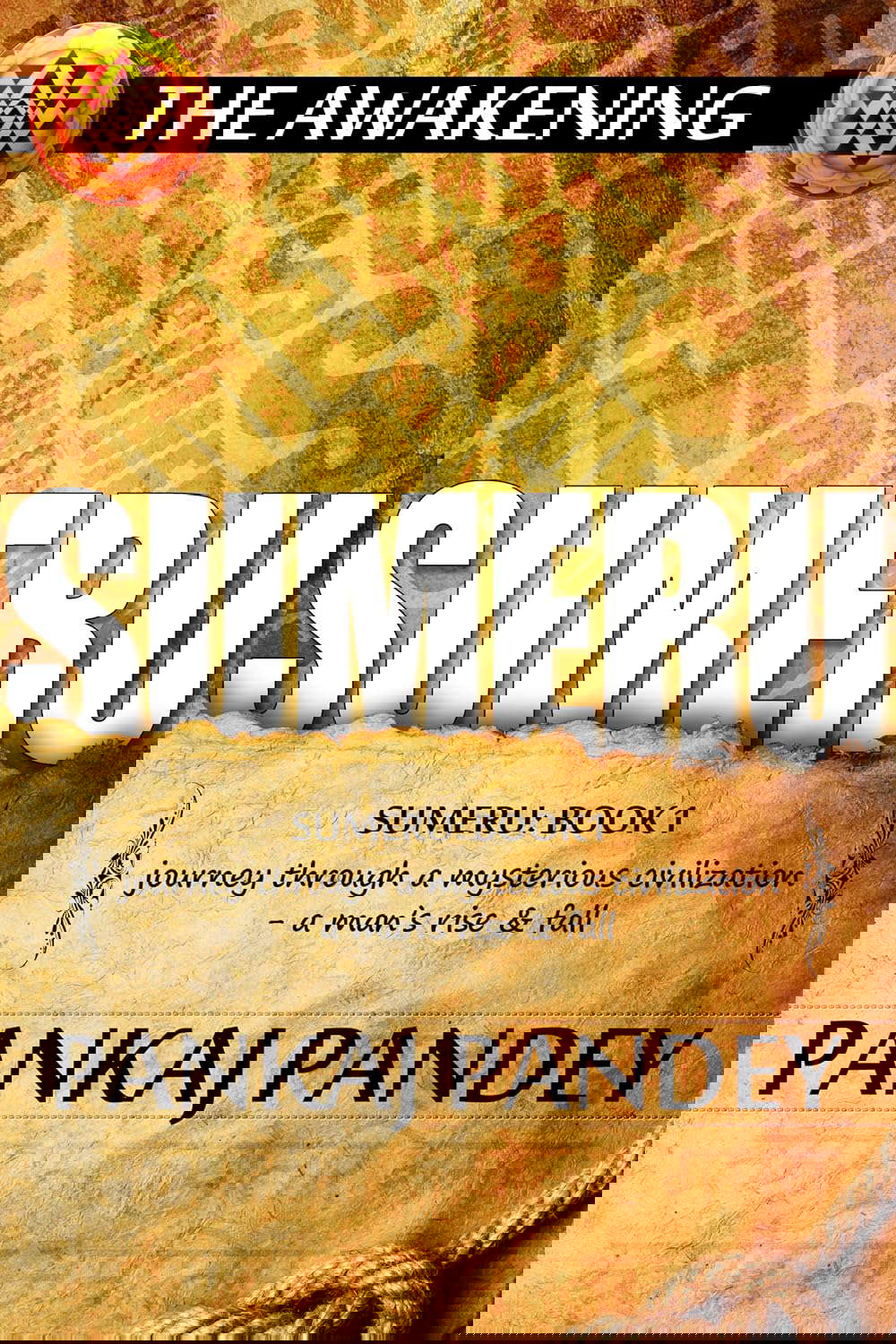
This story describes the spiritual journey of a boy who travels through time to unwrap the biggest mysteries in the universe. The book takes readers to the fascinating and enigmatic world of Sumeru and seeks to explain the cyclic nature of the universe.Chilon—a young boy in ancient Greece, circa 240 BC—is troubled by bizarre recurring dreams and seeks answers from his teacher, a meditation master and mystic. By teaching Chilon to astral travel back to his past lives, the master helps him learn his ultimate destiny. Eons ago, in one past life, Chilon is a warrior named Nara who lives in a highly advanced civilization known as Sumeru. This land is ruled by five priests known as the Guru Mandala. Endowed with supernatural powers, these pure beings have an advanced understanding of nature, mysticism, and universal laws. They work with invisible energies and thought power and can materialize and dematerialize at will. Telepathy, teleportation, time travel, and clairvoyance are only some of the mystical powers they possess. These priests attained their occult powers through their intense practice of yoga and meditation.In Sumeru, men are tall and strong and known for their longevity. The priests live for hundreds of years by controlling their prana (energy force), and they perform feats that normal men would consider magic or occultism.Hearsay has it that a mysterious being called “Rudra” (also known as the “unborn”) rules over the high priests. Rudra is never seen by the masses, and few people know whether he is real or a myth.Handsome, brave, and curious, Nara is an accomplished yogi and spiritual warrior and is well-trained in martial arts and combat skills. Soon after his nineteenth birthday, strange things begin to happen in his life when his inherent powers emerge.At the culmination of his lessons in metaphysics and philosophy, Nara must compete against other warriors in a game of survival. (Although this contest bears a superficial resemblance to another well-known competition, described in The Hunger Games, there is one major difference: The Hunger Games focuses on the sadistic part of human nature, whereas the game of survivor in Sumeru — The Awakening pits warriors against one another to find the best in them.) In time, Nara discovers his gifts and falls in love, and his destiny gradually unfolds. He realizes he is a hero and a savior to many.Yet although Nara has spent years immersed in spirituality, he finds himself overwhelmed by the discovery of his life’s purpose. He is courageous with a kind heart, but his keen desire to attain the greatest powers known to man leads him to give in to vanity. As a result, he embarks on a dangerous spiritual journey, despite warnings from his Guru.On this journey, he is likely to fail and even risk the lives and hopes of millions who depend on him.In fact, his failure might mean the destruction of Sumeru. Will he be able to overcome his passion and obstinacy and follow the right path?What does he want to achieve, and why do millions depend on him? Let's find out, in Sumeru The Awakening.
This book is entirely a work of fiction and a product of the author's imagination. Certain ideas have been inspired by mythologies from various sources, predominantly from the ancient Vedic culture and teachings of India.The author has used mythological figures, names, and characters in various forms in a purely fictitious manner. Therefore, any resemblance to actual people is purely coincidental.Some incidents have been inspired by the lives of both well-known and obscure yogis and adepts of meditation and yoga from ancient to modern times. It is said that even today, many yogis and mystics still practice in caves in the Himalayas.Although some of the beliefs in this book may not have been corroborated by modern empirical sciences, they have been evident in the lives of many great masters throughout human history. Therefore, seeking the truth in such incidents and perspectives is entirely the choice of the reader.The book inevitably contains many Sanskrit Vedic terms for which there are no adequate English equivalents. In this regard, endnotes have been added to explain the meaning of the terms and their relevance, based on ancient texts.
"The ultimate ignorance is the rejection of something you know nothing about. Yet refuse to investigate"Dr. Wayne Dyer"You are not just a drop in the ocean - You are the mighty ocean in the drop"Rumi"All things appear and disappear because of the concurrence of causes and conditions. Nothing ever exists entirely alone; everything is in relation to everything else"Buddha"Great men are they who see that spiritual is stronger than any material force - that thoughts rule the world"Ralph Waldo Emerson"I used to be an atheist, until I realized I was God"J Krishnamurti"The natural universe is the result of the limited consciousness of man. When man becomes conscious of his divinity, all matter, all nature, as we know it, will cease to exist" Swami Vivekananda
Find it on
AmazonNo videos available yet.
No news articles linked to this title yet.

Overall
Overall rating of the media
Atmosphere
How immersive and tense is the atmosphere
Gore
Level and quality of gore/violence
Story
Quality of the storyline and plot
Writing
Quality of the written content
Character Development
Depth and growth of characters
Pacing
Flow and timing of the narrative